Glossary
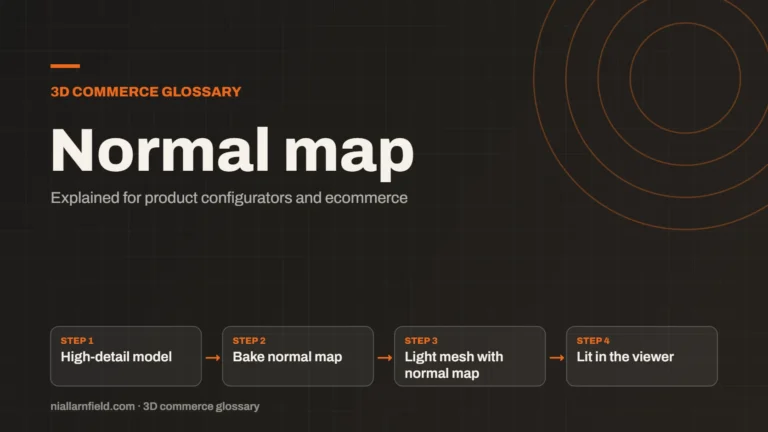
Normal Map: What It Is and Why Configurators Use It
A normal map adds fine surface detail to a 3D model without extra geometry. Learn how it works, why configurators rely on it, and its limits.
Read articleProject stories and practical notes on design and development, with the decisions, examples and evidence behind the work.
A normal map adds fine surface detail to a 3D model without extra geometry. Learn how it works, why configurators rely on it, and its limits.
Read article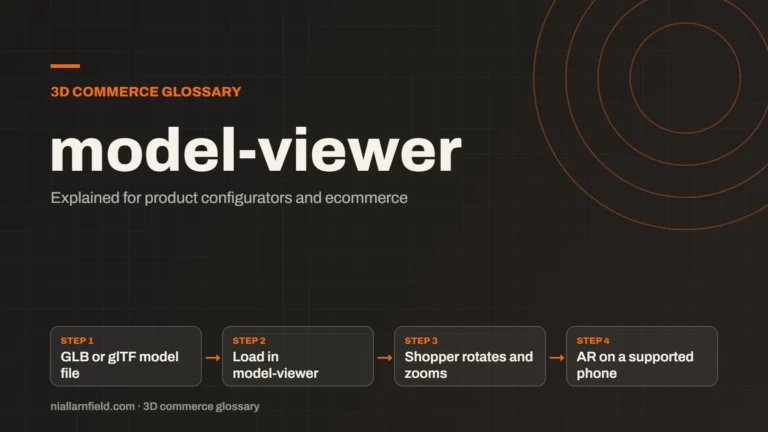
A plain guide to Google's model-viewer web component: how it shows GLB and glTF models on a product page, and how it opens AR on phones.
Read article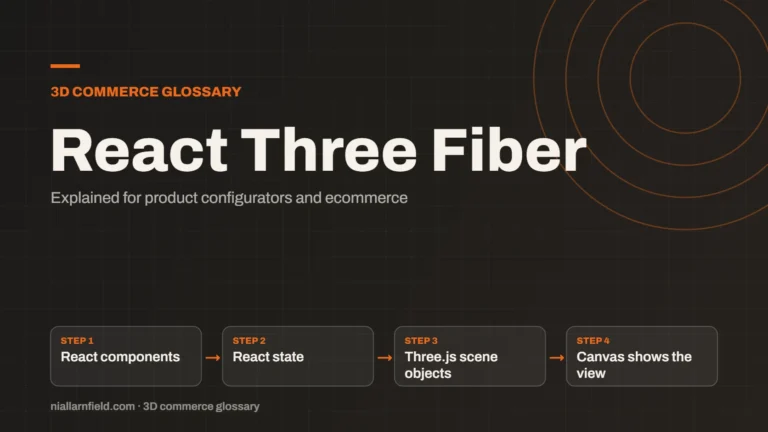
React Three Fiber is a React renderer for Three.js. Learn how it turns 3D scenes into React components, and when a configurator should use it.
Read article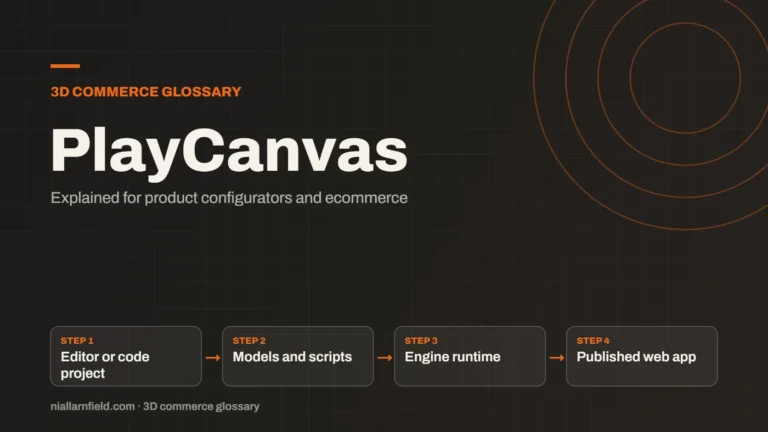
PlayCanvas is an open-source 3D engine for the web, with a visual editor. Learn how it works, its editor and code routes, and where it fits a configurator.
Read article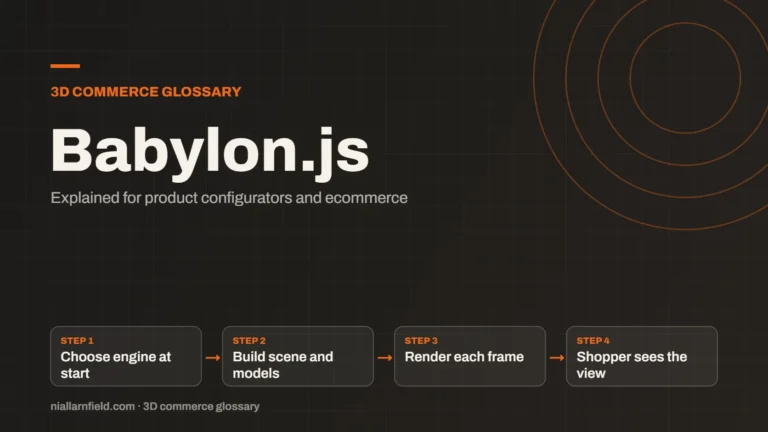
Babylon.js is a JavaScript 3D engine that renders with WebGL or WebGPU. Learn what it covers, how it handles WebGPU, and when a configurator should use it.
Read article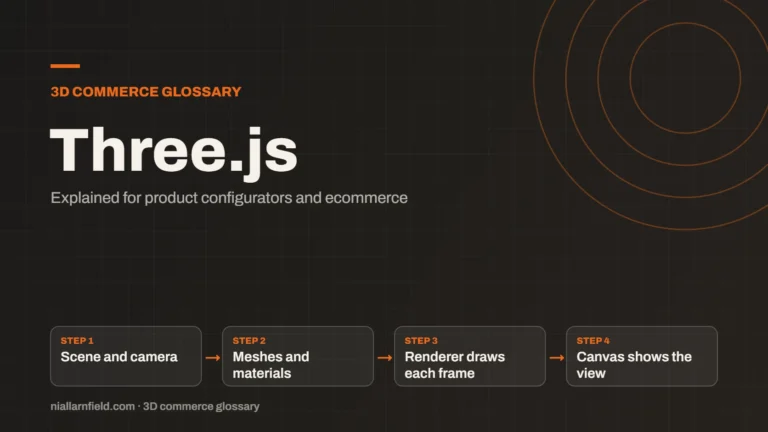
Three.js is the JavaScript library most web 3D projects use. Learn what it does, how a scene is built, and where it suits product configurators.
Read article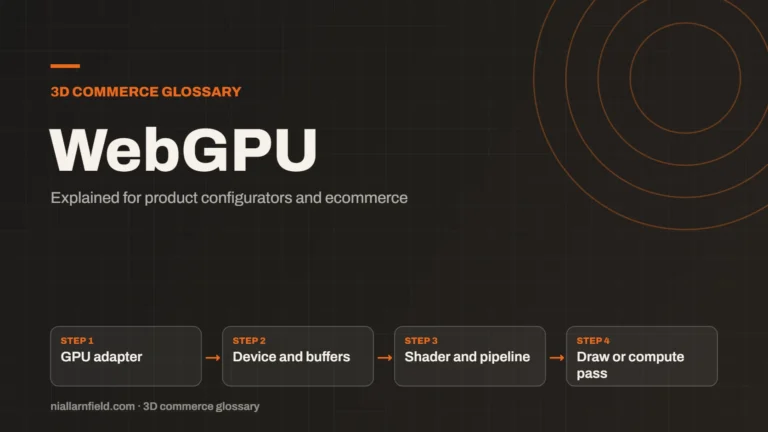
WebGPU is the newer web standard for using a device's graphics processor from a browser. Learn how it differs from WebGL and when a shop needs it.
Read article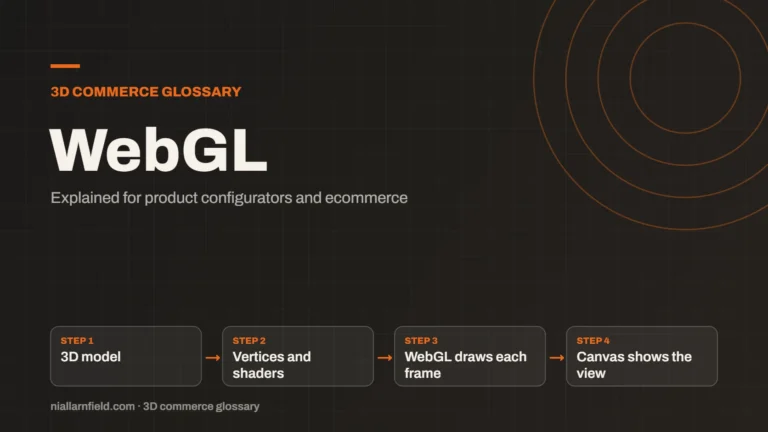
WebGL is the browser standard that draws 3D graphics without plugins. Learn how it works, why product configurators rely on it, and its limits.
Read article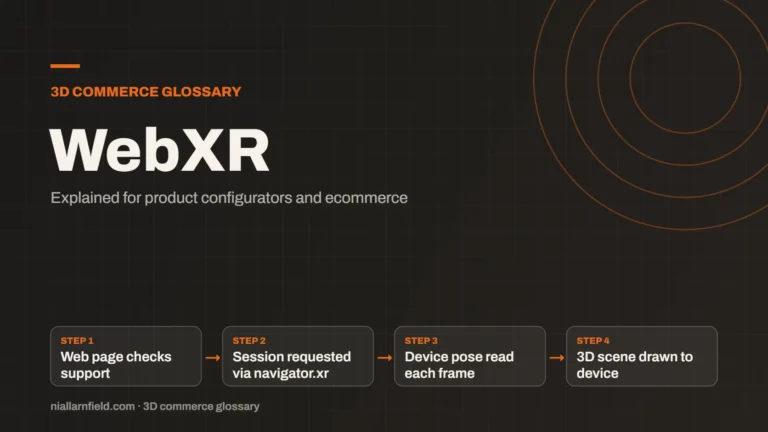
WebXR is the W3C web standard for AR and VR in the browser. Learn what it gives a web page, where it works and what it means for…
Read article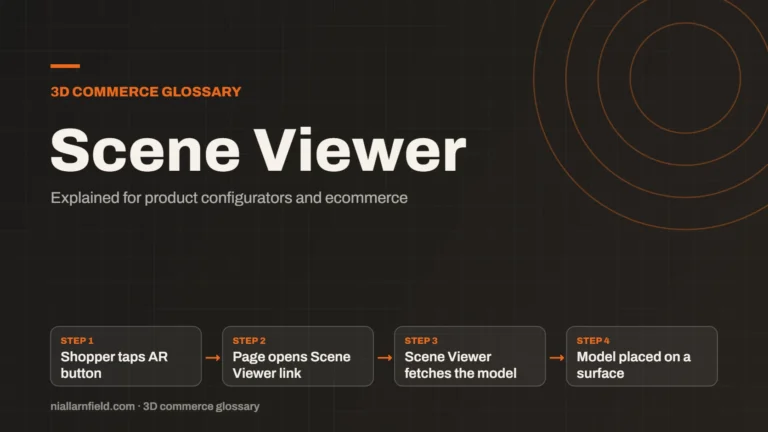
Scene Viewer is Google's Android app for viewing glTF and GLB models in augmented reality. Learn how it launches, what it needs and when to use it.
Read article