Glossary
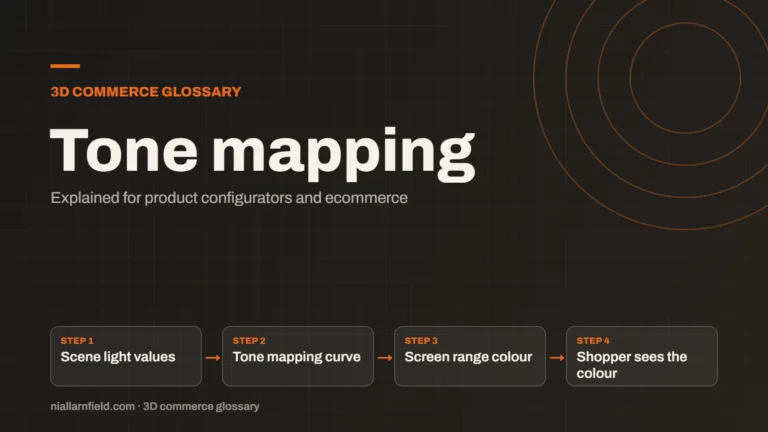
Tone Mapping: What It Does to Product Colours in 3D
Tone mapping explained for product configurators: how it squeezes 3D light into screen range and why it changes the colour a shopper sees.
Read articleProject stories and practical notes on design and development, with the decisions, examples and evidence behind the work.
Tone mapping explained for product configurators: how it squeezes 3D light into screen range and why it changes the colour a shopper sees.
Read article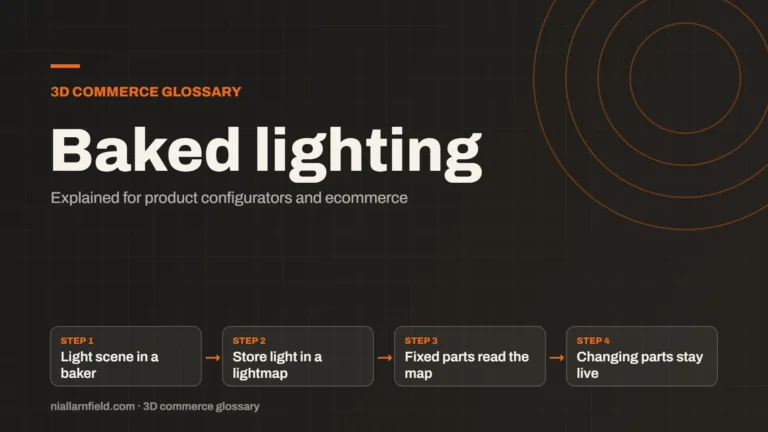
Baked lighting explained: light calculated ahead of time and stored in textures, why it runs cheaply in product configurators, and where it stops working.
Read article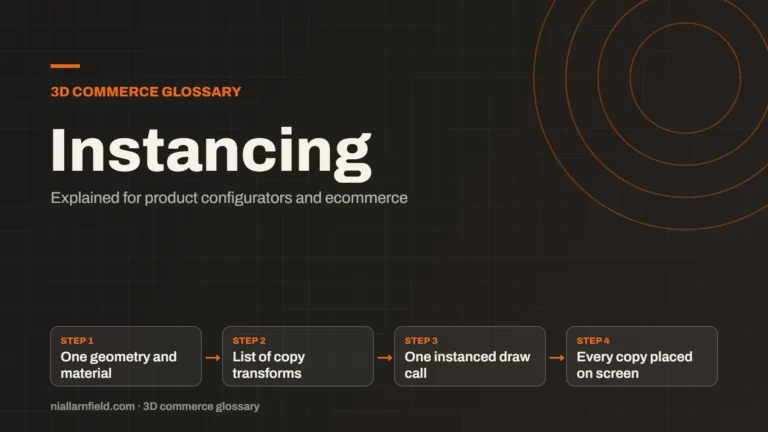
Instancing explained: GPU instancing draws many copies of one part in a single call, which suits configurators with bolts, slats, tiles and other repeats.
Read article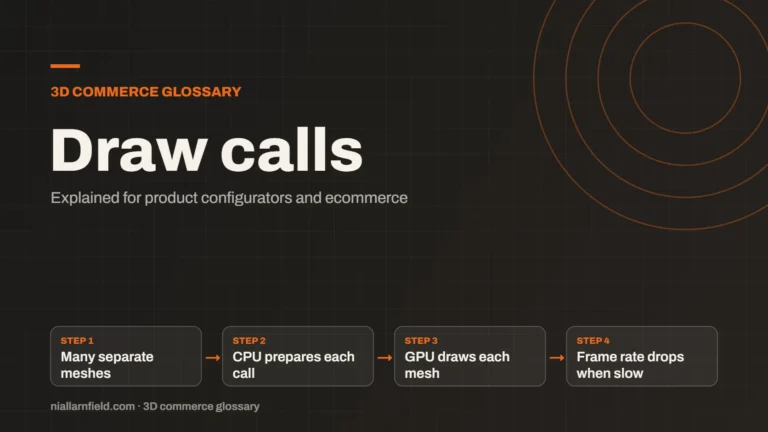
Draw calls explained for ecommerce teams and developers: why each separate mesh costs CPU time, why busy configurators slow down, and how to cut the count.
Read article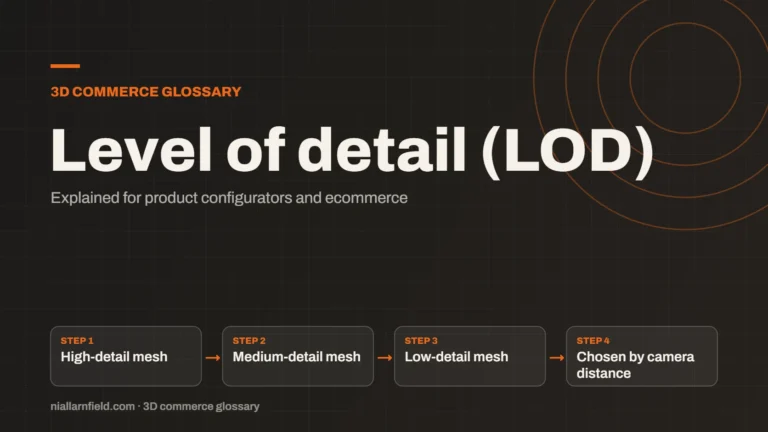
Level of detail (LOD) explained: lighter meshes for distant parts, detailed ones up close, and why this keeps product configurators fast on phones.
Read article
Texture atlas explained: one image holding many part textures, how UV coordinates reach each patch, and why it speeds up product configurators on the web.
Read article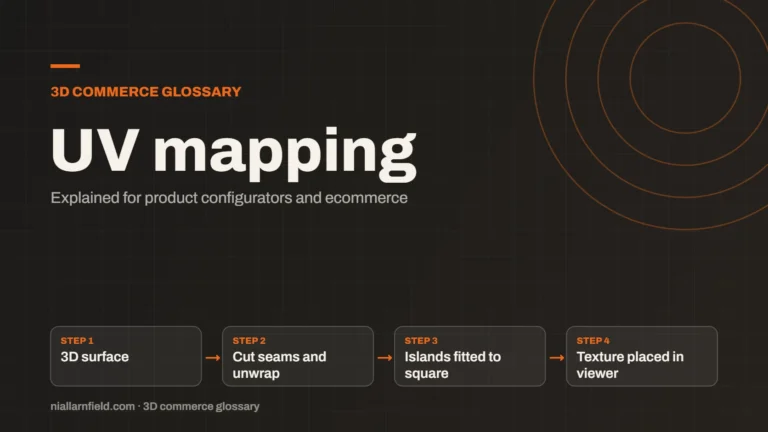
UV mapping unwraps a 3D model's surface onto a flat image so textures line up. Learn how UV coordinates, seams and layouts affect configurators.
Read article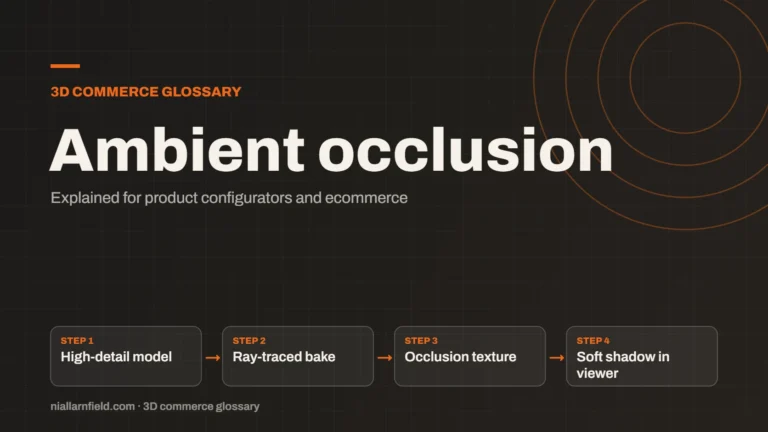
Ambient occlusion adds soft shadows to creases and joints in a 3D model. Learn how it is baked, why it grounds products and its common mistakes.
Read article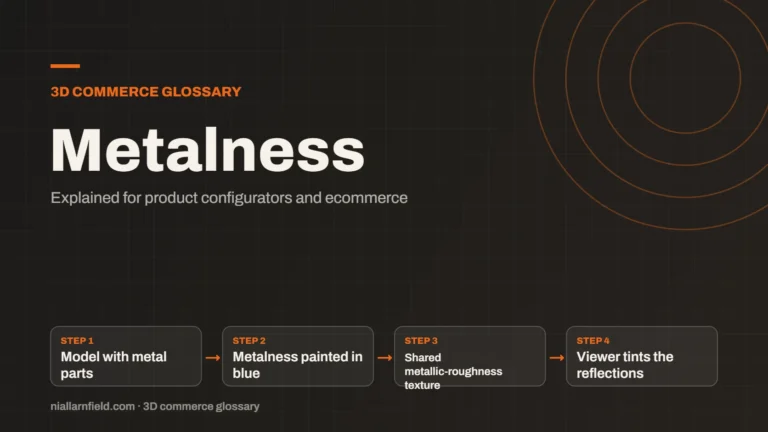
Metalness is a PBR value that says how metal-like a surface is. Learn how a metalness map is stored, used and tested in product configurators.
Read article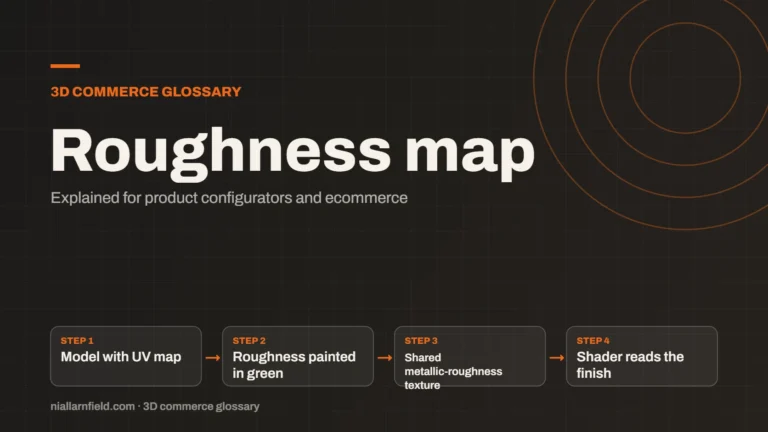
A roughness map sets how blurred or sharp a surface's reflections look, pixel by pixel. See how it is stored in glTF and where it helps configurators.
Read article