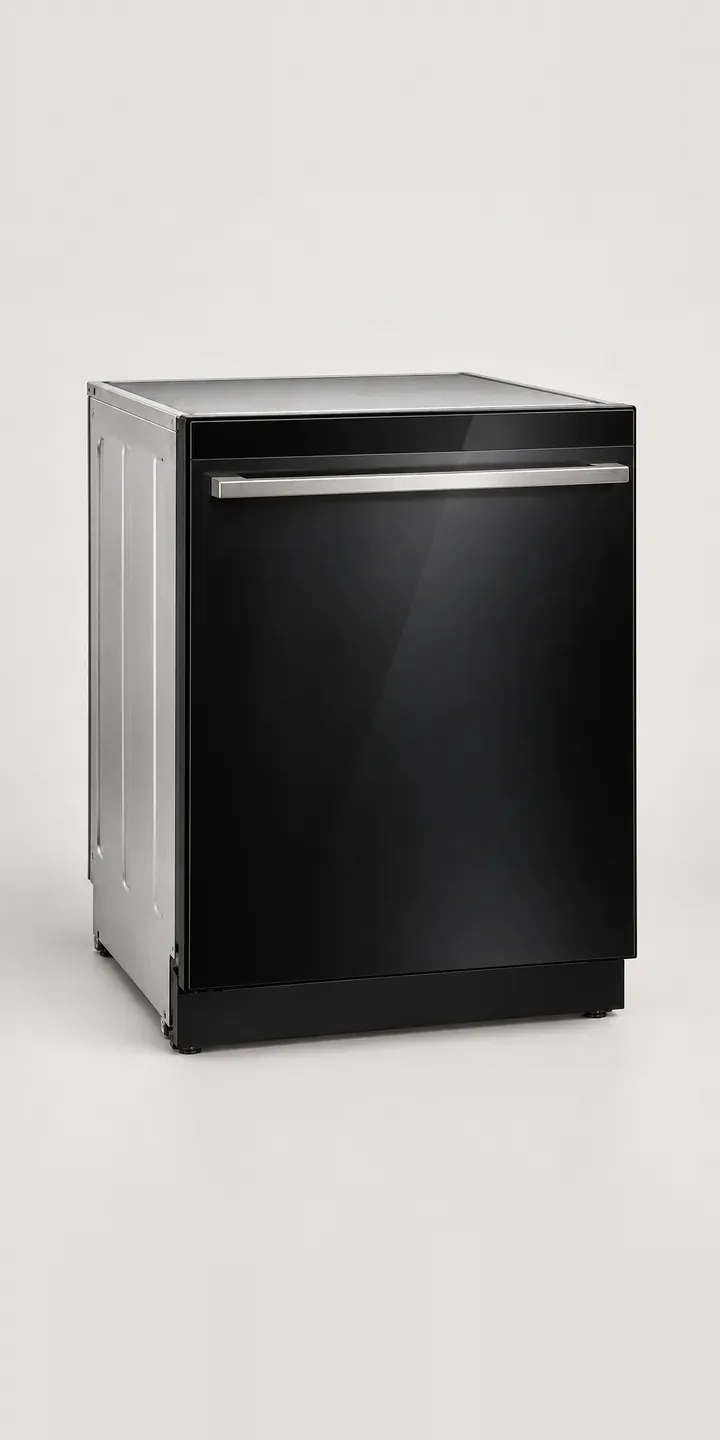
Configure an illustrative built-in dishwasher: four door finishes, two widths, and a summary you can send as a quote. The finishes on show are black glass, brushed steel, white and graphite.
A built-in dishwasher is bought to fit a gap and to match the appliances around it. Width is usually settled by the cabinet run long before the buyer starts browsing. Finish is where they hesitate. The door sits in full view of an open-plan room, beside an oven and hob that may already be black glass or brushed steel.
Appliances Configurator demo
Built-In Dishwasher
- Product
- Built-In Dishwasher
- Colour
- Black Glass
- Width
- 45 cm
Illustrative product. The design and images are generated examples, not a real model for sale.
What you can configure
Switch between the four door finishes on a plain background, where only the door changes. In a kitchen, black glass and graphite recede into dark cabinets. Brushed steel suits a professional-style run, and white belongs with pale units. The width selector offers the 45 cm slimline and 60 cm full-size versions, recorded in the summary. The picture does not change with width here, though a production build would show both.
- Colour: Black Glass, Brushed Steel, White, Graphite
- Width: 45 cm, 60 cm
Why a configurator suits dishwashers
Appliance retailers sell on specification filters: width, noise level, energy class, place settings. Finish usually ends up as a row of colour dots with one product photo, often the steel version. For a dishwasher with a visible door, that undersells the model, because the finish is what the owner looks at every day.
Six finishes in two widths gives twelve products, each with its own model code and often its own stock position. A configurator lets the retailer present them as one product page with every variant visible. Reviews and search ranking then build on one URL instead of splitting across twelve listings.
It also prevents a familiar mismatch. Buyers coordinating a black glass oven and dishwasher want to know the two blacks will sit together. Showing the door clearly, with the control strip and handle bar in view, settles that before the order. Making width an explicit step, with a reminder to measure the aperture, catches the other expensive mistake before installation day.
How a production version would be built
Each finish needs its own photograph or render, and so does each width, because a 45 cm door is visibly narrower and its handle bar shorter. That gives twelve images from one camera position. Black glass is the hardest to photograph: it reflects the studio, so I would render it from a 3D model or shoot with careful black flags. The retailer supplies model codes, energy and noise data per variant, and cabinet aperture sizes. The configurator then adds the chosen variant to a Shopify or WooCommerce basket like any other product.
Build sheet for this range
- Colours in the full range: 6 (4 shown in this demo)
- Width choices: 2
- Combinations to support: 6 × 2 = 12
- Images for one photograph per combination at 3 angles: 36
- Images if widths can be shown as separate layers, at 3 angles: 24
- Data each of the 12 combinations needs: a SKU or variant ID, price, stock or lead time, and any dimensions or specification that change
Questions about dishwasher configurators
Can the configurator hide finishes that only come in one width?
Yes. If sage is only made at 60 cm, choosing 45 cm can disable sage and show a short note. The rule comes from your product data, so when the range changes, the configurator follows. Buyers never reach a dead end at checkout.
Can we show matching ovens and hobs in the same finish?
Yes. Once a finish is chosen, the page can suggest other appliances with the same finish name from your catalogue. That works best when finish names are consistent across categories, which is worth tidying in the product data first. It turns one dishwasher sale into a matched set.
Can buyers compare the noise level and energy class of each variant?
Yes. Each variant's technical data can sit beside the image and update when the width changes, since the two widths often differ in place settings and ratings. Pulling it from your product feed keeps it accurate. Buyers comparing specifications then stay on the configured page rather than opening a second tab.
How long does it take to build a configurator for an appliance range?
It depends mainly on images. If you have consistent renders of each finish and width, a single product family can go live fairly quickly. Shooting or rendering from scratch adds time. I scope it after seeing your data and photography, and I reply to enquiries within two UK working days.
More home appliance configurator demos
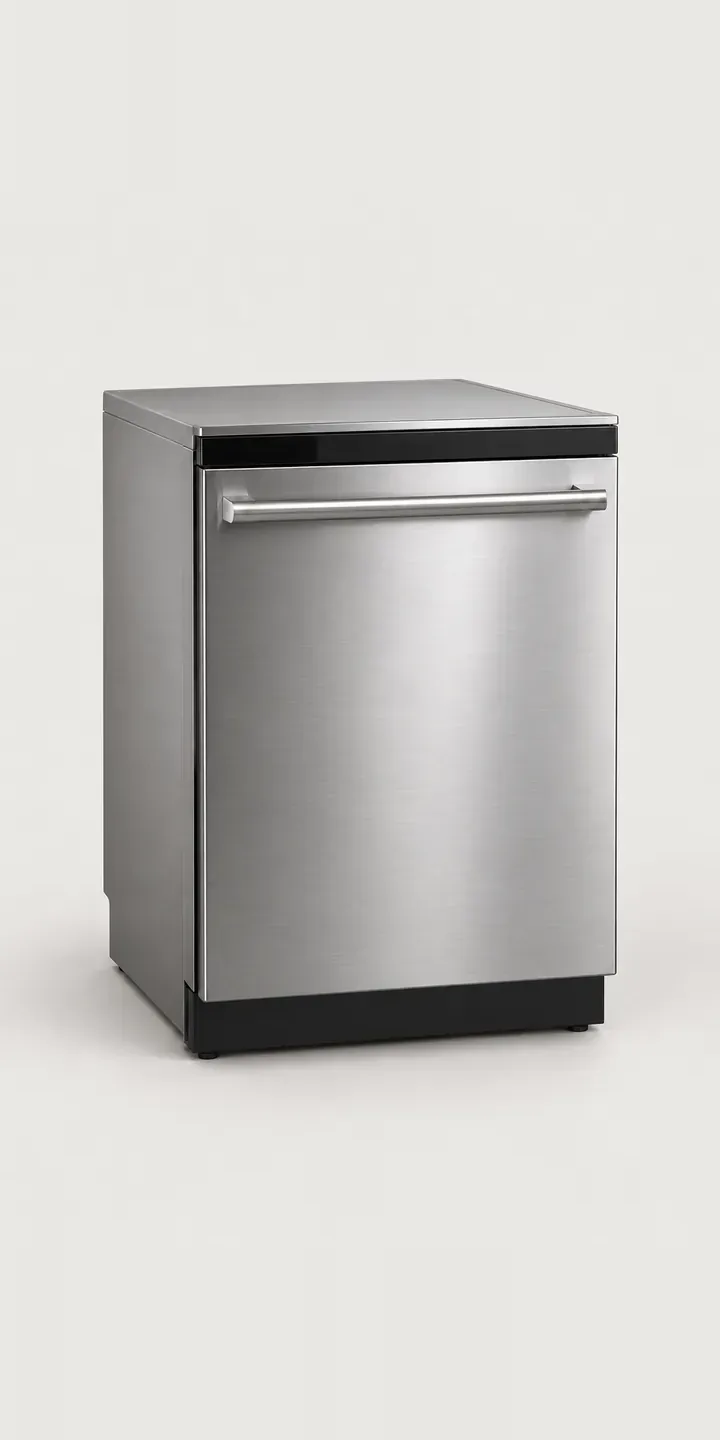
Fitted Dishwasher
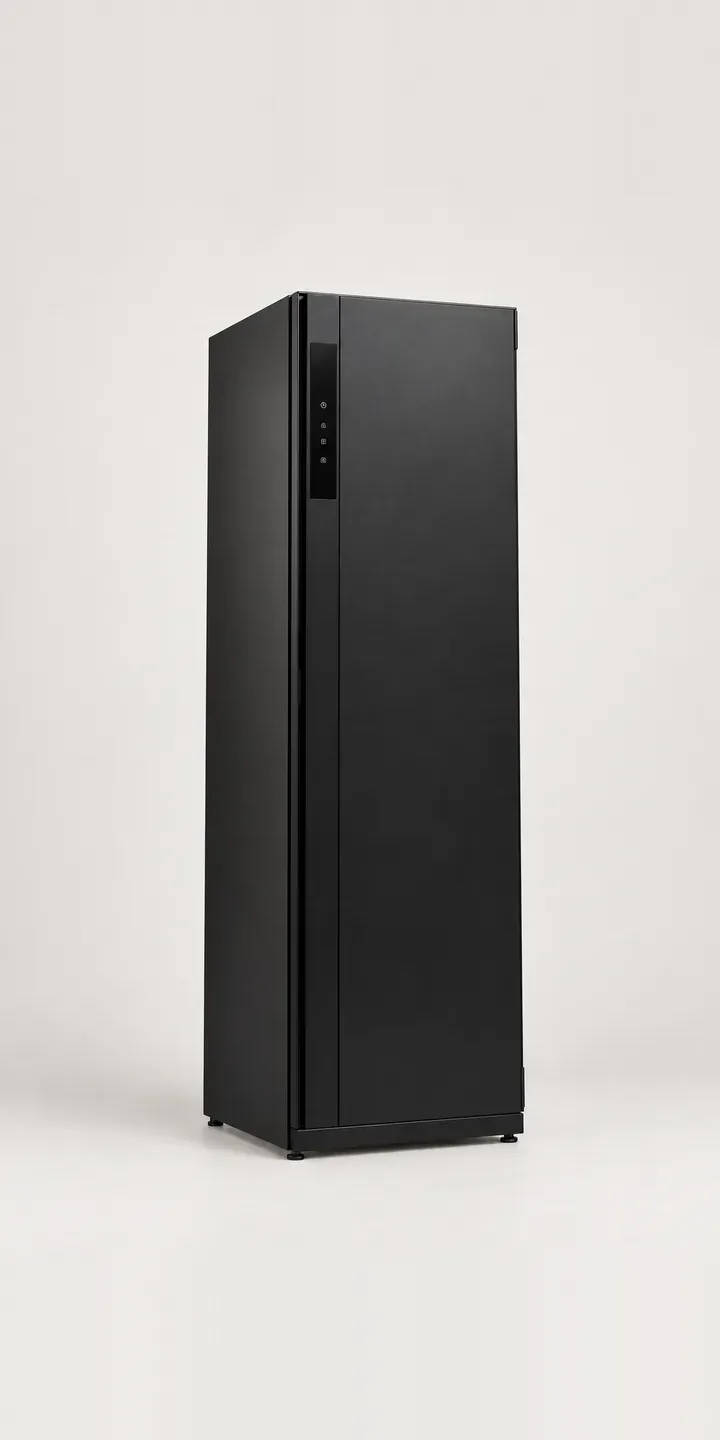
Garment Care Cabinet
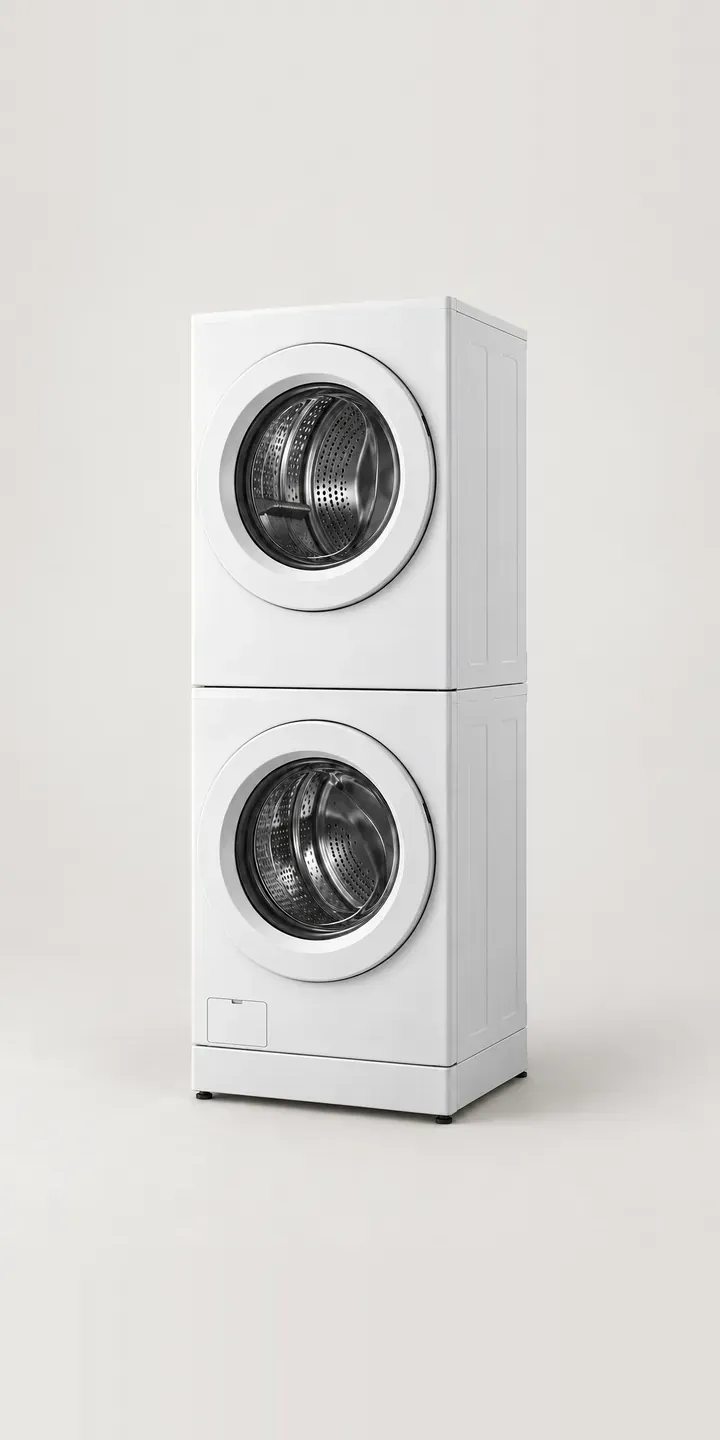
Laundry Tower
Mopping Robot Vacuum
Retro Fridge-Freezer
Bagless Stick Vacuum
All home appliance configurator demos
A configurator for your dishwashers
This demo uses an illustrative product. If you sell dishwashers, I can build the same experience around your own range, photography and ordering process, connected to Shopify, WooCommerce or a quote workflow. I reply to enquiries within two UK working days.