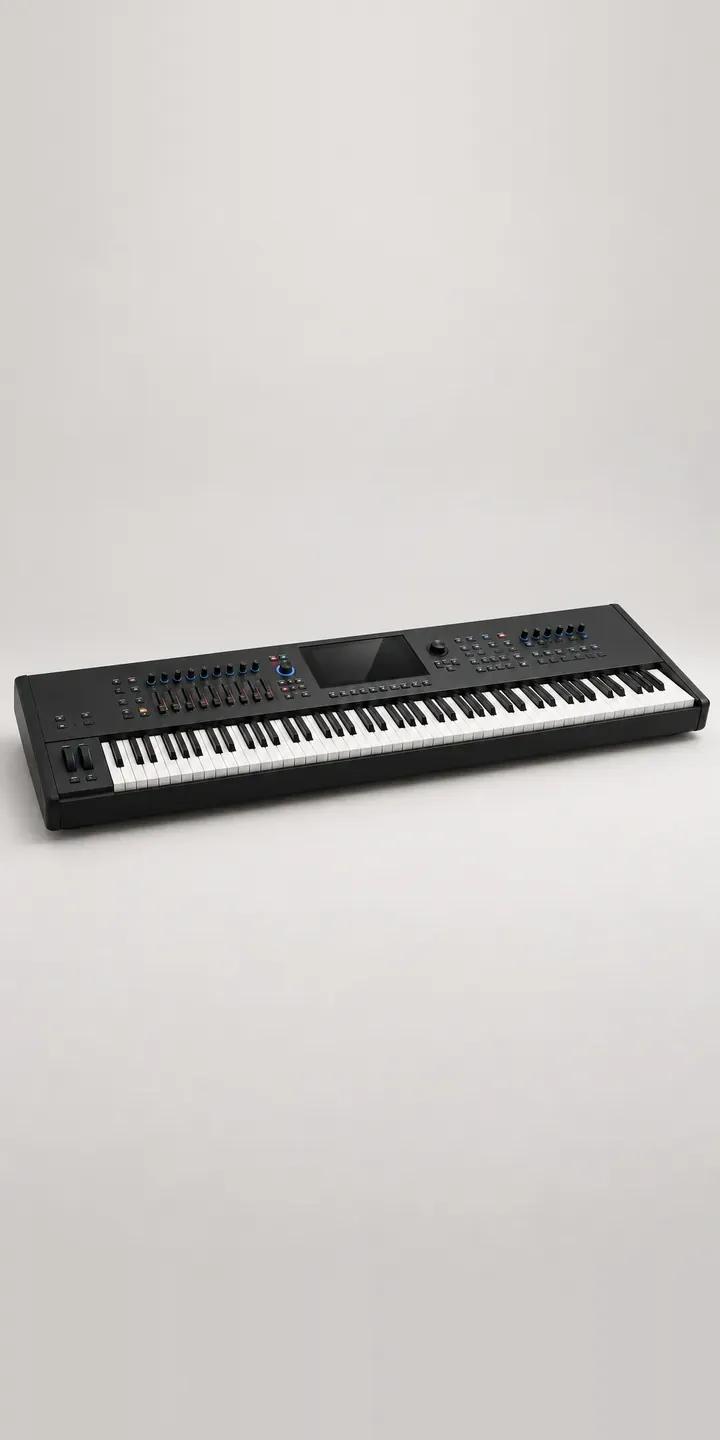
The configurator on this page is built around an illustrative performance synthesizer, the kind players take on stage. Pick a finish and a key count, and the summary captures the spec for a quote.
A performance synth is chosen with the gig in mind. Key count sets the range for splits and layers, and also the size of the case that goes in the van or the hold of a plane. Many players settle on 76 keys as the compromise between reach and weight. Finish has a stage role too: gloss white and wine red stand out under lights and in festival photographs, while matte black disappears into the backline.
Music Configurator demo
Performance Synth
- Product
- Performance Synth
- Colour
- Matte Black
- Keys
- 61 Keys
Illustrative product. The design and images are generated examples, not a real model for sale.
What you can configure
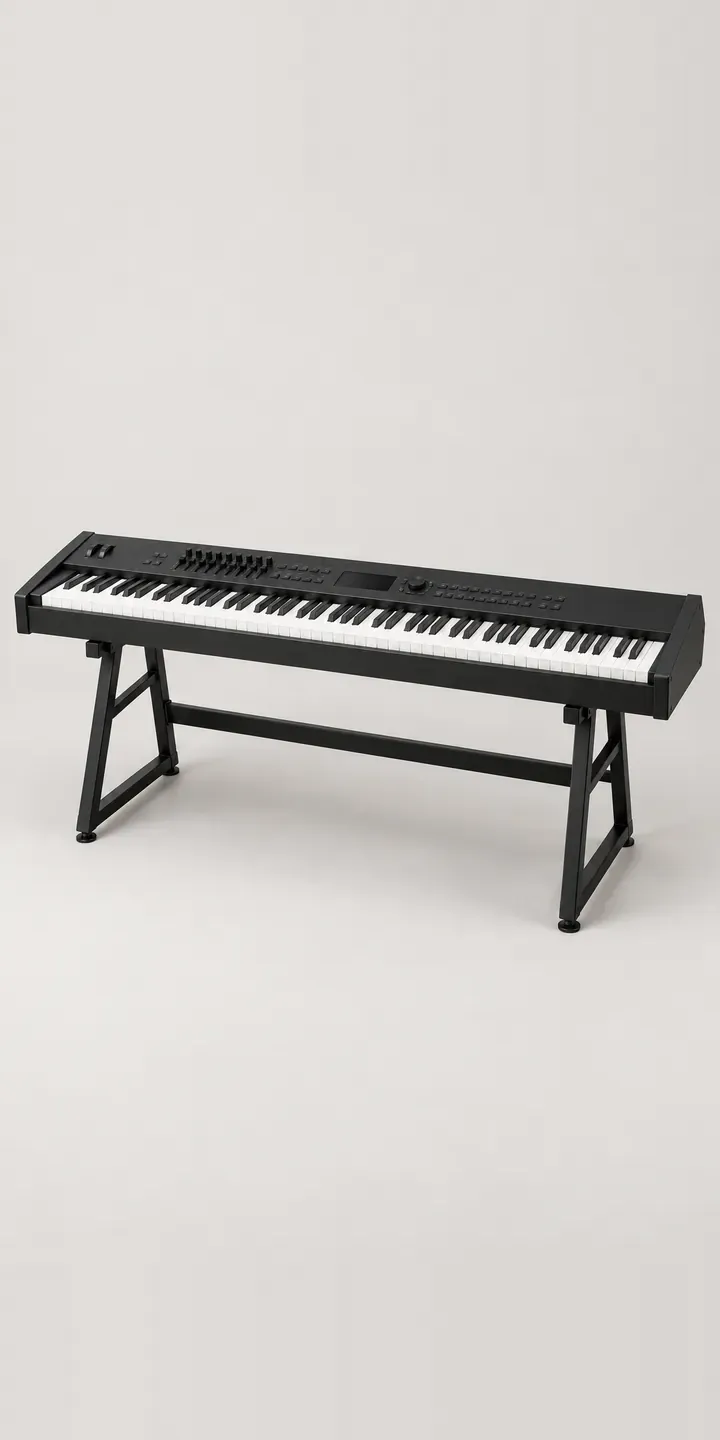
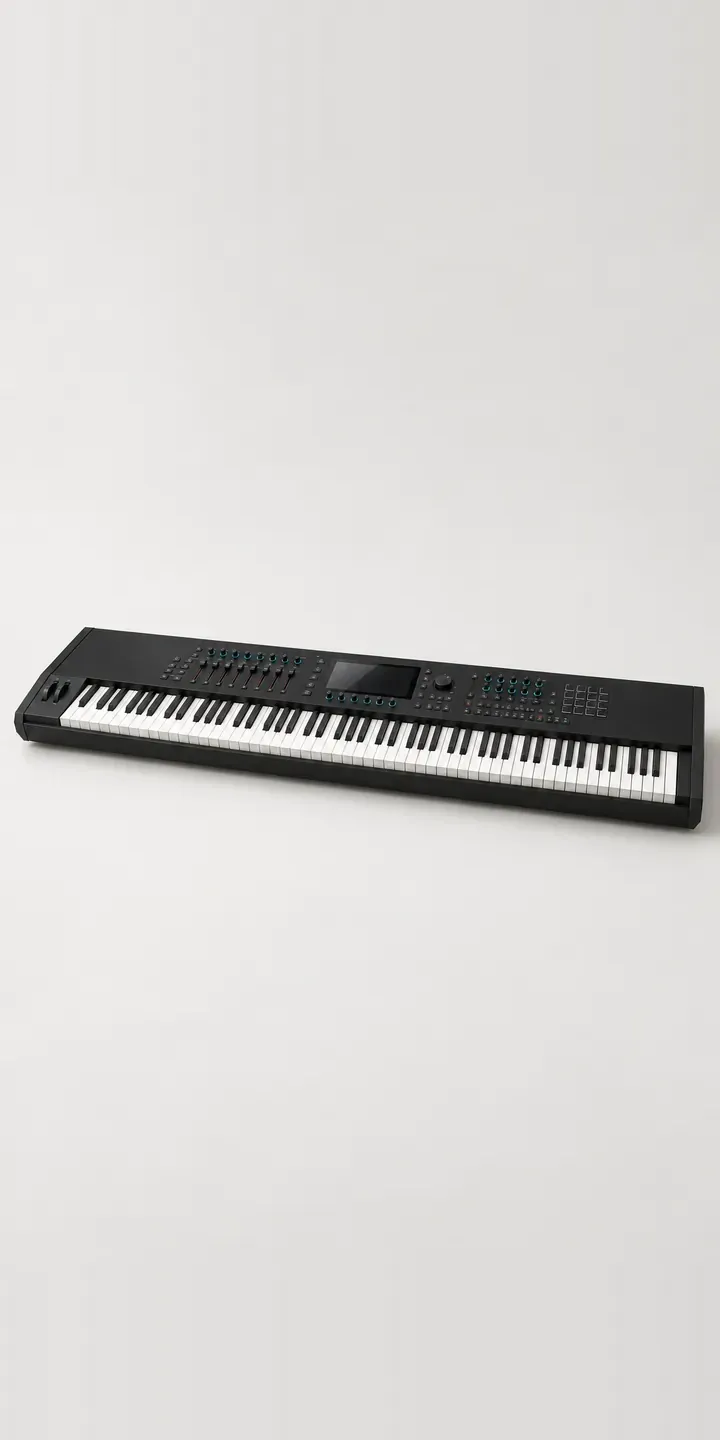
Matte black, gloss white, silver and wine red are switchable in the demo, with midnight blue and walnut in the full range. The knobs, sliders and central display stay fixed between images, so the finish comparison is direct. Key count sits beside it at 61, 76 or 88, the choice that determines both what a player can reach and which stand and flight case they will need. Only the summary reflects key count in this demo, since every photo shows one length.
- Colour: Matte Black, Gloss White, Silver, Wine Red
- Keys: 61 Keys, 76 Keys, 88 Keys
Why a configurator suits synths
Eighteen versions come from six finishes and three key counts. Stage players also buy around the instrument: a flight case cut to size, a stand that takes the weight, a sustain pedal and an expression pedal. Each depends on the key count, and getting it wrong means a case that does not close.
A configurator lets the buyer assemble the whole rig in one place. The music shop sells a complete setup rather than a bare keyboard, and the player gets a case that matches without measuring. For touring musicians buying through a tech or musical director, a saved build can be checked by the person who will load it before anyone pays.
Finish choice is also where artist relationships show up. Players often want a colour that matches their stage identity, and a maker may offer limited finishes for endorsed artists or launch runs. Handling those as configurator options, visible only to the right buyers or for a set period, keeps the specials organised and the standard range uncluttered.
How a production version would be built
Key count drives the base image for a synth, because a 61 and an 88 have different proportions. I would shoot or render each length once, apply finishes as layers where they are flat colours, and photograph gloss white separately, since its reflections behave differently from matte paint. Cases, stands and pedals become their own image set. The maker supplies SKUs per finish and length, accessory compatibility and any artist-only finishes. The completed rig goes to a basket or a quote, and a shareable configuration link lets a band sign off the spec together.
Build sheet for this range
- Colours in the full range: 6 (4 shown in this demo)
- Keys choices: 3
- Combinations to support: 6 × 3 = 18
- Images for one photograph per combination at 3 angles: 54
- Images if key counts can be shown as separate layers, at 3 angles: 27
- Data each of the 18 combinations needs: a SKU or variant ID, price, stock or lead time, and any dimensions or specification that change
Questions about synth configurators
Can the configurator pick the right flight case for the key count?
Yes. Cases are tagged with the instruments and lengths they fit, so only matching cases appear once a key count is chosen. If the buyer changes from 76 to 88 later, the case updates or the summary flags it. That single rule removes one of the most common ordering errors with stage keyboards.
Could a production version add stage or studio images alongside the studio shots?
Yes, as an optional second view. The main images stay as clean product shots on a plain background, because that is where buyers judge detail. A rendered or composited stage view can follow the selected finish, so changing colour updates both. It adds context without replacing the accurate view.
Can artist or limited finishes be hidden from general buyers?
Yes. A finish can be restricted by date, by customer group or by a private link sent to the right people. The standard configurator stays unchanged for everyone else, and the special finishes do not need their own product page. When the run ends, the finish simply closes.
How does a gloss white synth photograph compared with matte black?
Very differently. Gloss white reflects the studio around it, so every softbox and edge shows on the panel, while matte black absorbs light and hides surface detail. Each needs its own lighting setup. Treating them as one recolourable image leaves the white looking flat and plastic.
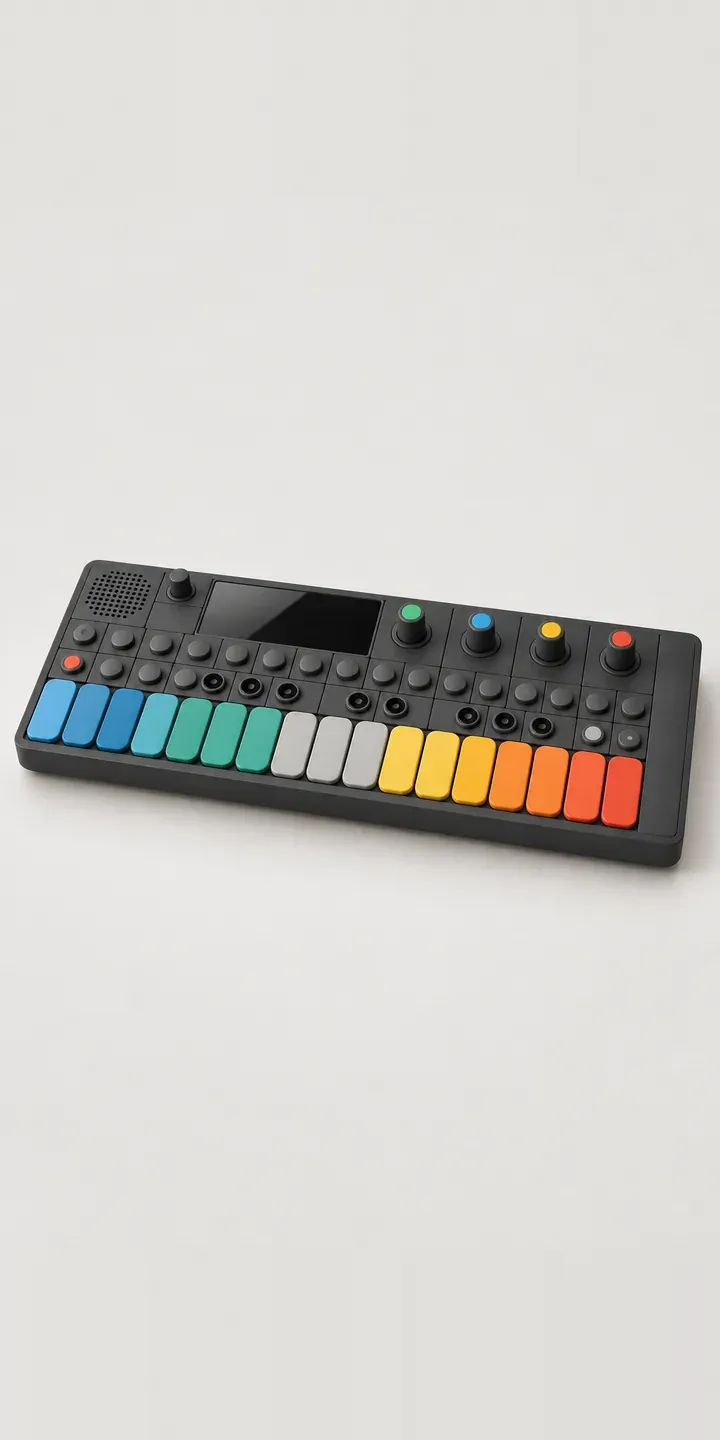
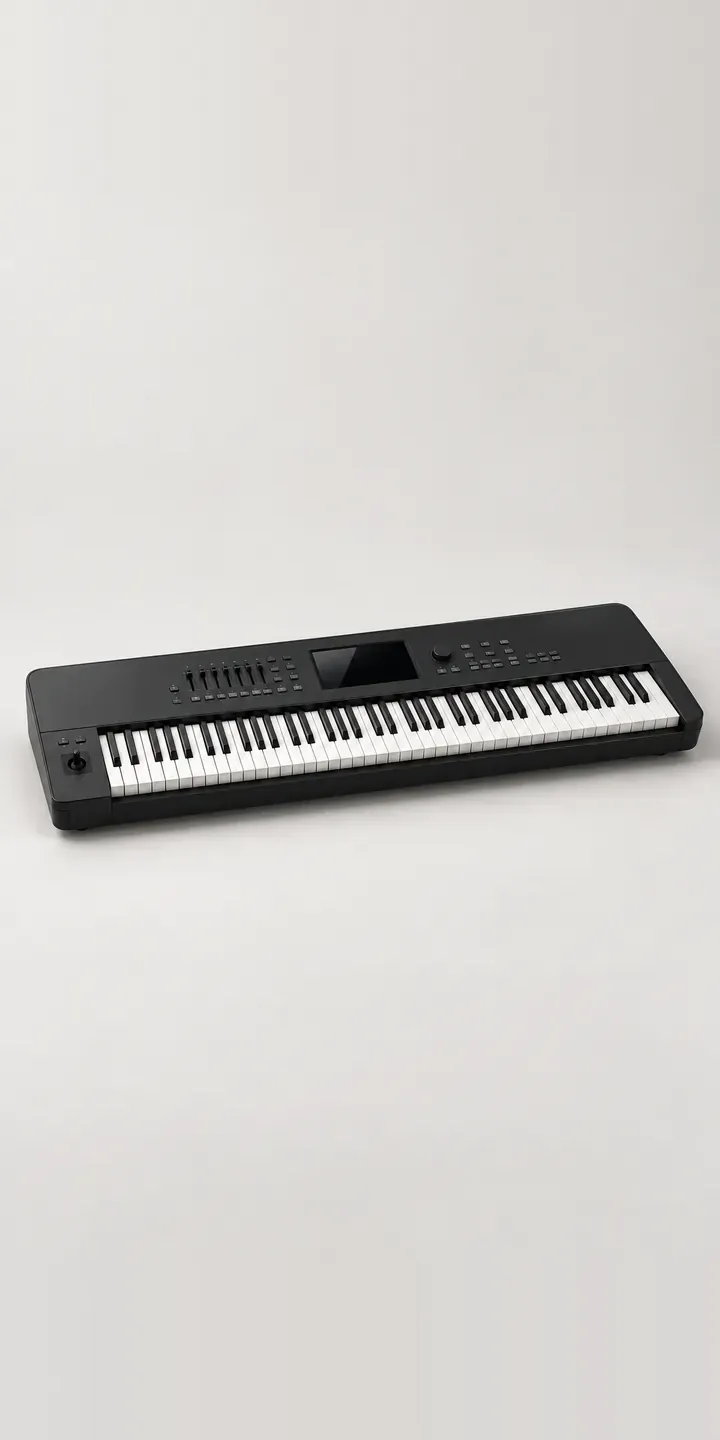
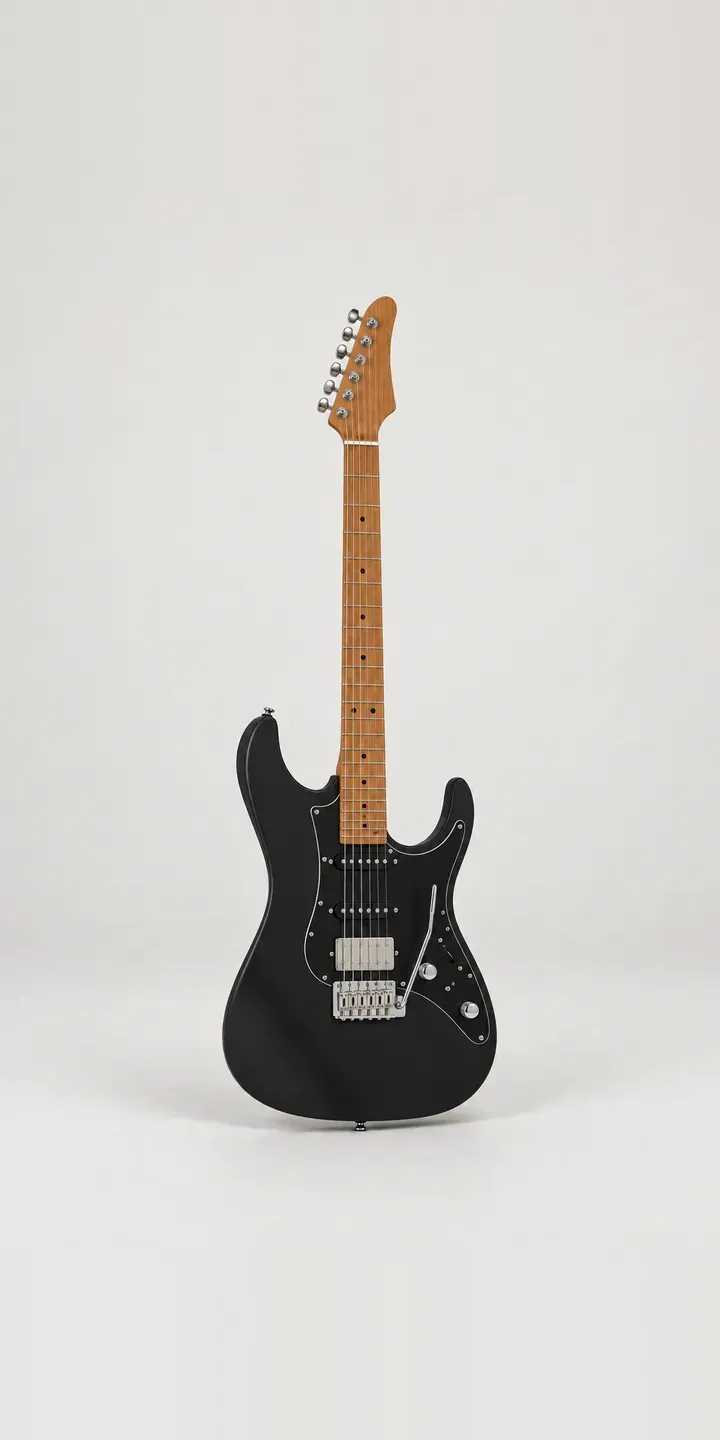
More musical instrument configurator demos

All musical instrument configurator demos
A configurator for your synths
This demo uses an illustrative product. If you sell synths, I can build the same experience around your own range, photography and ordering process, connected to Shopify, WooCommerce or a quote workflow. I reply to enquiries within two UK working days.