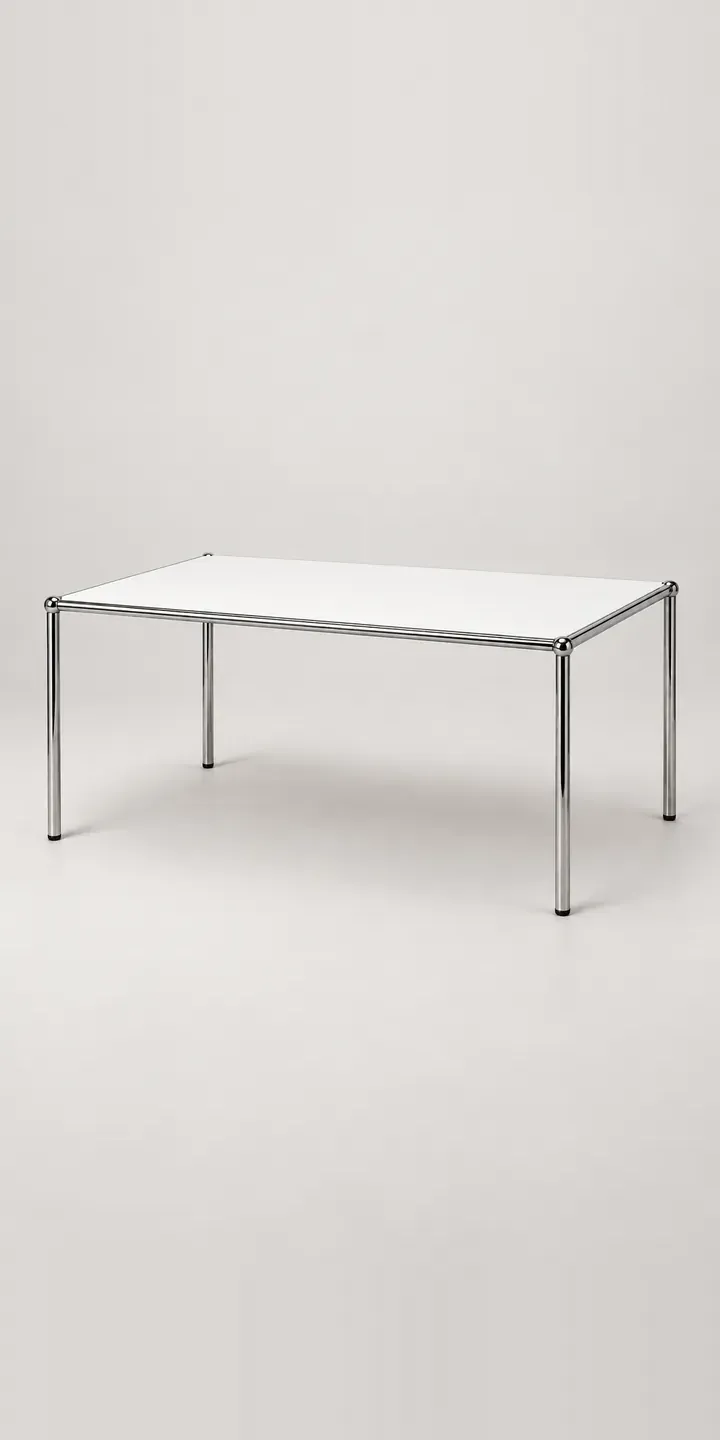
Chrome tubes, ball connectors and enamelled steel panels make this illustrative low cabinet a natural fit for a configurator. Choose a panel colour and a width of two, three or four bays.
System furniture like this is bought as a layout, not an object. The buyer is planning around a screen, a turntable and a pair of speakers, and needs the run to span the right width with a bay for each. Colour is the emotional choice. Graphite disappears in a dark media room, while steel blue or mustard turns the cabinet into the thing people notice first.
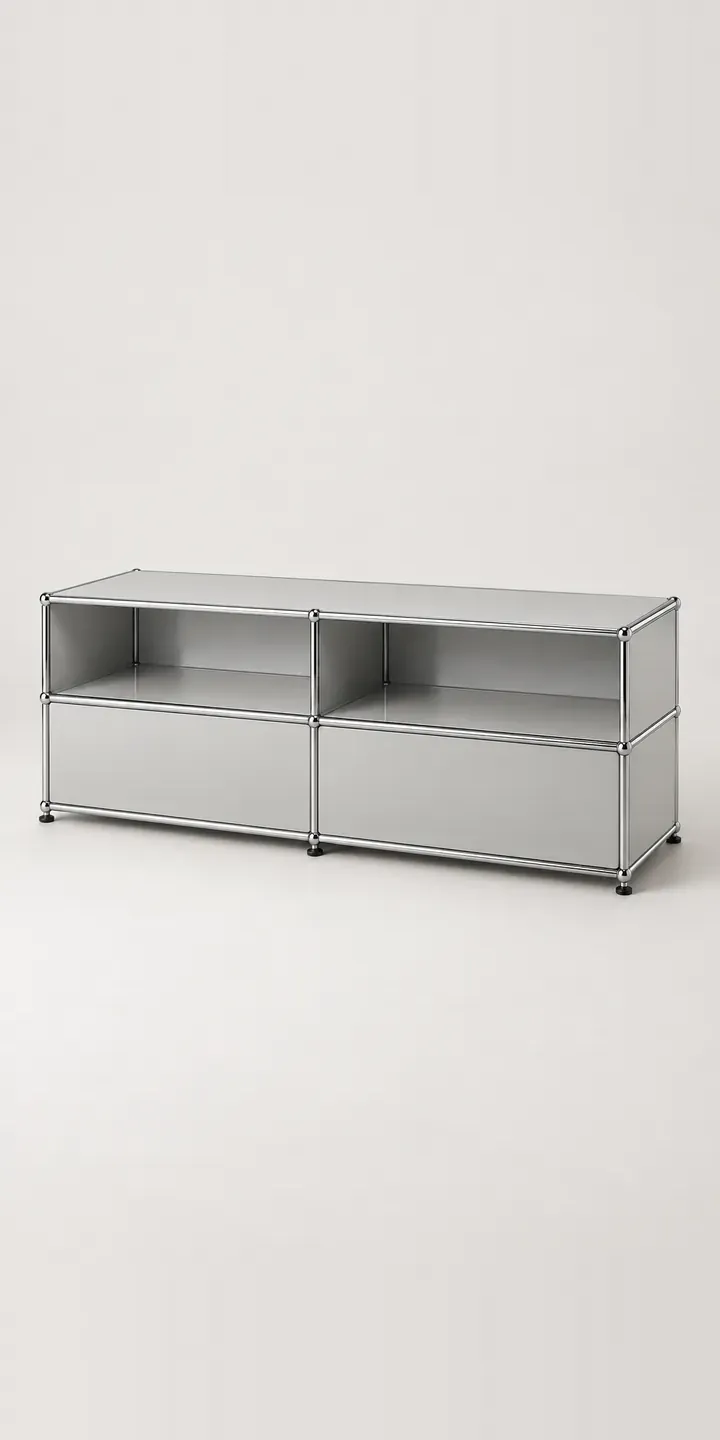
Furniture Configurator demo
Steel Low Cabinet
- Product
- Steel Low Cabinet
- Colour
- Light Grey
- Width
- 2 bays
Illustrative product. The design and images are generated examples, not a real model for sale.
What you can configure
Panel colour drives the image, with light grey, white, graphite and steel blue available from six. Width is chosen by bay count and appears in the summary, while the picture stays at one length for now. Bays matter here because each is a fixed module. The width of the run, the position of doors and the number of connectors all follow from that count.
- Colour: Light Grey, White, Graphite, Steel Blue
- Width: 2 bays, 3 bays, 4 bays
Why a configurator suits low cabinets
In a real modular system, the variant count stops being countable. Six panel colours across three widths is already eighteen cabinets, and every bay can take a different front, drawer or shelf. No retailer photographs that. Even counting the parts is error-prone. Most rely on a showroom and a specialist who sketches the layout by hand.
A configurator replaces the sketch. The customer builds the run themselves, sees the bays assembled, and gets a parts list priced component by component. For a dealer network, that list is the order: tubes, connectors and panels counted correctly, without the errors that come from re-keying a drawing. Pricing follows the same logic, so the quote matches the layout exactly.
Modular steel furniture also sells to returning customers who extend what they already own. A saved configuration lets them add a bay years later in the same colour. The original order reference is all they need to start. That makes the configurator part of the after-sale relationship, not just a front-end feature for first-time buyers.
How a production version would be built
Modular systems are where layered compositing or 3D earn their keep. Each bay, panel and connector is a component placed by rules on a grid, so the image is assembled from parts rather than photographed whole. The storage configurator demo shows the layout side of this in more detail. What the build needs from the manufacturer is the component list, panel colours, compatible sizes and pricing logic. Output is usually a parts list sent to a quote, a dealer or an ERP, rather than a single basket item.
Build sheet for this range
- Colours in the full range: 6 (4 shown in this demo)
- Width choices: 3
- Combinations to support: 6 × 3 = 18
- Images for one photograph per combination at 3 angles: 54
- Images if widths can be shown as separate layers, at 3 angles: 27
- Data each of the 18 combinations needs: a SKU or variant ID, price, stock or lead time, and any dimensions or specification that change
Questions about low cabinet configurators
Can the configurator produce a parts list for our dealers?
Every bay, tube, connector and panel can be counted from the layout, and the list travels with the quote request or goes straight into your ERP. Dealers receive an order they can pick from rather than a drawing to interpret, which is usually where modular furniture saves the most time.
Can customers mix panel colours within one cabinet?
They can, if your system allows it. Each panel becomes a selectable part, so a graphite cabinet could take a single mustard door. Rules decide whether that is permitted and how it is priced. This demo changes the whole cabinet at once, which is the simpler starting point.
How do you show gloss enamel panels accurately?
With careful lighting and a detail view. Gloss panels reflect their surroundings, so a render or photograph in a neutral studio gives a more honest colour than a styled interior shot. I usually pair the main image with a close-up of one panel edge inside the tube frame, which shows finish and build quality together.
Can a returning customer add a bay to a cabinet bought years ago?
Yes, provided the original configuration was saved or can be rebuilt from an order reference. They reopen it, add a bay in the same panel colour, and the configurator lists only the extra parts required. A one-off purchase becomes an extension sale.
More furniture configurator demos
All furniture configurator demos
A configurator for your low cabinets
This demo uses an illustrative product. If you sell low cabinets, I can build the same experience around your own range, photography and ordering process, connected to Shopify, WooCommerce or a quote workflow. I reply to enquiries within two UK working days.