A compact steel cabinet for beside the bed, built on chrome tubes with a drop-down door and a coin lock. It is an illustrative product, configurable by panel colour and by base: feet or castors.
Bedside storage is chosen for small daily things: a book, glasses, a phone at night. The buyer is checking height against the mattress, whether the door drops without hitting the bed frame, and how the cabinet sits with everything else in the room. Colour is the expressive part. White and light grey recede, while steel blue, mustard and green make a compact cabinet feel deliberate.
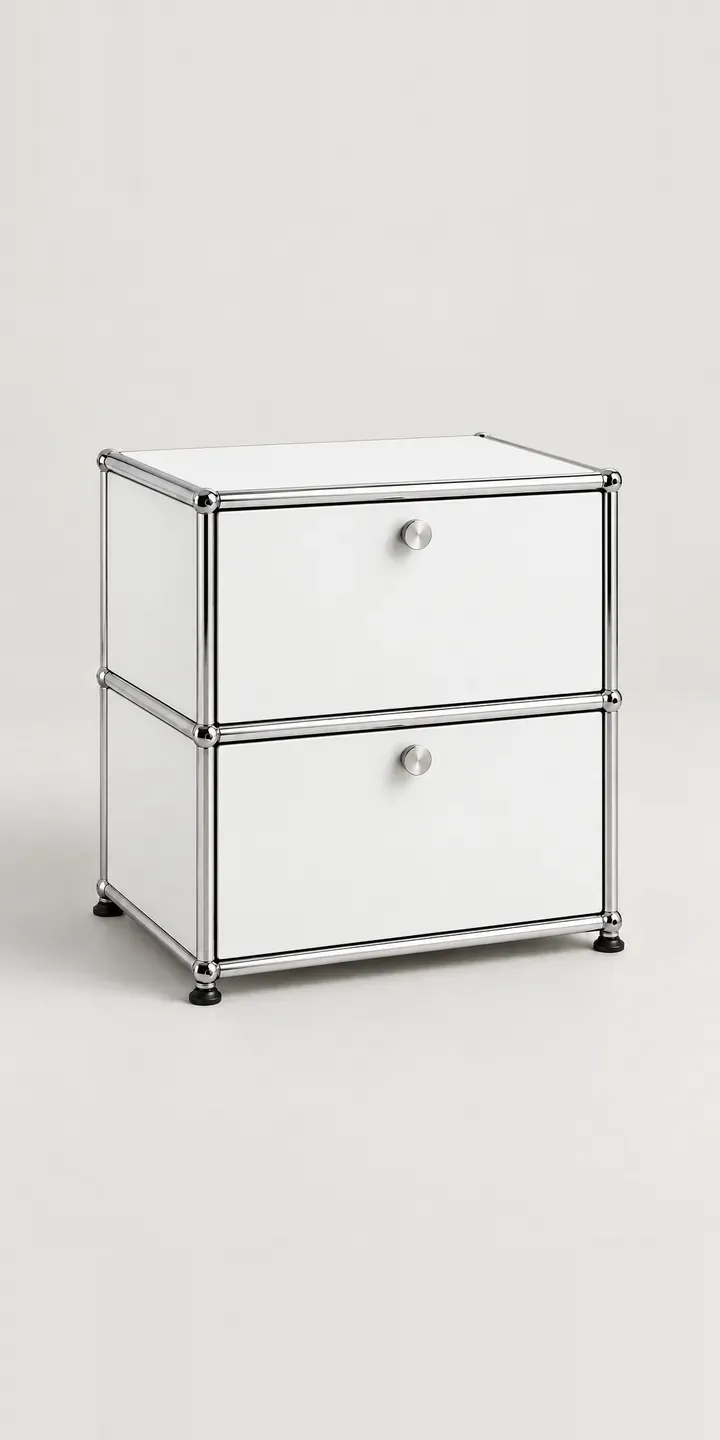
Furniture Configurator demo
Steel Bedside Cabinet
- Product
- Steel Bedside Cabinet
- Colour
- White
- Base
- Feet
Illustrative product. The design and images are generated examples, not a real model for sale.
What you can configure
Feet or castors is the less obvious choice in this demo. It is recorded in the summary while the picture stays on one base, yet it changes more than looks. Castors usually alter the overall height and let the cabinet roll out for cleaning; feet keep it fixed. Panel colours shown are white, graphite, light grey and steel blue, from six.
- Colour: White, Graphite, Light Grey, Steel Blue
- Base: Feet, Castors
Why a configurator suits bedside tables
Hotels are the commercial interest here. Design hotels buy bedside storage in quantities matched to room count, often specified alongside desks in the same finish. They need exact references for every room type. Twelve versions of one cabinet is manageable; a schedule across several room types is where errors creep in. A wrong base repeated across every room on a floor is an expensive mistake.
A configurator gives the hotel's designer or procurement team a way to fix colour and base per room type, save each build and send one structured quote. The lockable door matters to them, as does whether castors suit their floors and housekeeping routine. Those details travel with the configuration instead of getting lost in email.
For home buyers the cabinet is usually one of a pair. A configurator that defaults to two, and matches the panel colour to other pieces from the same system, reflects how people actually furnish a bedroom. Ordering the pair in one step also avoids two cabinets arriving from different batches.
How a production version would be built
As part of a modular steel system, this cabinet is best built from components: tube frame, ball connectors, panels and the chosen base, each rendered once and composited. The same parts library then serves larger units in the range. Panel colours, base options with their heights, lock details and contract certifications all live in the product data. Hotel projects go to a quote with quantities per room type, and retail orders to a basket. Clean product data is what makes a shared parts library work.
Build sheet for this range
- Colours in the full range: 6 (4 shown in this demo)
- Base choices: 2
- Combinations to support: 6 × 2 = 12
- Images for one photograph per combination at 3 angles: 36
- Images if bases can be shown as separate layers, at 3 angles: 24
- Data each of the 12 combinations needs: a SKU or variant ID, price, stock or lead time, and any dimensions or specification that change
Questions about bedside table configurators
Can hotel buyers specify different finishes for different room types?
Yes. Each room type is saved as its own build with a quantity, so suites might take graphite on feet while standard rooms take white on castors. The whole schedule goes in one quote request, and your project team receives a list it can price directly.
Does the configurator show the height difference between feet and castors?
It should, with the overall height for each base in the summary. For bedside storage that number decides whether the top lines up with the mattress. A small side view against a bed makes the difference obvious in a way two figures on their own do not.
Can it reuse the parts library from our larger steel cabinets?
Yes, and that is the main reason to build it from components. Tubes, connectors and panels are shared. Adding a bedside unit to an existing system configurator mostly means adding its rules and dimensions rather than commissioning a whole new photoshoot.
What does a configurator for a modular furniture system cost?
There is no fixed price. Cost depends on the number of components and panel colours, and whether 3D models already exist. Where orders go matters too: a basket, a quote or an ERP. I reply to enquiries within two UK working days with an initial view of scope.
More furniture configurator demos
All furniture configurator demos
A configurator for your bedside tables
This demo uses an illustrative product. If you sell bedside tables, I can build the same experience around your own range, photography and ordering process, connected to Shopify, WooCommerce or a quote workflow. I reply to enquiries within two UK working days.