This demo pairs an illustrative rangefinder body with a choice of finish and a single prime lens. The top plate is deliberately sparse, so the finish and the focal length carry most of the character.
Rangefinder buyers are choosing how they want to see, more than what they want to own. A 28 mm lens suits close street work, 35 mm is the everyday reportage length, and 50 mm is quieter and more selective. The finish is a longer-term decision. Black paint wears through at the edges with use, raw brass darkens and patinates, and chrome stays bright. People buying at this level often know which of those they want the camera to look like in ten years.
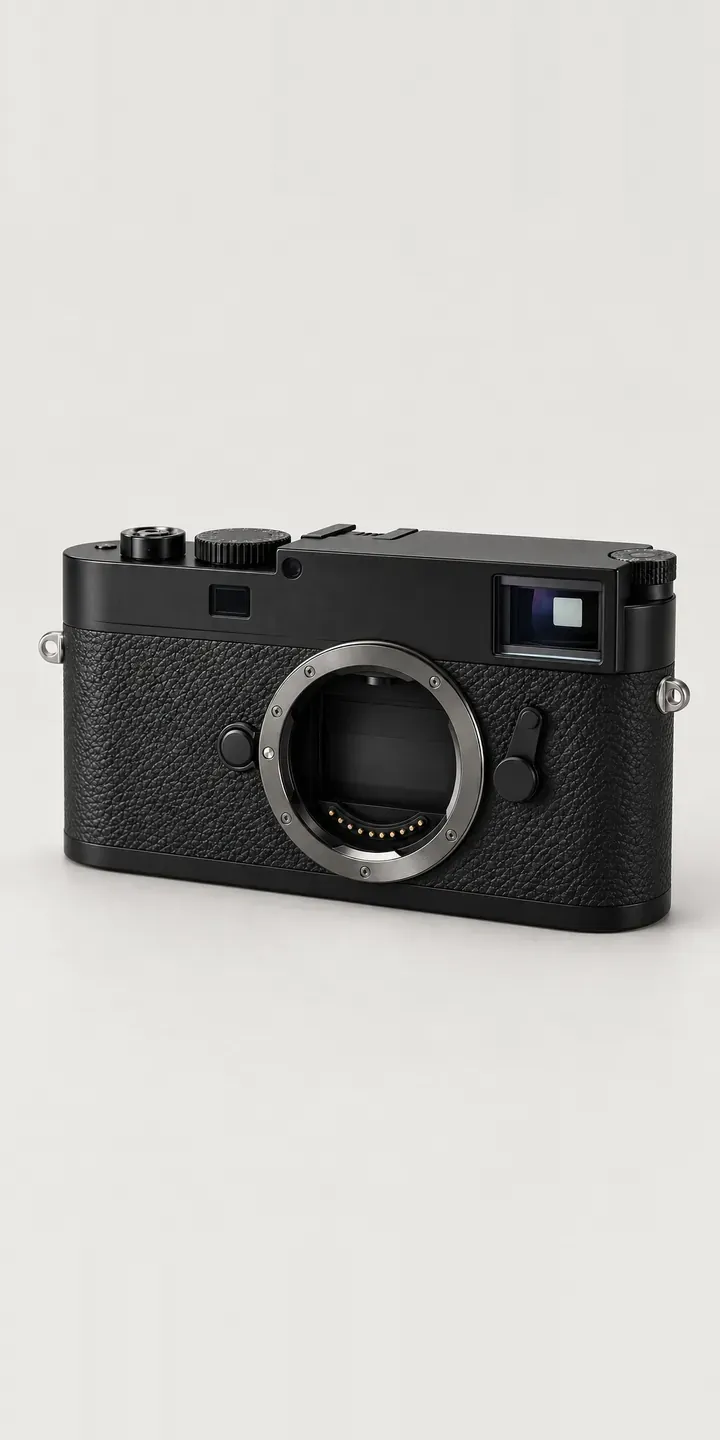
Cameras Configurator demo
Rangefinder Camera
- Product
- Rangefinder Camera
- Colour
- Black Paint
- Lens
- 28 mm
Illustrative product. The design and images are generated examples, not a real model for sale.
What you can configure
Four of the six finishes are shown: black paint, silver chrome, raw brass and olive. Each swap keeps the twin rangefinder windows and flat top plate in place, so the comparison is purely about surface. The lens selector offers 28 mm, 35 mm or 50 mm. On a rangefinder the focal length also determines which frameline appears in the viewfinder, so it shapes the shooting experience as well as the picture.
- Colour: Black Paint, Silver Chrome, Raw Brass, Olive
- Lens: 28 mm, 35 mm, 50 mm
Why a configurator suits cameras
Rangefinder buyers notice details other camera shoppers skip, and eighteen finish and lens pairings give them plenty to notice. They want to know whether a chrome lens on a black paint body looks deliberate or mismatched. A dealer cannot answer that with a single hero image and a list of finish names.
This is also a slow, considered purchase. Buyers save builds, compare them over weeks and sometimes wait for a specific finish to be allocated. A configurator remembers the build and lets the buyer pass it to a dealer. That turns a slow decision into a lead the shop can follow up properly.
Small-batch finishes such as raw brass or olive are often produced in limited runs or made to order. Taking reservations against a configured build gives the maker a clear picture of demand per finish and per lens before anything is plated or painted. For dealers holding allocation, it also records who asked first. Over time it shows which focal length sells best in each finish.
How a production version would be built
For a rangefinder I would photograph each finish against a consistent studio set, then add the three lenses as separate layers. Lens barrels often come in black and silver, so the data model should record which barrel ships with which body rather than assume a match. A second image showing worn black paint or aged brass is worth commissioning, because it answers the question buyers of these finishes really ask. Builds can be saved and shared as links, so a buyer can send the exact pairing to a dealer before committing.
Build sheet for this range
- Colours in the full range: 6 (4 shown in this demo)
- Lens choices: 3
- Combinations to support: 6 × 3 = 18
- Images for one photograph per combination at 3 angles: 54
- Images if lenses can be shown as separate layers, at 3 angles: 27
- Data each of the 18 combinations needs: a SKU or variant ID, price, stock or lead time, and any dimensions or specification that change
Questions about camera configurators
Is there a way to show how black paint or raw brass will age?
Yes, as an extra view rather than a separate finish. A photographed or rendered worn state beside the new one sets honest expectations. It is particularly useful for raw brass, which can look very different after a few months of handling. Buyers who choose these finishes for the way they age tend to value seeing it first.
Can we restrict which lens finishes go with which body?
Yes. Pairing rules live in the product data. If the 28 mm lens is only made in black, the configurator shows only that barrel when it is selected, and can say why. Dealers then receive orders that can actually be fulfilled, rather than combinations someone has to email back about.
Do rangefinder buyers really configure online, or do they want to handle the camera first?
Many will still want to hold one. The configurator does not replace that; it prepares for it. A buyer arrives at the shop with a saved build, or books a viewing for a specific finish and lens. For buyers far from a dealer, accurate images of each pairing may be the only reliable reference they have.
Could the configurator handle engraving on the top plate?
Yes. A text field with character limits and a preview overlay on the top plate is straightforward in an image-based build. The engraving text, typeface and position travel with the quote, so the workshop receives exact instructions. An approval step can be added if each engraving is checked by hand before production.
More camera configurator demos
A configurator for your cameras
This demo uses an illustrative product. If you sell cameras, I can build the same experience around your own range, photography and ordering process, connected to Shopify, WooCommerce or a quote workflow. I reply to enquiries within two UK working days.