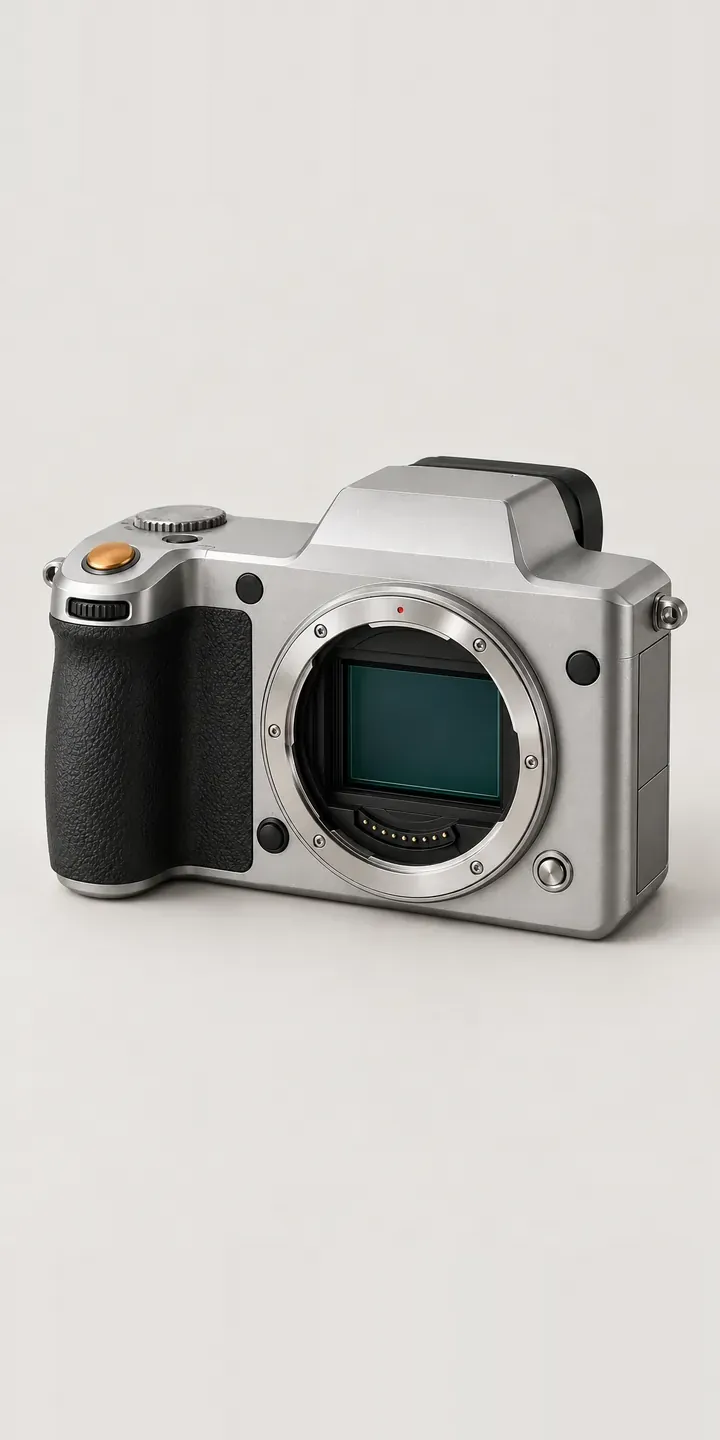
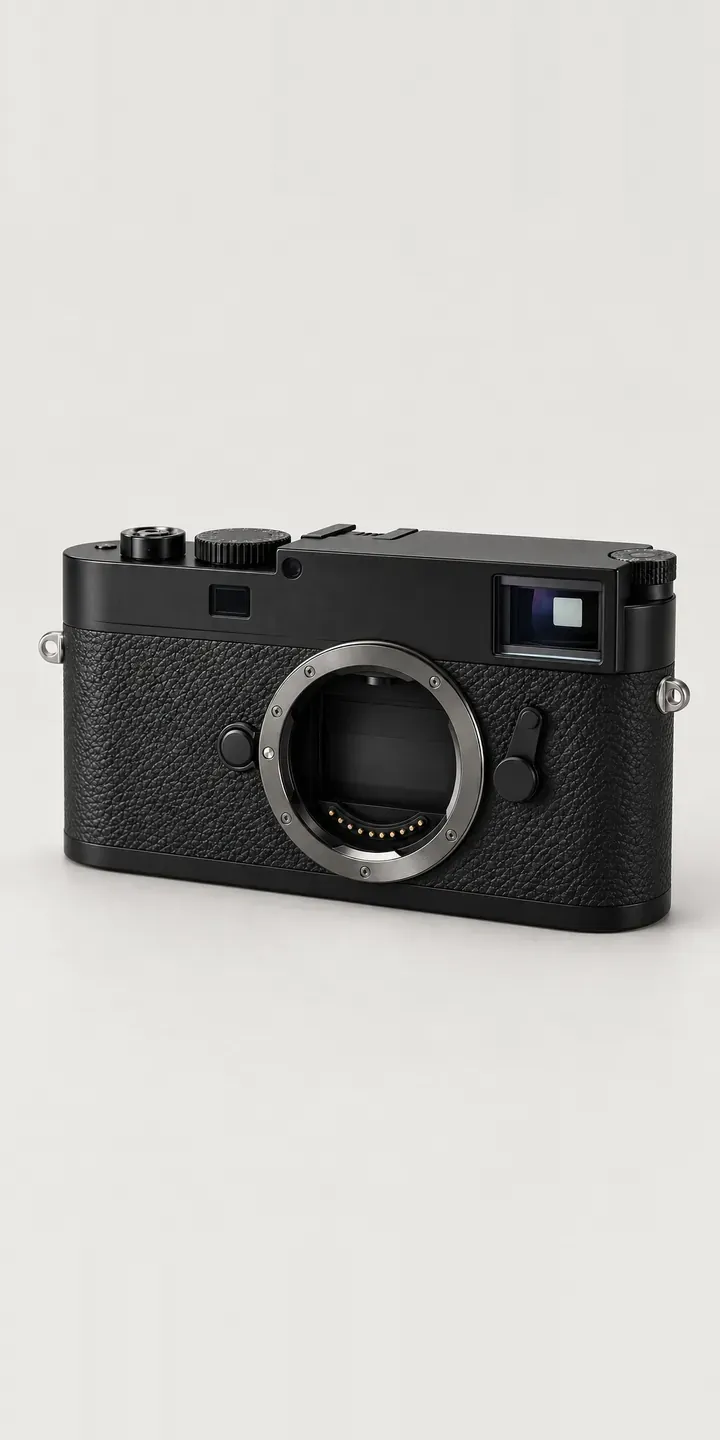
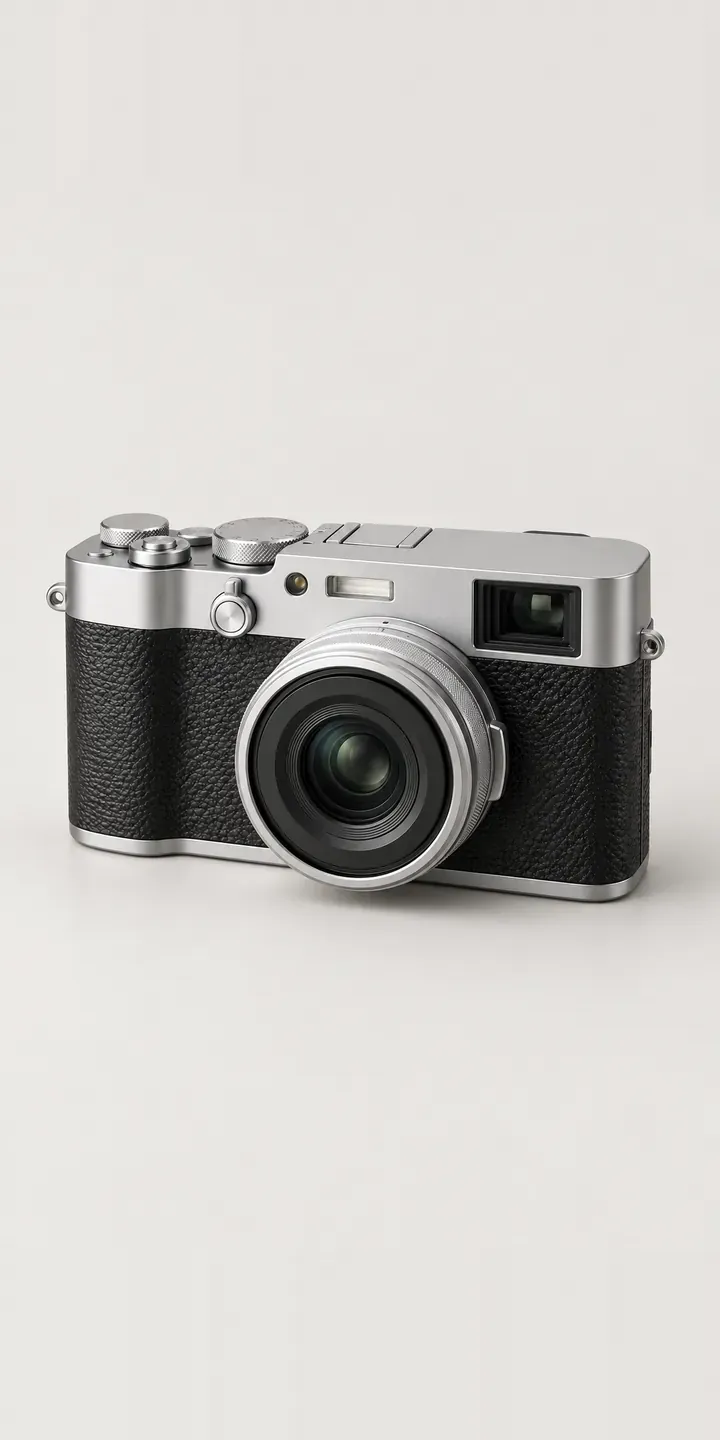
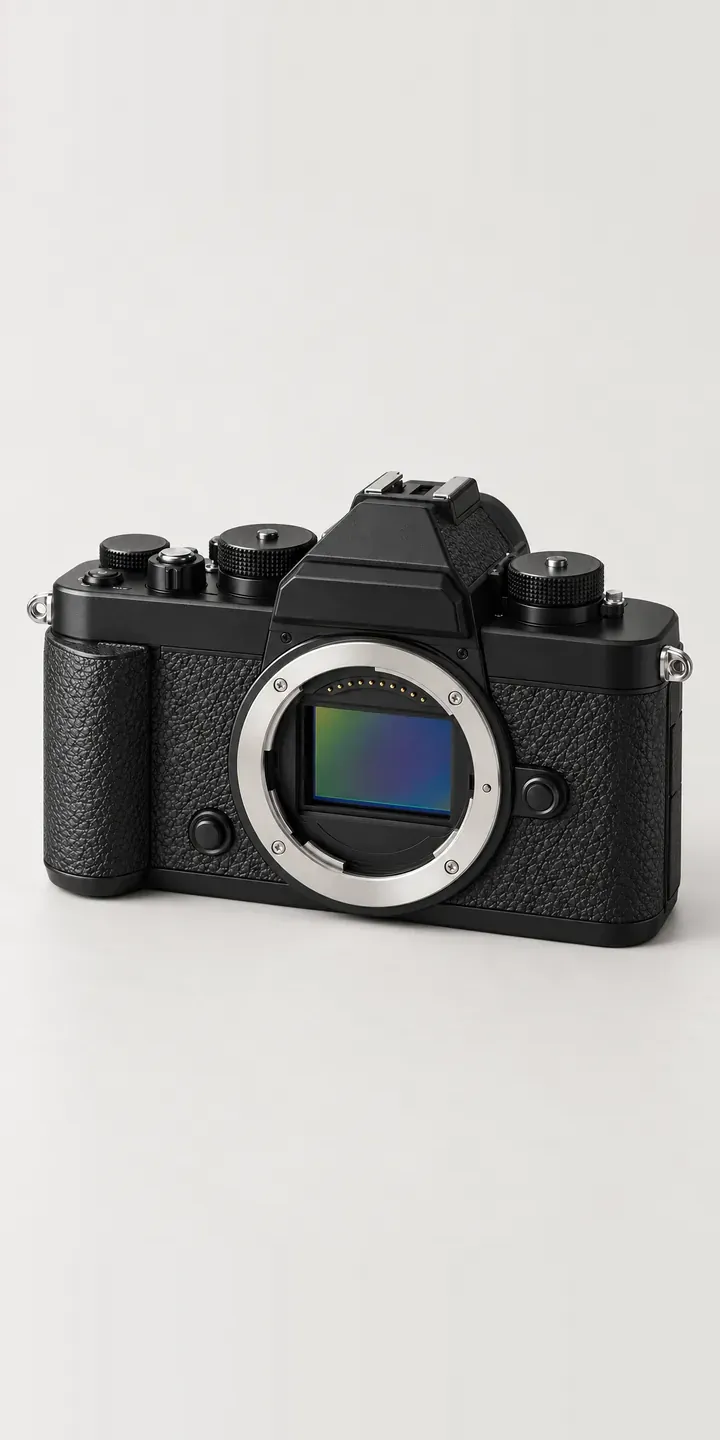
An illustrative medium-format camera, shown in four of six finishes with an optional prime lens. The configurator records the body finish and lens, then sends the build as a quote request rather than a basket order.
Medium format is a system purchase made slowly. The buyer is a commercial, studio or fine-art photographer weighing file size, tonal depth and the lens range they will need over several years. Body colour is unusual in this category, so finishes such as titanium or champagne signal something specific: a camera meant to be seen as well as used. For the retailer, each enquiry is high value and usually involves a conversation before money moves.
Cameras Configurator demo
Medium Format Camera
- Product
- Medium Format Camera
- Colour
- Silver
- Lens
- Body Only
Illustrative product. The design and images are generated examples, not a real model for sale.
What you can configure
The demo changes the body between silver, matte black, titanium and champagne, keeping the flat top plate, central hot shoe and large grip unchanged. The lens option covers body only, a 38 mm or a 55 mm prime. On medium format those focal lengths give a wider view than the same numbers on full frame, so the selector should say so in plain terms. The lens is listed in the summary, not yet drawn on the body.
- Colour: Silver, Matte Black, Titanium, Champagne
- Lens: Body Only, 38 mm, 55 mm
Why a configurator suits cameras
The commercial case here is about qualifying leads, not cutting basket abandonment. A medium-format sale often includes lenses, a trade-in, a demo appointment and sometimes finance. A configured enquiry tells the dealer the finish, lens and intent before the first call, which makes that call shorter and better informed.
Finishes such as champagne or titanium may only be built to order, with lead times that change by batch. Show the lead time against each finish at the point of choice. It prevents the most awkward conversation in high-end retail: explaining after the deposit that the colour will take months. A clear date also lets the buyer plan a shoot around delivery.
There is also a system-building angle. Someone choosing body only is probably adding to lenses they already own, and may be trading in an older body. Someone choosing the 38 mm is a likely buyer of the 55 mm later. Recording those builds gives the retailer a clean list of who might want which lens next, which beats a generic newsletter.
How a production version would be built
With six finishes and three lens states, a layered image approach is sensible. Each body is captured once and each lens is a layer, giving nine images for eighteen builds. For a premium product I would consider rendering from CAD rather than photographing, because champagne and titanium are hard to light consistently. The data to gather is finish names, lead times, lens compatibility and any dealer-only options. Quotes route to the nearest authorised dealer or a central sales inbox, and can sync to a CRM. A 3D configurator is worth considering if buyers want to inspect the body from every side.
Build sheet for this range
- Colours in the full range: 6 (4 shown in this demo)
- Lens choices: 3
- Combinations to support: 6 × 3 = 18
- Images for one photograph per combination at 3 angles: 54
- Images if lenses can be shown as separate layers, at 3 angles: 27
- Data each of the 18 combinations needs: a SKU or variant ID, price, stock or lead time, and any dimensions or specification that change
Questions about camera configurators
Can enquiries be routed to the nearest authorised dealer?
Yes. The quote form can take a postcode or region and send the build to the right dealer's inbox, with a copy to the brand. Each dealer sees only their own enquiries. That stops a high-value lead sitting in a shared mailbox while someone works out who covers that area.
Should we use photography or renders for metallic finishes like champagne and titanium?
Renders usually win for metallic finishes if CAD data exists. They give identical angles and controllable reflections, which photography struggles with on satin metal. I still check renders against physical samples, since metallic tints can drift towards yellow or grey. Photography can work, but it needs a very disciplined lighting set.
Can the configurator show lens equivalents for photographers moving up from full frame?
Yes. A short line under each lens can give the approximate full-frame equivalent field of view, supplied by the manufacturer. Many medium-format buyers are moving up from full frame, so that translation helps them choose between the two primes without leaving the page to look it up.
How long does a camera configurator take to build?
It depends on the number of models and finishes, and whether usable images already exist. A single-model image build with existing photography is a short project; one needing new renders and dealer routing takes longer. I reply to enquiries within two UK working days with a realistic timeline for your range.
More camera configurator demos
A configurator for your cameras
This demo uses an illustrative product. If you sell cameras, I can build the same experience around your own range, photography and ordering process, connected to Shopify, WooCommerce or a quote workflow. I reply to enquiries within two UK working days.