Feather-wrapped seat cushions, welted seams and slim steel legs define this illustrative corner sectional. Pick a fabric colour and an L or U layout, and the summary records the build for a quote.
Sectionals are planned around a room before they are chosen from a page. The buyer is working out which wall it backs onto, where the corner falls and which side the return should sit. Colour matters, but it comes second. Oatmeal suits a bright beach house with pale boards; charcoal or olive anchors a busy family den that sees daily wear.
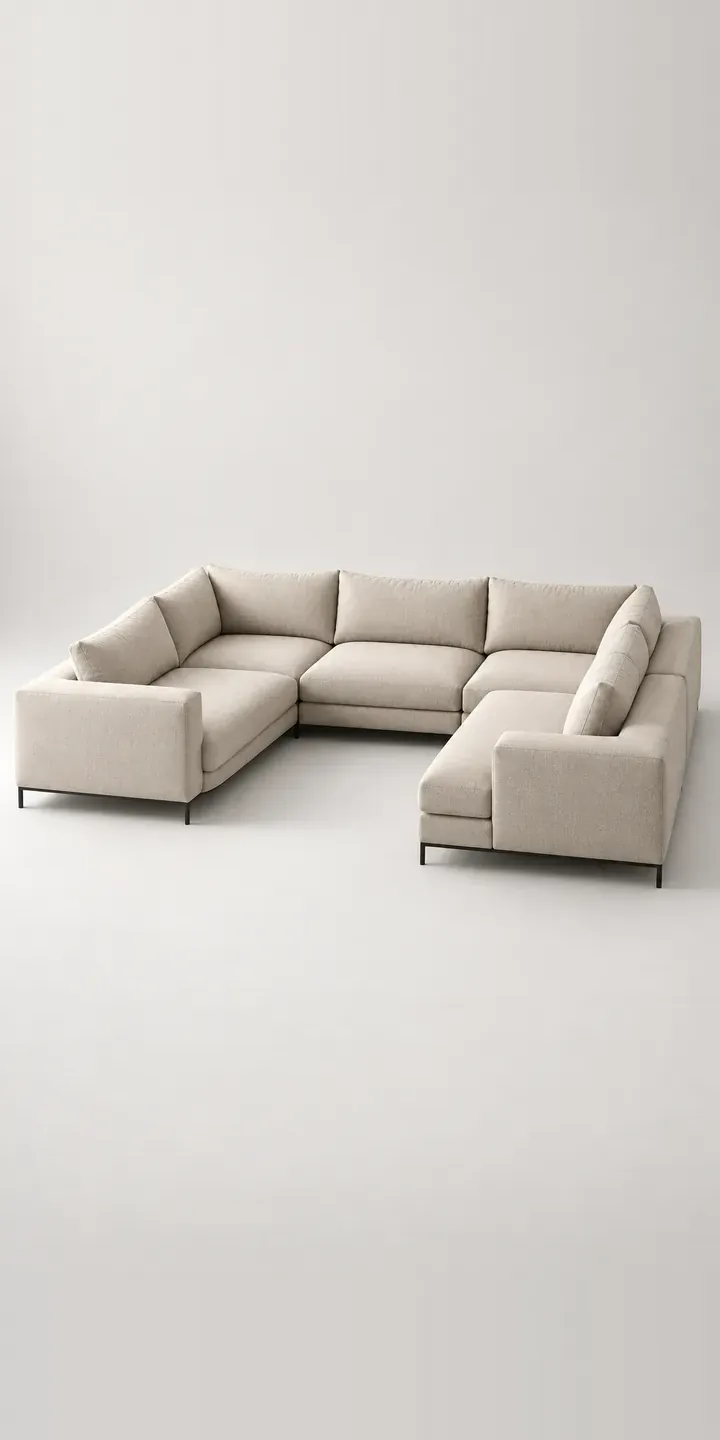
Furniture Configurator demo
Corner Sectional
- Product
- Corner Sectional
- Colour
- Oatmeal
- Layout
- L-shape
Illustrative product. The design and images are generated examples, not a real model for sale.
What you can configure
In this demo the image stays on one arrangement while you choose L or U in the summary. Fabric swatches cover oatmeal, charcoal, slate blue and olive, four of six colours. A production build would draw each layout, and for an L-shape it would also ask which side the corner sits on. A left-hand and a right-hand unit are different products, built from different modules.
- Colour: Oatmeal, Charcoal, Slate Blue, Olive
- Layout: L-shape, U-shape
Why a configurator suits sofas
Handing is the most common ordering error on corner sofas. Some sites describe it from the sitter's point of view, others from the viewer's, and buyers guess. Six colours in two layouts looks like twelve sofas; add left and right versions of the L-shape and it becomes eighteen, before arm styles or extra seats.
A configurator removes the ambiguity by showing a plan view. The buyer sees the shape against their room, and the order carries an exact module list. On a made-to-order sectional with a long lead time, a corner on the wrong side is an expensive mistake to unpick. The workshop builds what the module list says, so it has to be right.
Sectionals are also the largest piece most households buy, so delivery access matters. Module dimensions in the configurator let the buyer check doors and stairwells before ordering. Retailers with showrooms can open the same saved layout in store, once the customer has sat on a sample. That saves a second explanation.
How a production version would be built
A sectional suits a modular build. Each seat, corner and return unit is rendered once per colour, from the front and from above, then assembled by layout rules. That covers L, U and both handings without photographing every arrangement. Module dimensions, fabric codes and permitted combinations are the inputs that matter. The same module approach underpins any wider furniture configurator, and the order can go to a Shopify basket or to a quote carrying the full module list. Plan and front views should share one fabric image set.
Build sheet for this range
- Colours in the full range: 6 (4 shown in this demo)
- Layout choices: 2
- Combinations to support: 6 × 2 = 12
- Images for one photograph per combination at 3 angles: 36
- Images if layouts can be shown as separate layers, at 3 angles: 24
- Data each of the 12 combinations needs: a SKU or variant ID, price, stock or lead time, and any dimensions or specification that change
Questions about sofa configurators
How does the configurator handle left-hand and right-hand corner sofas?
It shows a plan view and lets the buyer flip the corner, with a short note defining handing as seen when facing the sofa. The order then records the exact modules, not just the word left. That single visual step removes the most frequent ordering mistake on corner sofas.
Can customers check the sofa will fit through their door?
Yes. Each module's width, depth and height sit in the product data, so the configurator can list the largest single piece alongside the overall footprint. Buyers compare it with their door and stair measurements before ordering, which is exactly where many large-sofa returns begin.
Do feather-wrapped cushions need explaining in the configurator?
It helps. Feather-wrapped seats look relaxed and need regular plumping, which some buyers love and others find tiresome. A brief comfort and care note beside the fabric choice sets expectations and heads off complaints that the sofa looks different after a few weeks.
Can a U-shape and an L-shape be built from the same images?
They can, if the modules are imaged separately. A U-shape is an L-shape with another corner and return, so the same seat and corner images are reused. Layout rules decide where each module sits, which is far cheaper than photographing every arrangement as a finished sofa.
More furniture configurator demos
All furniture configurator demos
A configurator for your sofas
This demo uses an illustrative product. If you sell sofas, I can build the same experience around your own range, photography and ordering process, connected to Shopify, WooCommerce or a quote workflow. I reply to enquiries within two UK working days.