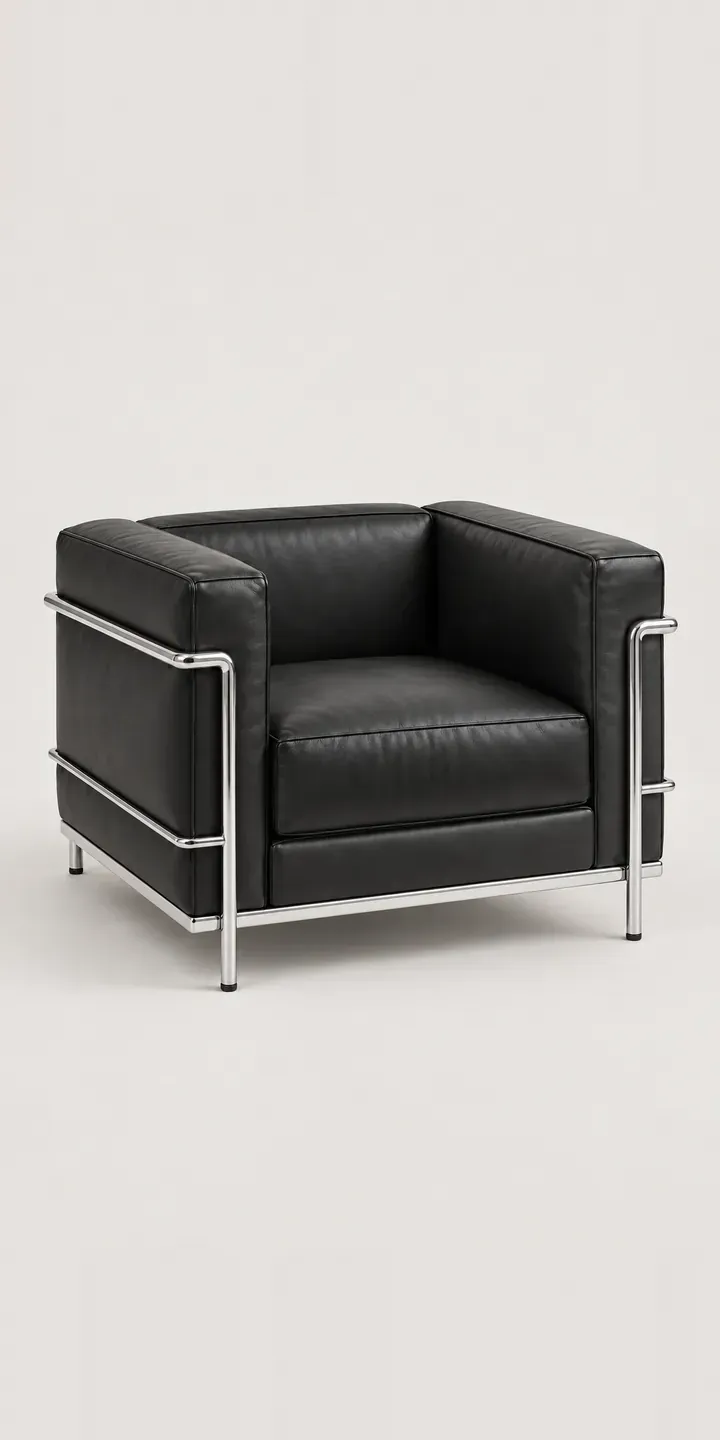
This illustrative cube armchair has a polished chrome tube cage holding loose leather cushions. Pick a leather colour and a size, whether armchair, 2-seat or 3-seat, and the summary records the piece.
Pieces like this are bought for the leather and the proportion. The frame is fixed, so the hide is the decision. Black is the classic, cognac warms a cool modernist room, and white is beautiful in a gallery but nervous in a family home. Many buyers want a matching set, an armchair with a sofa, so they are choosing a colour they will see across several pieces.
Furniture Configurator demo
Cube Armchair
- Product
- Cube Armchair
- Colour
- Black
- Size
- Armchair
Illustrative product. The design and images are generated examples, not a real model for sale.
What you can configure
Leather is the variable here, as the chrome cage never changes. Black, cognac, white and dark brown are available, with grey and oxblood completing six. Check the right-angle chrome corner with its joint, and the stitched cushion edge pressed against the steel. Those two details show how each hide sits in the frame. Choosing armchair, 2-seat or 3-seat updates the summary only. A production version would show each width in proportion.
- Colour: Black, Cognac, White, Dark Brown
- Size: Armchair, 2-seat, 3-seat
Why a configurator suits armchairs
Leather furniture is usually sold by grade as well as colour. A retailer may offer several hides at different prices, each with its own palette. The configurator can group colours by grade and show the difference in texture and finish, which helps a buyer understand why one black costs more than another. Without that, grade is a line on a spec sheet few people read.
Sets add complexity. Armchair, 2-seat and 3-seat in six leathers is eighteen products, and contract buyers often order several of each. Hotel lobbies and office receptions need matching pieces cut from consistent leather. A configurator can hold a set in one request, which helps the supplier allocate hides together.
White and pale leathers need extra reassurance. Buyers want to know about protection, cleaning and how the leather ages. Care information beside the swatch, rather than in a PDF, answers that at the moment of choice. It also reduces cancellations after the order has reached the workshop.
How a production version would be built
For leather seating, image-based 2D works well when the range is modest. Each leather is photographed or rendered on the armchair, with the frame identical in every image. Larger sizes can reuse the same leather material, so adding a 2-seat or 3-seat means new renders rather than a new shoot. Leather names, grades, codes, sizes and lead times form the dataset. Contract orders go to a quote with quantities per piece, and retail orders go to the basket on WooCommerce or Shopify. The seating configurator demo shows a related approach.
Build sheet for this range
- Colours in the full range: 6 (4 shown in this demo)
- Size choices: 3
- Combinations to support: 6 × 3 = 18
- Images for one photograph per combination at 3 angles: 54
- Images if sizes can be shown as separate layers, at 3 angles: 27
- Data each of the 18 combinations needs: a SKU or variant ID, price, stock or lead time, and any dimensions or specification that change
Questions about armchair configurators
Can the configurator group leathers by grade?
Yes. Each leather sits in a grade, and the configurator shows grades as tabs or filters with a short explanation of the difference, such as protected or aniline. Pricing logic can follow the grade. Customers then compare like with like and understand the trade-off between a softer, more natural leather and an easier-care one.
Can a hotel order matching armchairs and sofas in one request?
That is a typical contract use. The buyer configures each piece, sets quantities and sends the set as one quote. Your team receives a structured list with leather, size and quantity per line. That helps you plan hide allocation, so a lobby set comes from consistent leather rather than separate batches.
How do you photograph polished chrome without distracting reflections?
Control the environment. Chrome mirrors the studio, so I use a consistent set of reflectors or a rendered environment that gives clean, even highlights. The same reflections then appear in every colour, which keeps the frame looking identical as the leather changes. It is one reason rendering often beats photography for chrome furniture.
Can customers see how pale leather wears before buying?
Show a care panel beside pale colours with plain advice on cleaning and protection, plus a close-up of the grain. If you sell a protection kit, the configurator can suggest it for white. Being upfront avoids disappointment and the returns that follow when a pale leather marks quickly.
More furniture configurator demos
All furniture configurator demos
A configurator for your armchairs
This demo uses an illustrative product. If you sell armchairs, I can build the same experience around your own range, photography and ordering process, connected to Shopify, WooCommerce or a quote workflow. I reply to enquiries within two UK working days.