An asymmetric spun-metal shade, tilted on its pivot, gives this illustrative table lamp a directional character, and a small switch sits on its slim stem. Colour and plug type are selectable, and the finished build goes to the retailer as a quote request.
Directional table lamps are bought for a specific job, such as lighting a sketchbook, a reading chair or one corner of a desk. Buyers want to know which way the light falls and how far the shade can tilt. Colour carries more weight than usual too, because a spun shade in dusty blue or dark green is often the most saturated object on a pale desk.
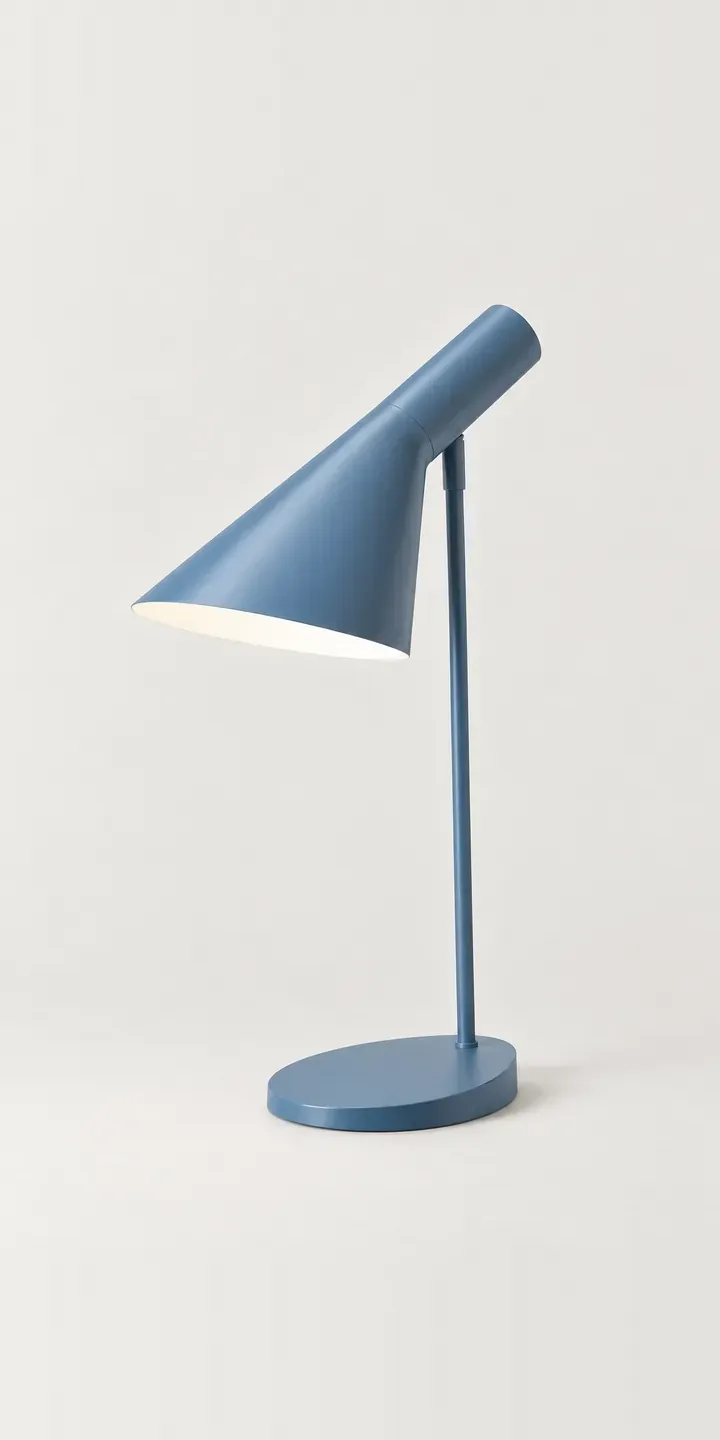
Lighting Configurator demo
Angled Table Lamp
- Product
- Angled Table Lamp
- Colour
- Dusty Blue
- Plug
- UK
Illustrative product. The design and images are generated examples, not a real model for sale.
What you can configure
Four colours feature in the demo: dusty blue, white, black and dark green. Polished brass and pale rose complete the six. The shade sits at the same tilt in every image, so only the colour changes between swatches. Plug is UK, EU or US, recorded in the summary for the order. A full build would add the shade's inner face, since the interior finish affects how warm the reflected light looks.
- Colour: Dusty Blue, White, Black, Dark Green
- Plug: UK, EU, US
Why a configurator suits table lamps
Brands that make a lamp like this often sell through stockists in several countries as well as direct. Each stockist needs the right plug and wants to see the full colour range before placing a seasonal order. A configurator gives wholesale buyers the same view as retail customers, with trade terms and minimum quantities handled in the quote.
Polished brass and pale rose are the hardest finishes in this range to photograph. Brass reflects everything in the studio, and pale rose can wash out towards grey. If the configurator shows them under the same controlled light as the painted colours, buyers compare like with like. Six finishes on three plugs give eighteen SKUs that look like six products.
The pivot creates its own return risk. A buyer who expected the shade to point down onto the desk, and finds it angled sideways, will be disappointed. A short sequence showing the tilt range answers that question on the page, before the lamp is boxed.
How a production version would be built
Plan on one image per finish at a fixed tilt. Add a short set of tilt views in one colour and a close-up of the shade interior. Plug type sits in the data and maps each finish to three SKUs. Wholesale stockists log in to see trade terms and order by market, so a French stockist sees EU plugs by default. Finishes, SKUs, tilt range and dimensions are the data to gather. Retail orders use the Shopify or WooCommerce basket. For a range-wide view, see the lighting product configurator demo.
Build sheet for this range
- Colours in the full range: 6 (4 shown in this demo)
- Plug choices: 3
- Combinations to support: 6 × 3 = 18
- Images for one photograph per combination at 3 angles: 54
- Images if plug types can be shown as separate layers, at 3 angles: 27
- Data each of the 18 combinations needs: a SKU or variant ID, price, stock or lead time, and any dimensions or specification that change
Questions about table lamp configurators
Can overseas stockists order through the same configurator as retail customers?
Yes. A trade login can switch the configurator into wholesale mode, showing trade terms and minimum quantities and ending in an order request. The stockist's country sets the default plug. Retail customers see the normal basket, so one set of product data serves both channels without duplicate listings.
Can the configurator show the inside of the shade?
Yes, with a close-up view per finish. On a spun-metal shade the interior is often a different finish from the exterior, and it changes the tone of the light. Buyers looking at polished brass, in particular, want to know whether the inside is brass too or a painted white.
How do we show the tilt range of the shade?
Three images in one colour usually cover it: shade pointing down, level and fully raised. They can sit as a small strip under the main image or behind a slider. The demo shows a single tilt, but the shape is identical across colours, so the extra views only need producing once.
Is it worth photographing polished brass separately from the painted colours?
Yes. Reflective metal needs different lighting from matte paint, usually large diffused sources and careful control of what the shade reflects. Shot in the same setup as the painted shades, brass tends to look dark or patchy. I would plan it as its own small shoot with the same camera position.
More lighting configurator demos
All lighting configurator demos
A configurator for your table lamps
This demo uses an illustrative product. If you sell table lamps, I can build the same experience around your own range, photography and ordering process, connected to Shopify, WooCommerce or a quote workflow. I reply to enquiries within two UK working days.