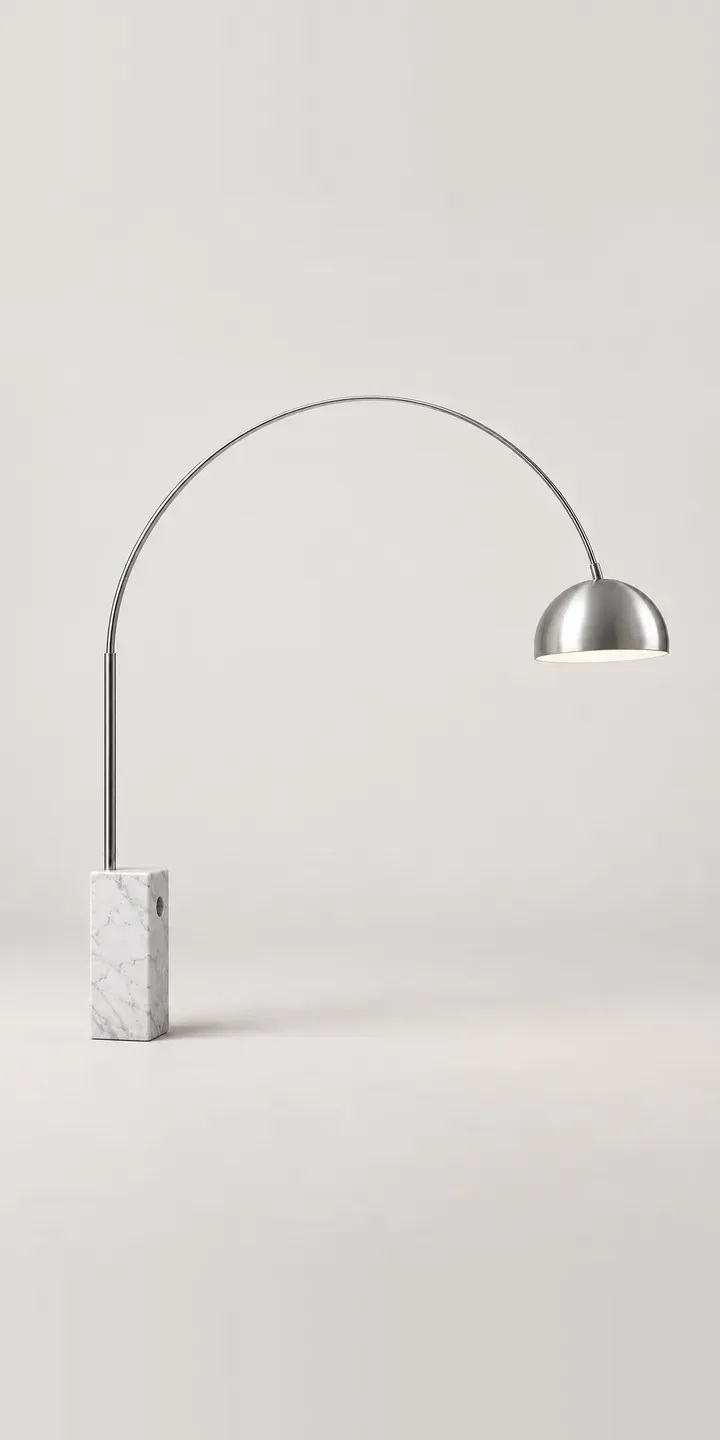
Solid stone at the bottom, a polished arm sweeping up and over the sofa: that is this illustrative curved floor lamp. Choose a finish pairing and a switch type.
A lamp like this is bought as a piece of furniture. The base is the heaviest and most visible part, so buyers judge it beside a coffee table, rug and sofa rather than as a light. They are also deciding how they will use it every evening. A foot switch suits simple on and off; a dimmer suits a shade that hangs low over the seating and is used for both reading and a softer glow.
Lighting Configurator demo
Curved Floor Lamp
- Product
- Curved Floor Lamp
- Colour
- Steel & Marble
- Switch
- Foot
Illustrative product. The design and images are generated examples, not a real model for sale.
What you can configure
The finishes here are pairings rather than single colours. Steel with marble, brass, matte black and travertine are shown, with green marble and copper completing the set. Each image keeps the arm's sweep identical, so the material is the only difference. Switch type, foot or dimmer, is chosen alongside and listed in the summary. It does not change the picture; a close-up of each switch would be added in production.
- Colour: Steel & Marble, Brass, Matte Black, Travertine
- Switch: Foot, Dimmer
Why a configurator suits floor lamps
Natural stone makes every base slightly different. Marble veining and travertine pitting vary from block to block, so the lamp that arrives will not match the photograph exactly. Saying so clearly, with a few example bases, is better than handling the return. A configurator gives that explanation a natural place, right beside the finish choice.
Stone bases are also heavy and costly to ship twice. Once a lamp has gone out by two-person courier, a return can wipe out the margin on the sale. The fewer buyers who change their mind about travertine versus marble after delivery, the better, and comparing every pairing under the same light helps them choose correctly first time.
Switch type is a small option with a large effect on satisfaction. A dimmer suits a lamp that hangs over seating and is used for reading as well as evening light. A foot switch is simpler and suits someone who wants one setting. Recording the choice as a structured option means the warehouse ships the right version, rather than relying on a note in an order comment.
How a production version would be built
Layering is natural for this lamp. The arm and shade are rendered once per metal, with the base as a separate layer per stone. A new combination then needs one new image rather than a full set. The retailer supplies the metal and stone options, which pairings are allowed, base weight and dimensions for delivery, and switch codes. Stone variation is best shown with a small gallery of real bases from stock. Orders can go to a basket, with the delivery method set automatically from the base weight.
Build sheet for this range
- Colours in the full range: 6 (4 shown in this demo)
- Switch choices: 2
- Combinations to support: 6 × 2 = 12
- Images for one photograph per combination at 3 angles: 36
- Images if switches can be shown as separate layers, at 3 angles: 24
- Data each of the 12 combinations needs: a SKU or variant ID, price, stock or lead time, and any dimensions or specification that change
Questions about floor lamp configurators
How do we show that every marble or travertine base is slightly different?
Show the configured image, then a small strip of photographs of real bases from stock. A short line explaining that veining and pitting vary sets expectations honestly. Some retailers let buyers reserve a specific base from those photographs, which suits higher-priced pieces and removes the surprise entirely.
Can customers mix any metal with any stone, or only set pairings?
Either. If the factory makes fixed pairings, the configurator offers those as finishes, as this demo does. If metal and stone are chosen independently, it shows two rows of swatches and hides any combination you do not make. The layered images handle both approaches without extra work.
Can a configurator explain the difference between a foot switch and a dimmer?
Yes. A short note beside each option, with a close-up image, is usually enough. A foot switch gives simple on and off; a dimmer adjusts the light over a sofa in the evening. If the dimmer needs a particular bulb, the configurator can say so and add a compatible one.
Can delivery be worked out from the weight of the stone base?
Yes. Base weight for each stone sits in the product data, so the configurator can choose the delivery method automatically. Lighter bases might go by standard courier and heavier ones by two-person delivery. The buyer sees the delivery option before checkout, which avoids surprises and failed deliveries.
More lighting configurator demos
Drip Pendant
Enamel Cone Pendant
Flush Wall Globe
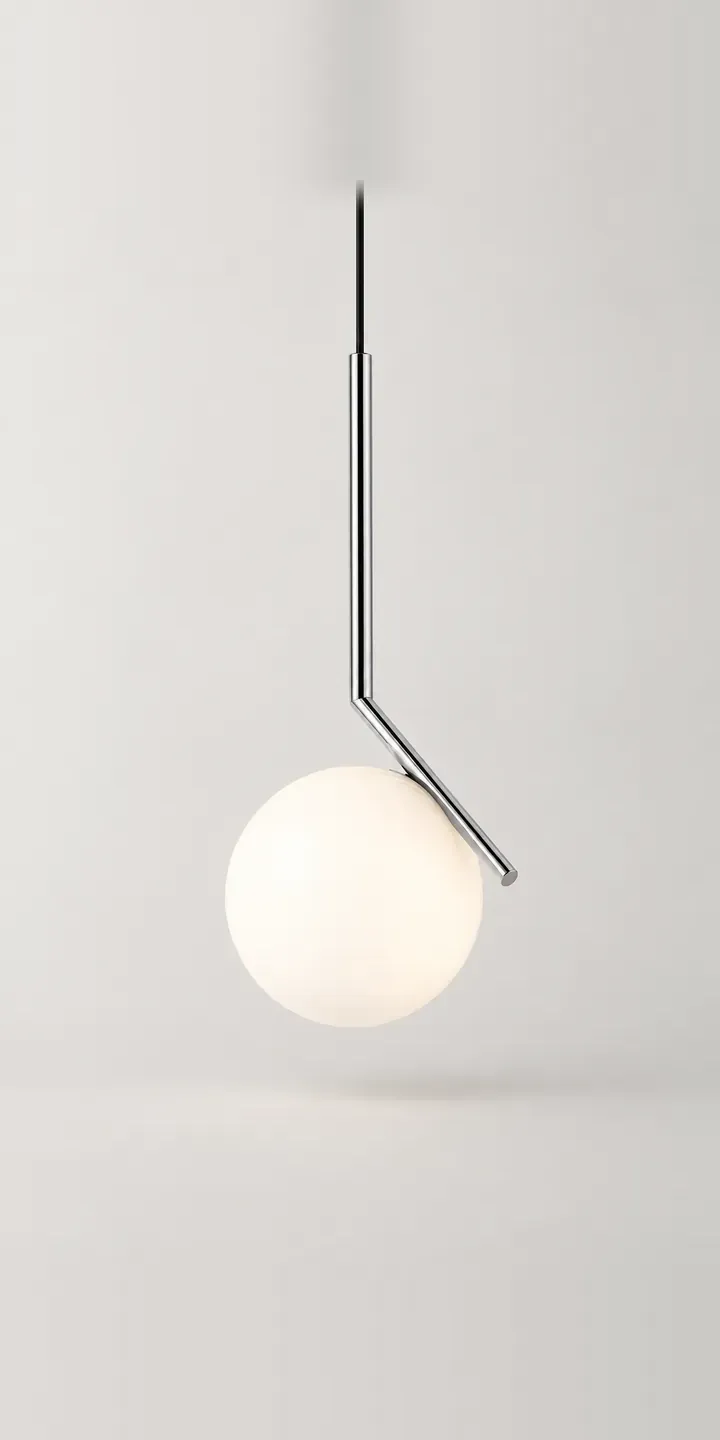
Framed Globe Pendant
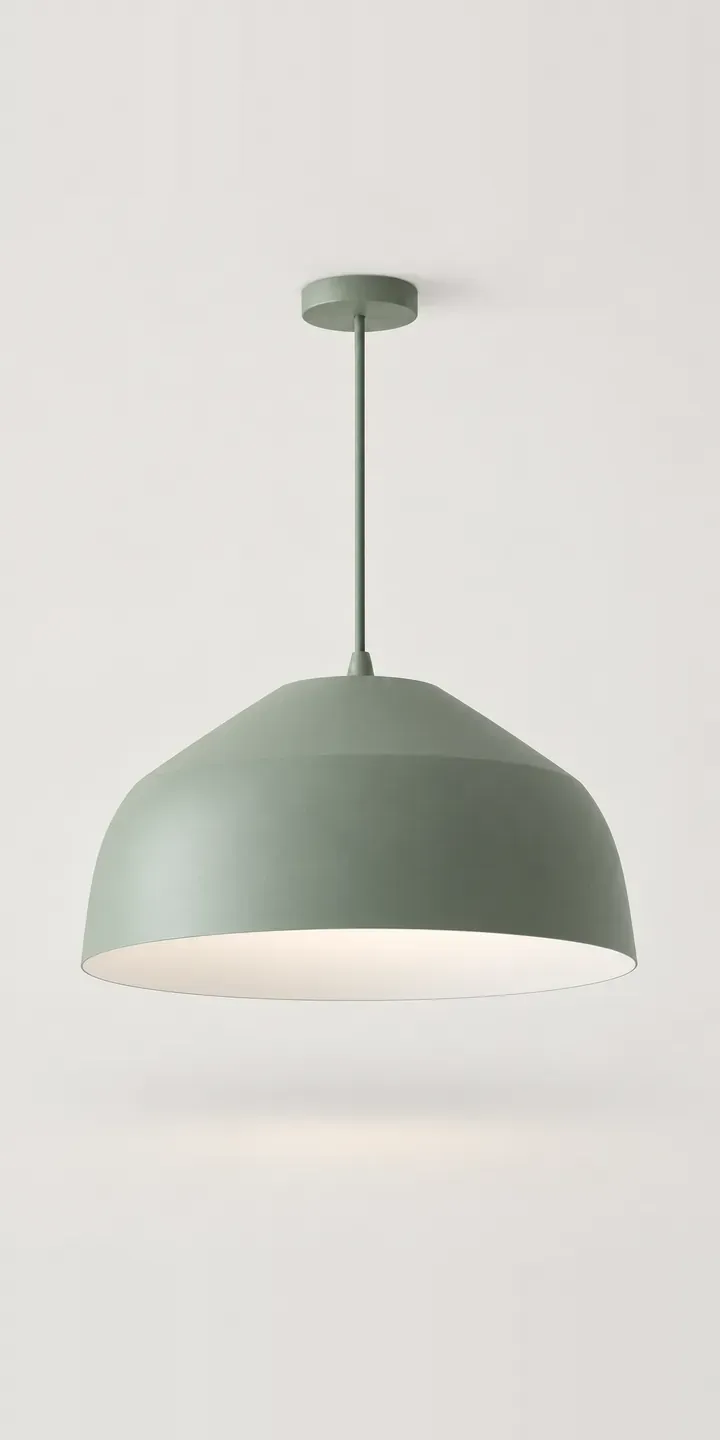
Geometric Pendant
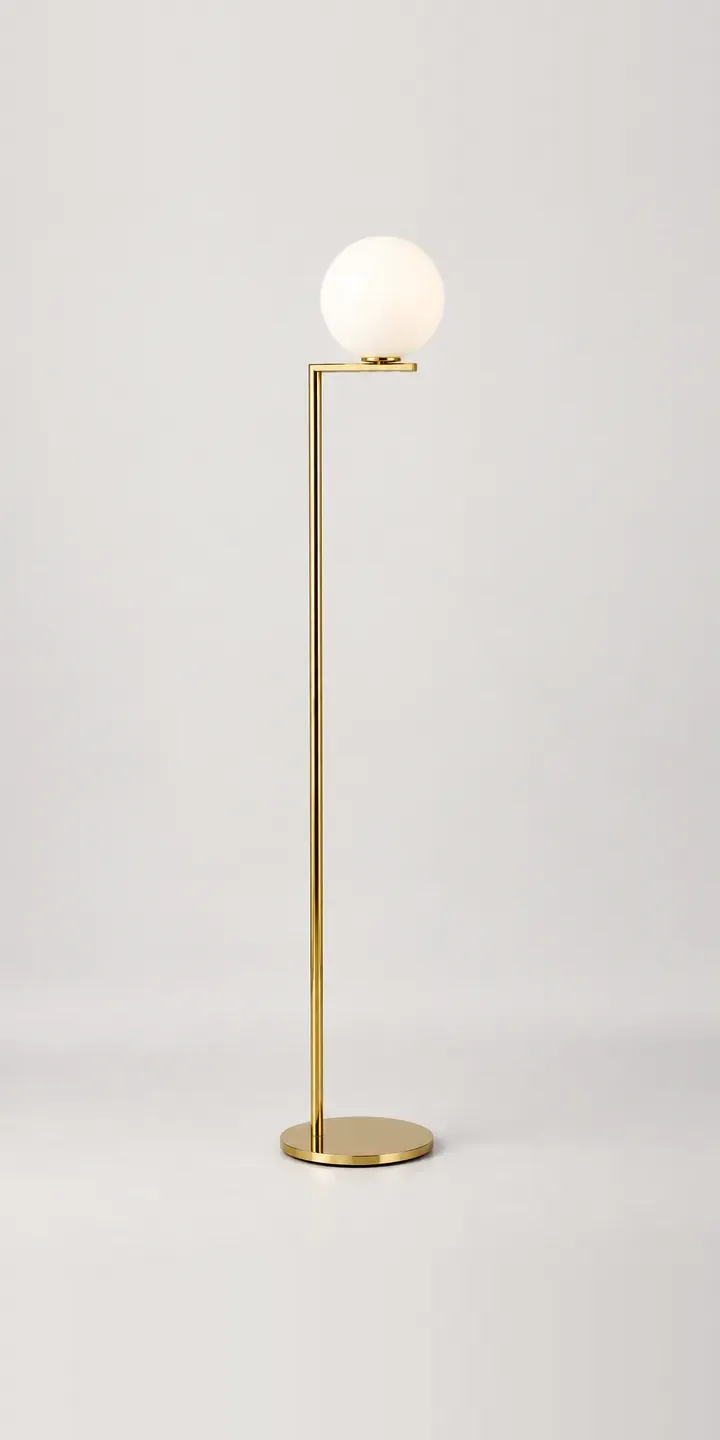
Globe Floor Lamp
All lighting configurator demos
A configurator for your floor lamps
This demo uses an illustrative product. If you sell floor lamps, I can build the same experience around your own range, photography and ordering process, connected to Shopify, WooCommerce or a quote workflow. I reply to enquiries within two UK working days.