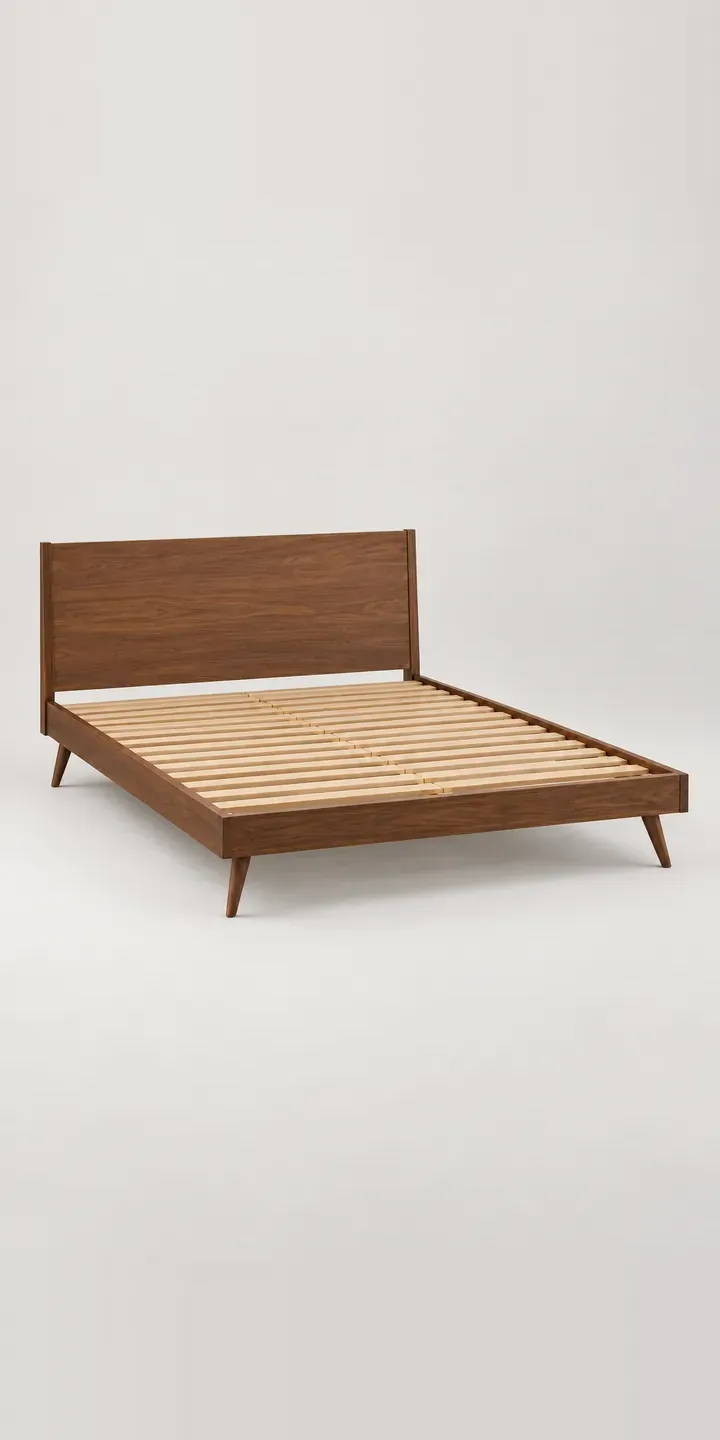
A panel bed lives or dies on proportion. On this illustrative frame, the headboard panel sits flush with the outer edge of the side rail, and evenly spaced slats cross the base. It sits low to the floor, a profile that suits calm, pared-back city bedrooms.
The buyer is making two choices that interact. The finish has to work with the floor and the other bedroom furniture. Walnut against polished concrete reads warm and deliberate, while white disappears into a white room. The width has to suit both the room and the mattress. It decides how much floor is left for bedside tables and whether the wardrobe door still swings freely.

Bedroom Configurator demo
Panel Bed
- Product
- Panel Bed
- Colour
- White
- Size
- 140 cm
Illustrative product. The design and images are generated examples, not a real model for sale.
What you can configure
The swatches switch between white, oak veneer, black brown and walnut, with grey and sand in the full range. Three widths are offered: 140, 160 and 180 cm. Those are continental mattress widths rather than the UK's 135, 150 and 180 cm sizes, which is worth stating plainly to British buyers. The image follows the finish, and the width is held in the summary.
- Colour: White, Oak Veneer, Black Brown, Walnut
- Size: 140 cm, 160 cm, 180 cm
Why a configurator suits beds
Six finishes across three widths gives eighteen versions of one bed. Few retailers photograph all eighteen, so most show one or two finishes in a room set and the rest as swatches. Customers are left guessing how black brown looks across a full headboard rather than a fingernail of veneer.
Bed width causes more trouble than colour. A UK buyer who orders 160 cm expecting a king size will find their existing 150 cm mattress sits loose in the frame. A good configurator names both sizing systems side by side and pairs the frame with the right mattress automatically. That prevents a return costing two deliveries and a collection.
Panel beds usually belong to a wider family of bedside tables, chests and wardrobes in the same finishes. A configured bed can pass its finish to the rest of the range, so the customer furnishes a room rather than buying a single item. For makers with their own workshop, the same data can feed the production schedule directly.
How a production version would be built
An image-based build works well for a panel bed. Each finish is rendered once from a three-quarter view. Width is handled with a second set of images or a dimension overlay, since the change reads more clearly in plan. The data side covers SKUs per finish and width, a mattress size mapping, external dimensions, and the matching furniture in each finish. The bed goes into the basket as a variant, with a mattress add-on if one is sold. My furniture configurator page covers how this extends to a whole bedroom range.
Build sheet for this range
- Colours in the full range: 6 (4 shown in this demo)
- Size choices: 3
- Combinations to support: 6 × 3 = 18
- Images for one photograph per combination at 3 angles: 54
- Images if sizes can be shown as separate layers, at 3 angles: 27
- Data each of the 18 combinations needs: a SKU or variant ID, price, stock or lead time, and any dimensions or specification that change
Questions about bed configurators
How do we stop UK customers ordering the wrong mattress size?
Name the size in both systems and pair the mattress automatically. The configurator shows 160 cm with a clear note that it is a continental size, not a UK king. If you sell mattresses, the matching one is added by default. If you do not, the summary states the exact mattress dimensions the frame needs.
Can the configurator show the bed at each width without new photography?
For most purposes, yes. A plan view with the bed drawn at each width, beside standard bedside tables, shows the difference clearly. Full renders at every width are only needed if the change in proportion shows from the main camera angle. Across a 40 cm spread, it may well.
Can a customer see the bed with matching bedside tables?
Bedside tables, chests and other pieces in the same finish can be added in a further step and shown together in a room view. The bed's finish carries across automatically, though customers can change it per piece. A bed purchase becomes a bedroom order in one sitting.
Does a bed configurator need 3D?
Not usually. For a few frames in several finishes, image-based configuration gives photoreal results at lower cost. 3D becomes worthwhile when there are many frames, headboard heights, storage options or fabrics, where rendering every combination as a still would take too long. I build both and recommend whichever suits the range.
More bed configurator demos
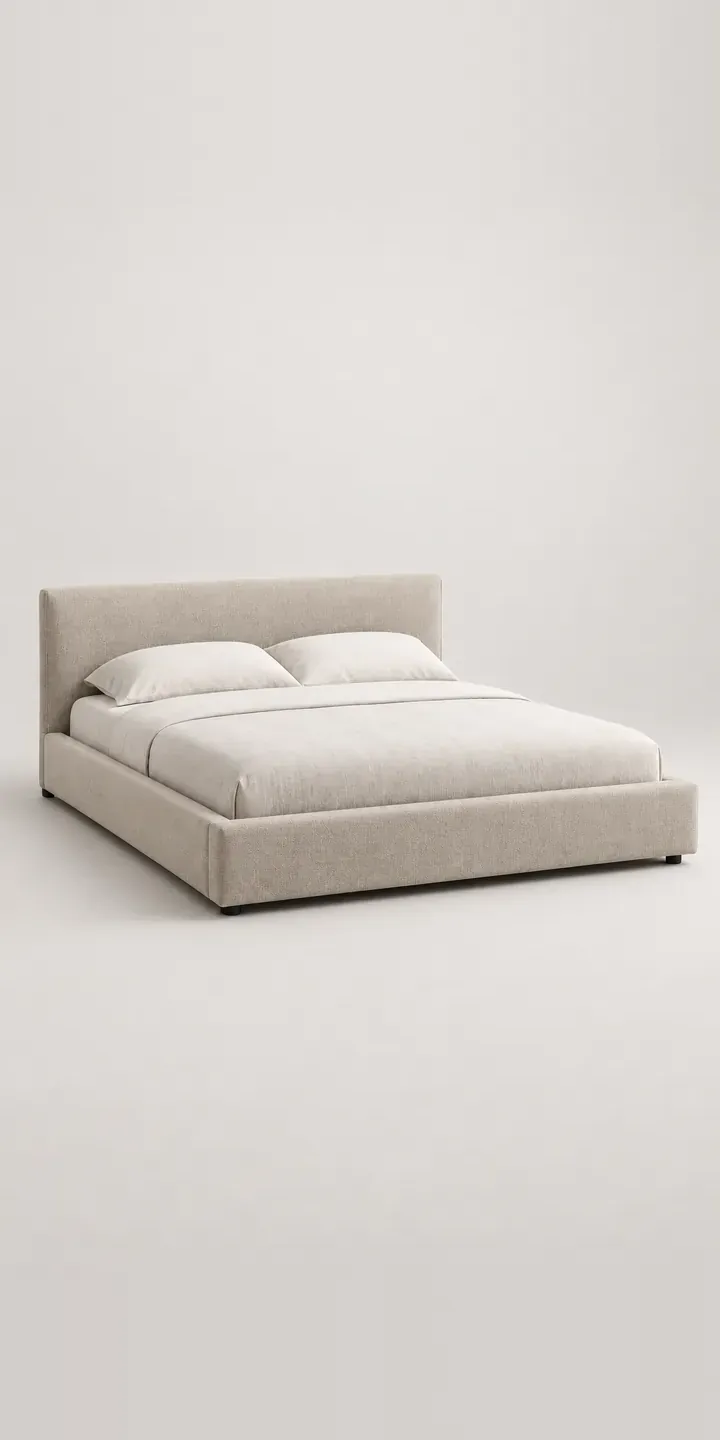
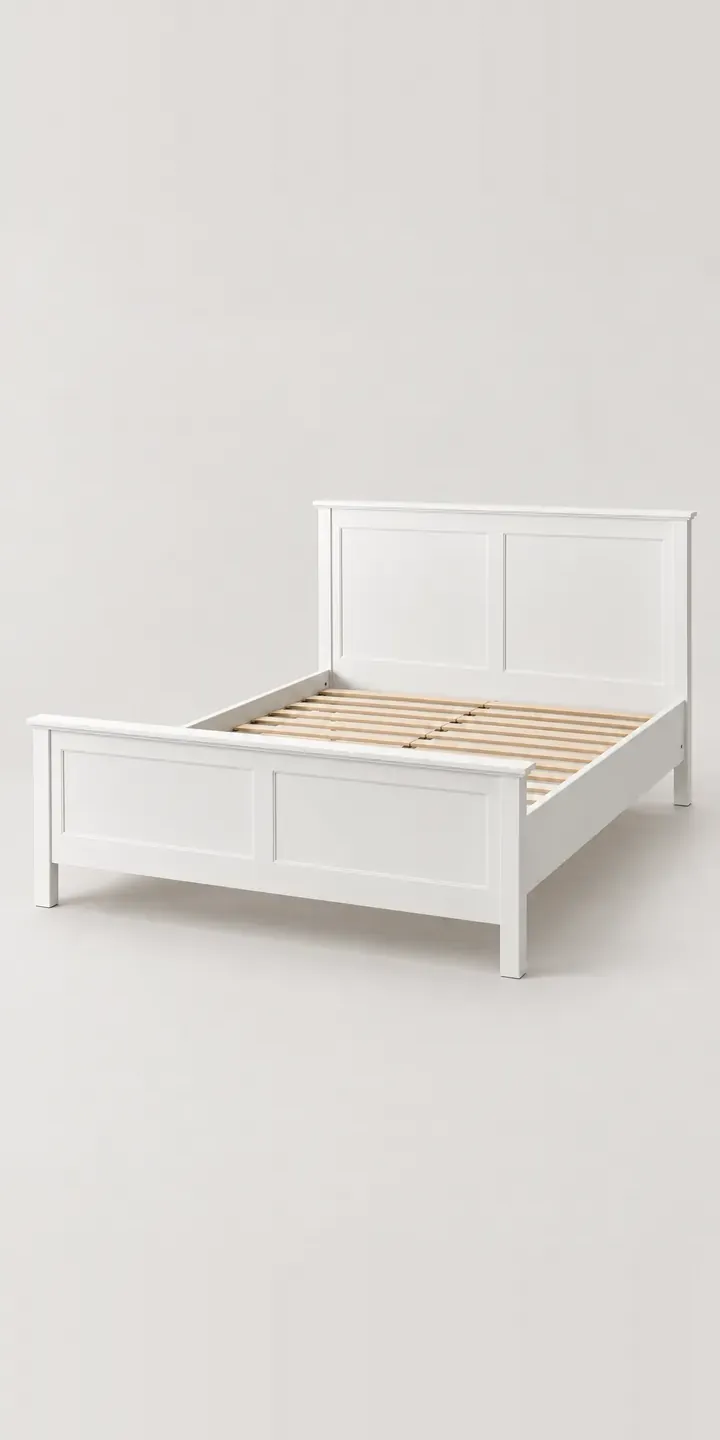
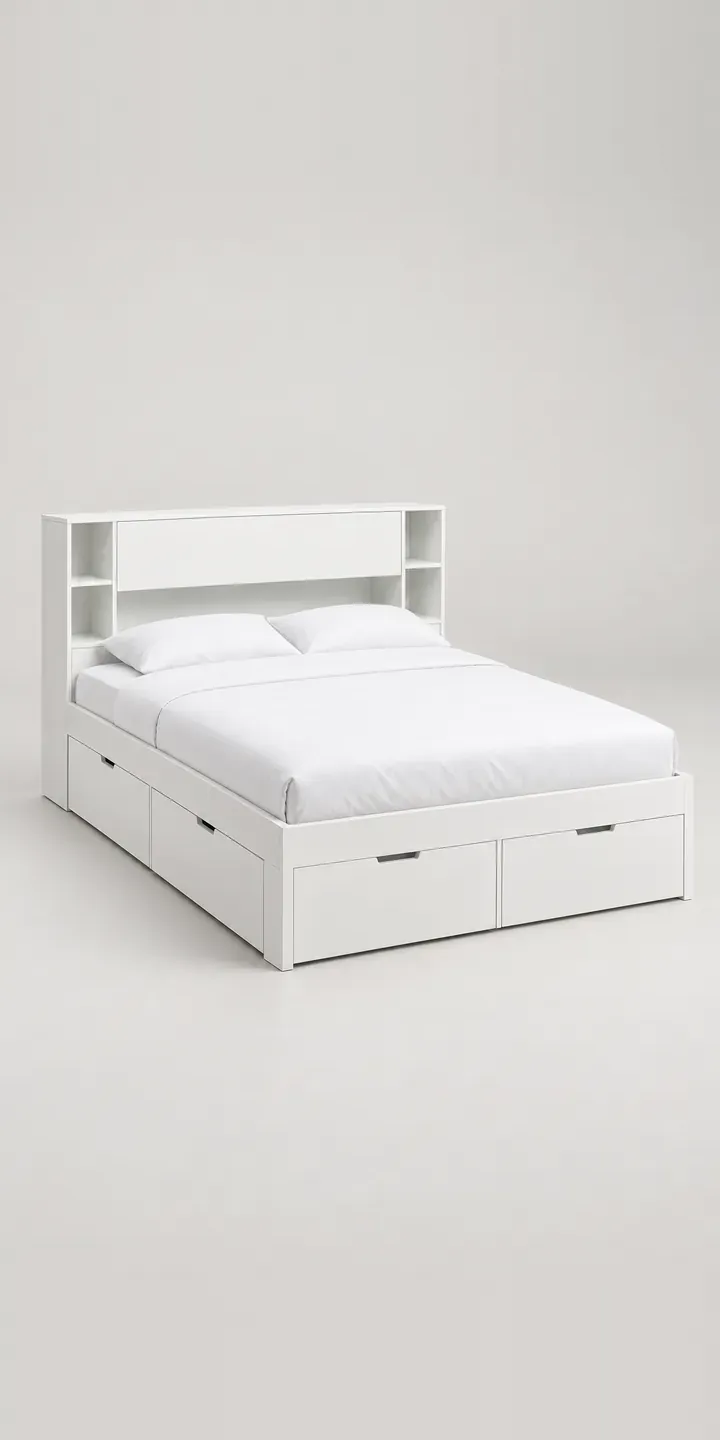
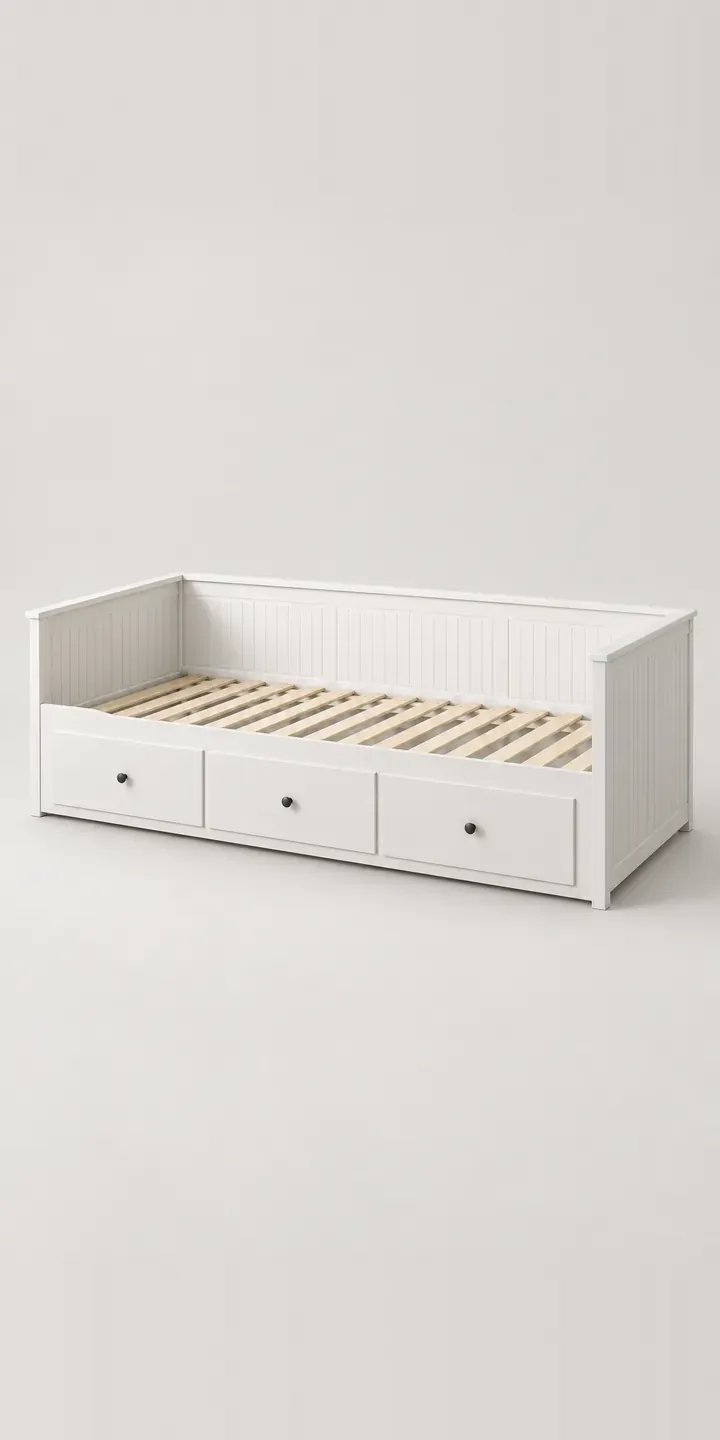
A configurator for your beds
This demo uses an illustrative product. If you sell beds, I can build the same experience around your own range, photography and ordering process, connected to Shopify, WooCommerce or a quote workflow. I reply to enquiries within two UK working days.