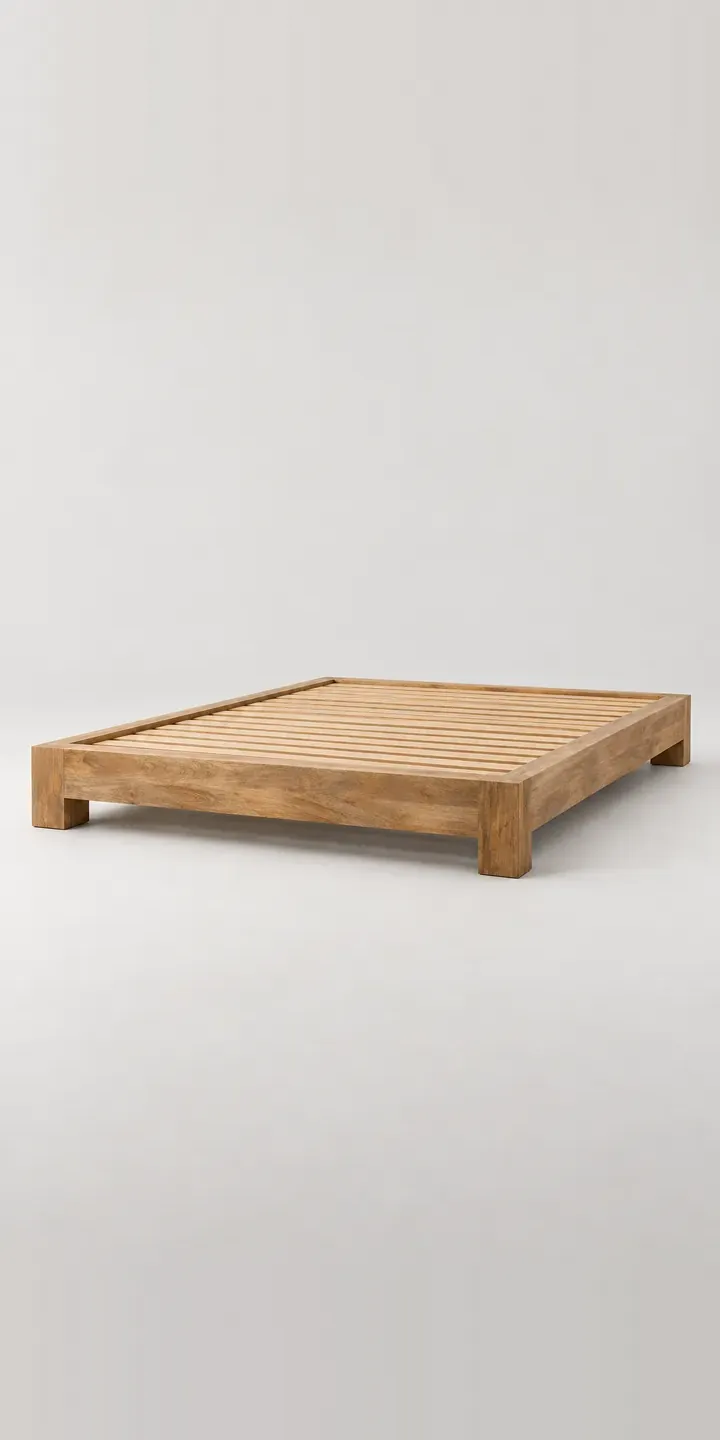
Mid-century styling depends on the legs. This illustrative platform bed stands on angled, tapered legs that join the side rail, with veneer grain running along the headboard edge. It suits retro-modern bedrooms built around teak and warm colour.
Its buyers care about timber. The questions start with species and grain direction. Does white wash still read as oak? Does black ash let the grain show through? The legs matter practically as well. They lift the bed for a lighter look and leave clear space beneath, useful for a robot vacuum or a row of baskets.
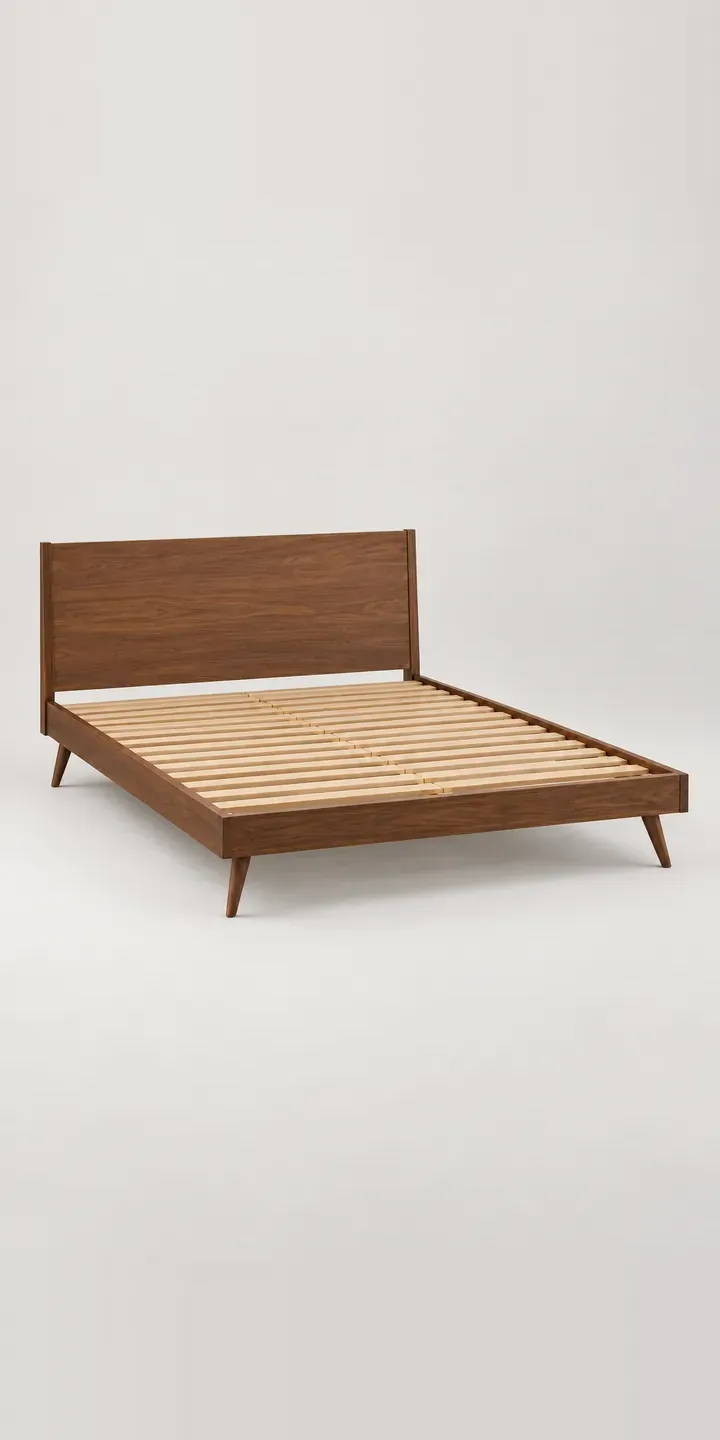
Bedroom Configurator demo
Angled Leg Bed
- Product
- Angled Leg Bed
- Colour
- Walnut
- Width
- 140 cm
Illustrative product. The design and images are generated examples, not a real model for sale.
What you can configure
Walnut, natural oak, white wash and black ash are in the demo, with cherry and grey wash in the wider range. The frame comes 140, 160 or 180 cm wide. Angled legs can project slightly beyond the frame, so on the wider sizes their position is worth checking against bedside tables. The width is recorded in the summary while the image changes with the veneer.
- Colour: Walnut, Natural Oak, White Wash, Black Ash
- Width: 140 cm, 160 cm, 180 cm
Why a configurator suits beds
Veneer is a natural material, and no two leaves are identical. Buyers of mid-century furniture know this and still want a representative view of each species. Retailers usually photograph walnut beautifully and show the rest as small chips. A configurator shows every veneer at full scale on the actual bed, so oak buyers get the same quality of image as walnut buyers.
Stained finishes need particular care. White wash, grey wash and black ash all change how visible the grain is, and a poor image makes them look like painted board. Showing the grain clearly in each finish protects the product's perceived quality and reduces returns from customers who expected a different character of wood.
Furniture in this style is often sold through independent interiors shops as well as the maker's own site. The same configurator can be embedded on a stockist's website with the maker's images and data, or end in a stockist locator. Either way, eighteen combinations of veneer and width are presented consistently wherever the customer meets them.
How a production version would be built
Veneer beds suit high-quality renders from a 3D model with real veneer scans applied, so the grain follows the headboard edge and the legs correctly. Each finish needs a three-quarter view and a close-up of the leg joint and headboard grain, while width can be shown with a plan overlay. From the maker I would need veneer species and stain names, scans or samples, widths, dimensions and lead times. For a stockist network, enquiries can be routed to the nearest shop with the build attached. See 3D product visualisation for how veneer renders are prepared.
Build sheet for this range
- Colours in the full range: 6 (4 shown in this demo)
- Width choices: 3
- Combinations to support: 6 × 3 = 18
- Images for one photograph per combination at 3 angles: 54
- Images if widths can be shown as separate layers, at 3 angles: 27
- Data each of the 18 combinations needs: a SKU or variant ID, price, stock or lead time, and any dimensions or specification that change
Questions about bed configurators
Can the configurator show real grain variation in the veneer?
It can show representative grain from scans of your actual veneer, applied correctly to each part. It cannot show the exact leaf a customer will receive, and it should say so. A short note on natural variation beside a close-up image sets the right expectation and protects you when a bed arrives with different figuring.
How do you stop stained finishes looking like paint?
By lighting for the grain. A raking light across the headboard edge reveals texture beneath the stain, and a close-up makes it obvious the finish is timber. I check each stain against a physical sample. Black ash needs the most care, because dark stains flatten quickly on screen.
Can stockists use the configurator on their own websites?
Yes. It can be embedded on a stockist's site using the maker's images and data, or the maker's own configurator can end in a stockist locator. Enquiries reach the right shop with the configuration attached, and any change to a finish or lead time flows out to every stockist at once.
Is image-based configuration enough for a range of veneer beds?
For a few frames, often yes. Renders from one model per bed give photoreal images at fixed angles, which is what most buyers need. Interactive 3D becomes worthwhile when there are many frames, leg options or headboard variants. I build both and would recommend whichever suits your range.
More bed configurator demos
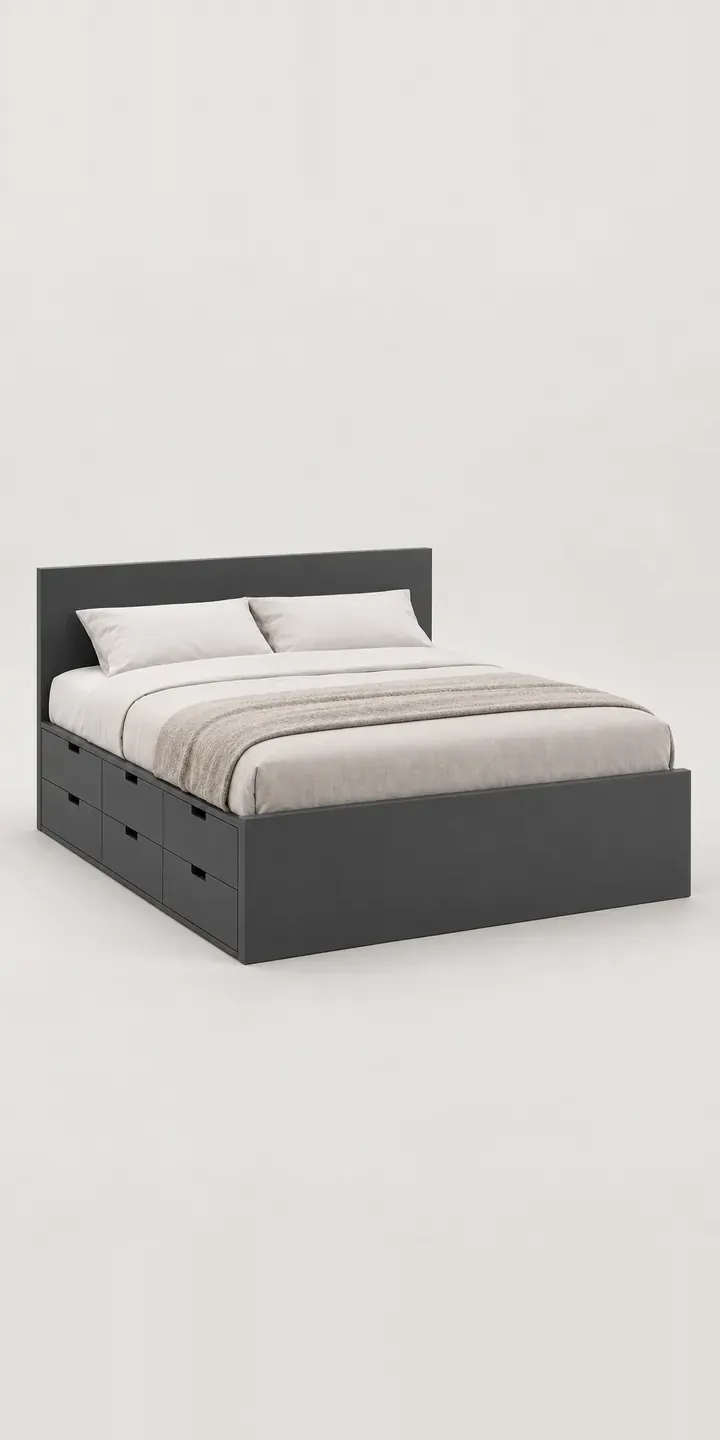
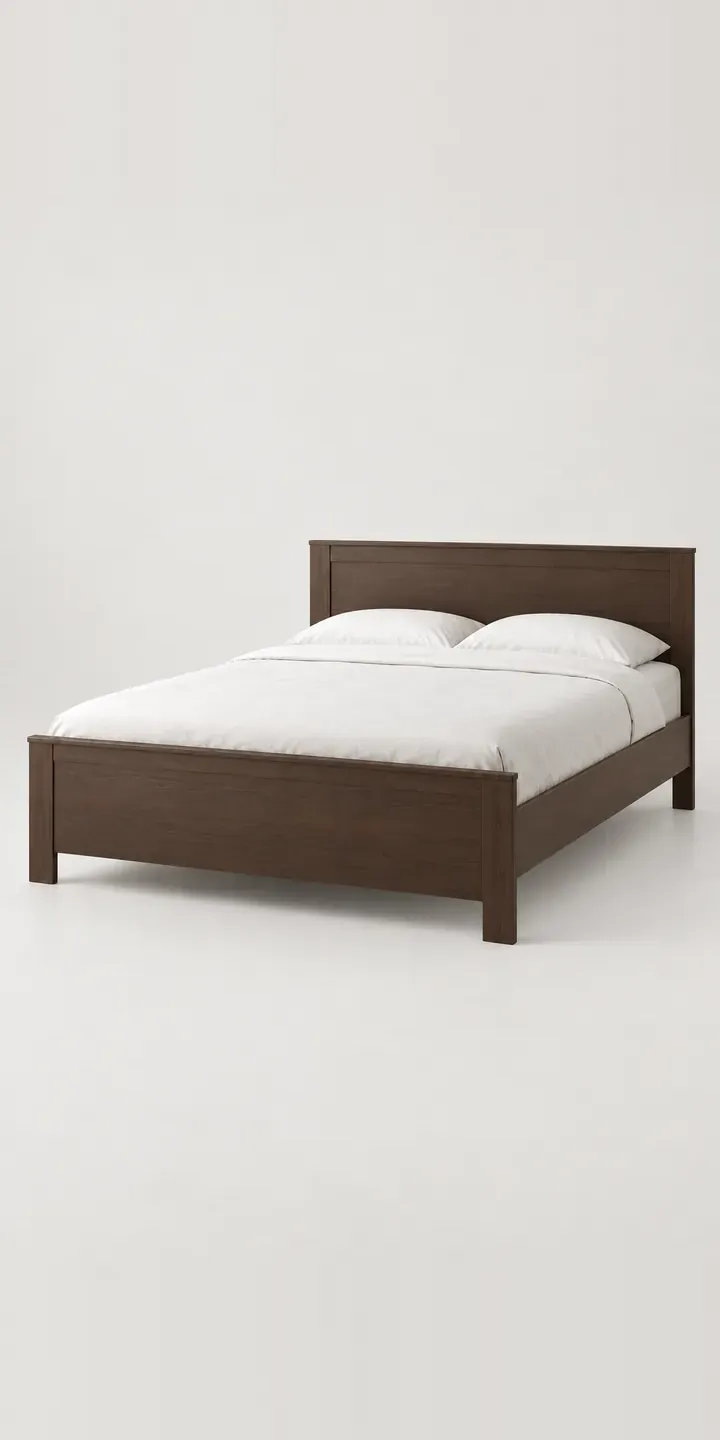
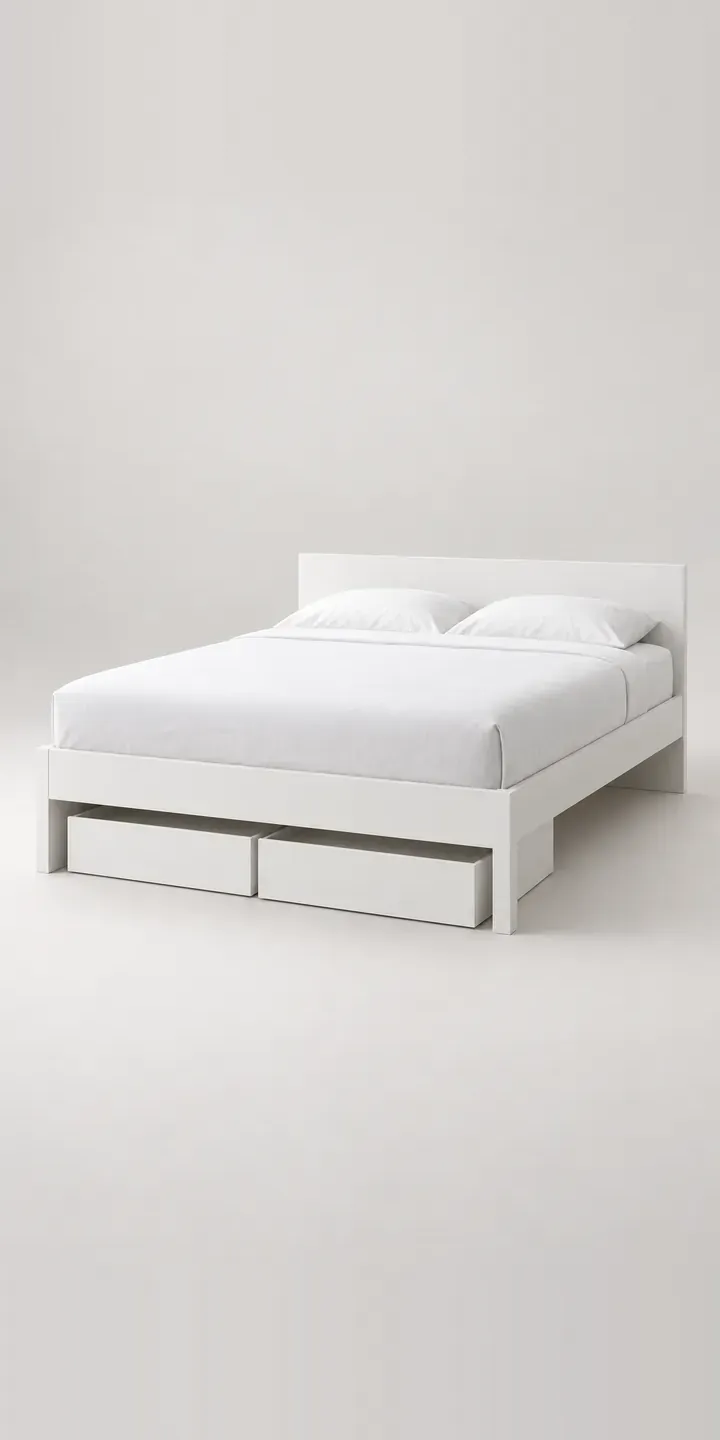

A configurator for your beds
This demo uses an illustrative product. If you sell beds, I can build the same experience around your own range, photography and ordering process, connected to Shopify, WooCommerce or a quote workflow. I reply to enquiries within two UK working days.