Home espresso buyers usually spend longer choosing a grinder than they expected to. This illustrative conical burr grinder can be tried in four body colours with two hopper styles, and the finished specification goes off as a quote request.
The real decision sits between workflow and worktop. A standard hopper suits someone who brews the same beans every morning. A single-dose hopper suits someone who weighs each shot and switches between a decaf and a light roast. The colour then has to live beside the espresso machine, kettle and scales already on the counter, so neutral finishes feel safe while the greens and clays need to be seen properly before anyone orders.
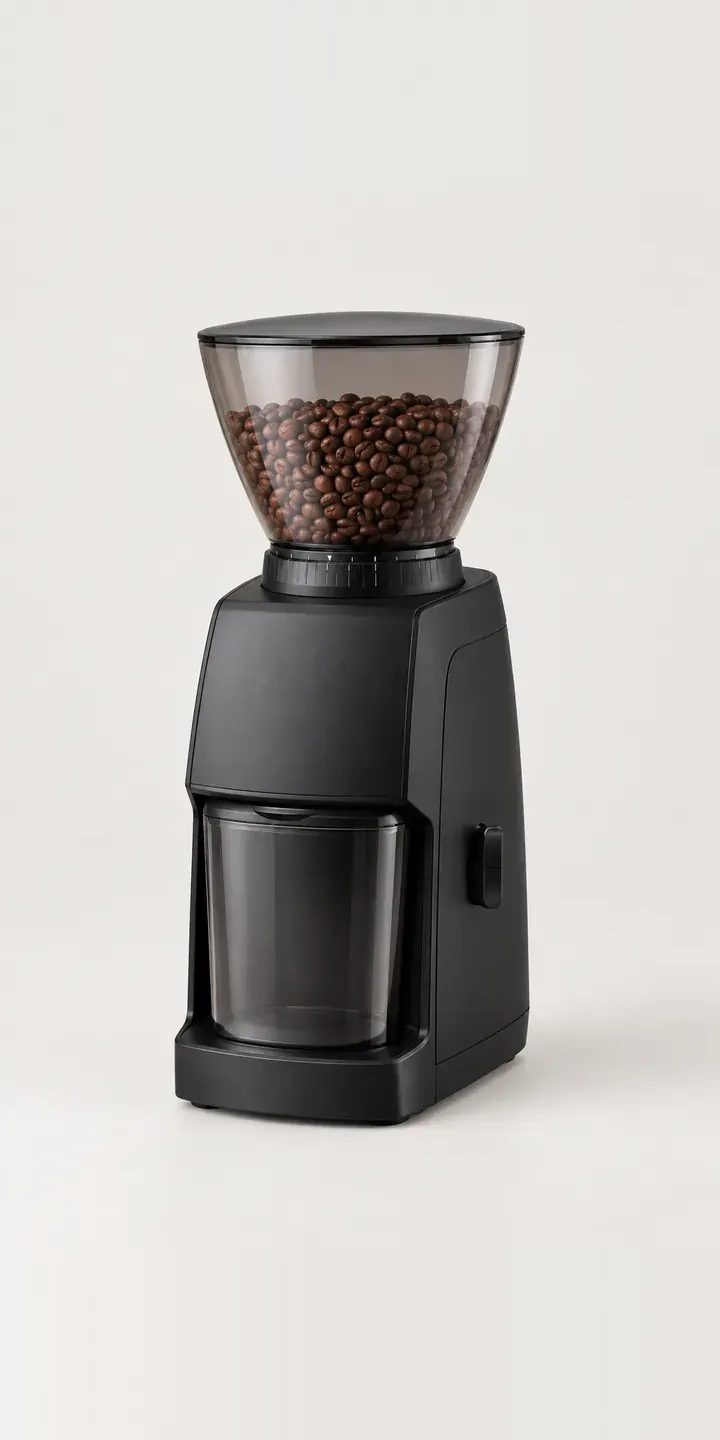
Coffee Configurator demo
Conical Burr Grinder
- Product
- Conical Burr Grinder
- Colour
- Matte Black
- Hopper
- Standard
Illustrative product. The design and images are generated examples, not a real model for sale.
What you can configure
The demo shows matte black, white, silver and forest from the six finishes in the range. Each swatch swaps to a photograph of the same grinder from the same angle, so the numbered grind dial stays in place and only the body colour changes. The hopper choice is recorded in the summary. In this demo it does not change the picture; a production version would show the single-dose hopper as its own image.
- Colour: Matte Black, White, Silver, Forest
- Hopper: Standard, Single Dose
Why a configurator suits coffee grinders
Six colours and two hoppers make twelve versions of one grinder. Most coffee equipment retailers photograph the bestseller in black, add a cut-out of each colour, and leave the hopper as a dropdown with no picture. Single-dose buyers are exactly the people who want to see what they are getting, so they go looking for owner photos on forums instead.
Consistent imagery fixes that. Every combination gets the same lighting and camera position, which matters for appliances because the finish is a large part of why one model is chosen over another. The order also arrives cleaner: body colour and hopper come through as separate attributes rather than a variant title, which cuts picking errors when the white standard and white single-dose sit side by side in the warehouse.
Grinders are rarely bought alone, so there is a cross-selling case too. A retailer can carry the chosen finish forward into a matching espresso machine, knock box or tamper. A roaster selling equipment alongside beans can also suggest a subscription that suits the hopper, since single-dose owners tend to enjoy rotating origins.
How a production version would be built
I would treat the grinder body and the hopper as separate layers. The body is photographed or rendered once per colour, the two hoppers are shot on their own from the identical camera position, and the configurator stacks them. A new seasonal colour then means one new body image rather than two. The retailer supplies SKU codes per pairing, any colour and hopper combinations that are not stocked, and accessory links if bundles are planned. On WooCommerce or Shopify the selection maps to a normal variant, so stock, price and checkout behave as usual.
Build sheet for this range
- Colours in the full range: 6 (4 shown in this demo)
- Hopper choices: 2
- Combinations to support: 6 × 2 = 12
- Images for one photograph per combination at 3 angles: 36
- Images if hoppers can be shown as separate layers, at 3 angles: 24
- Data each of the 12 combinations needs: a SKU or variant ID, price, stock or lead time, and any dimensions or specification that change
Questions about coffee grinder configurators
Can the single-dose hopper be shown on every colour without reshooting the whole range?
Yes. The hopper sits at the top of the grinder, so it can be photographed separately and layered onto each body colour. That only works when every shot uses the same camera height, lens and lighting, so I agree a shooting guide with the photographer before anything is captured. Clear or tinted hoppers need extra care with reflections.
Will matte black and silver both photograph well in the same set-up?
Not without some adjustment. Matte black loses detail under flat light, while silver and white can blow out. The usual fix is consistent key lighting with small exposure corrections per finish, then a close-up of the grind dial under raking light so buyers can judge texture as well as colour. A swatch on its own rarely shows an appliance finish properly.
Can we bundle the grinder with a matching espresso machine in one configurator?
Yes. After the grinder is chosen, the configurator can offer a paired machine or accessories, defaulting to the same finish. Each item still goes to the basket as its own product, so stock and returns stay simple. It suits retailers who already sell machine and grinder bundles and want the colour match to be obvious rather than left to the customer.
Can we use the manufacturer's existing images, or do we need new photography?
Manufacturer images can work if every colour shares an angle and lighting set-up, which is less common than it should be. When they are inconsistent, swapping between swatches looks jumpy and undermines trust. I review the existing assets first and only recommend new photography or renders where the gaps would actually show, which keeps the asset budget proportionate.
More coffee equipment configurator demos
Espresso Grinder Combo
Filter Coffee Maker
Flat Burr Grinder
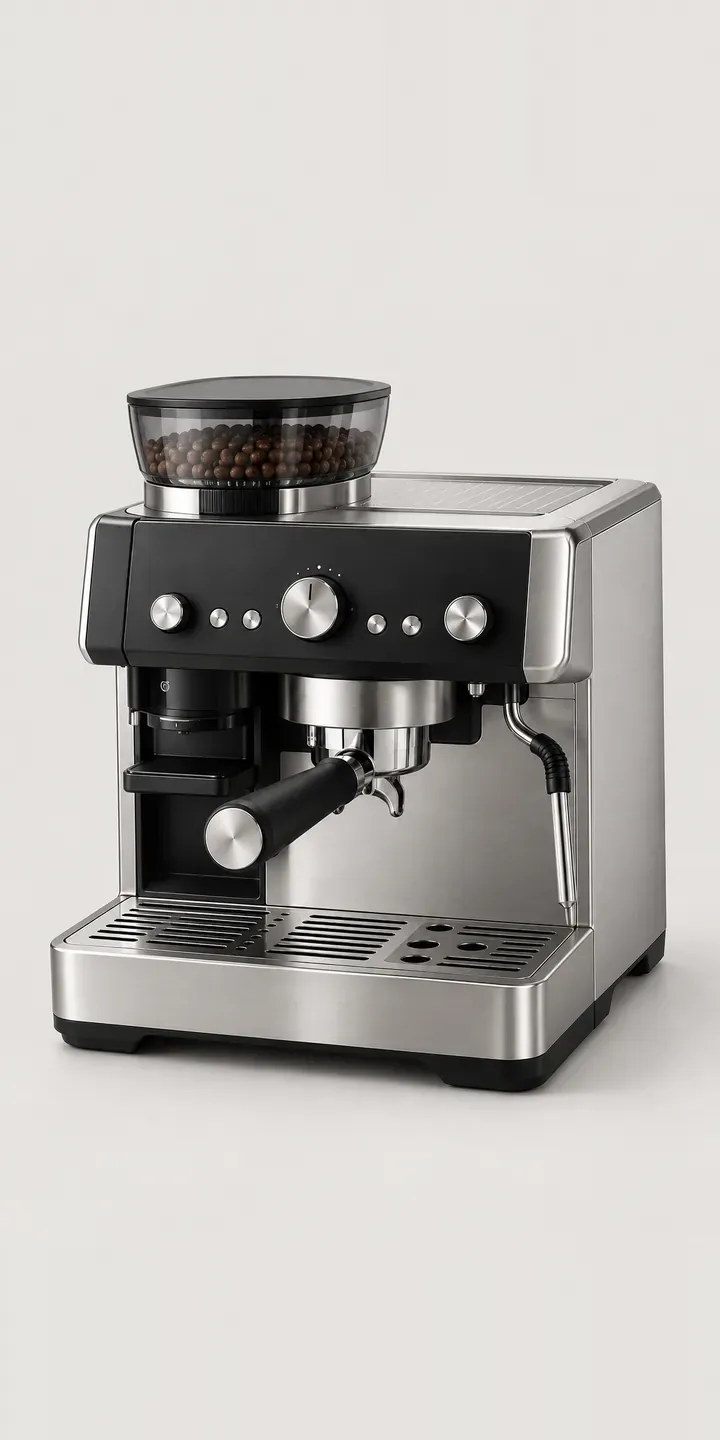
Home Espresso Station
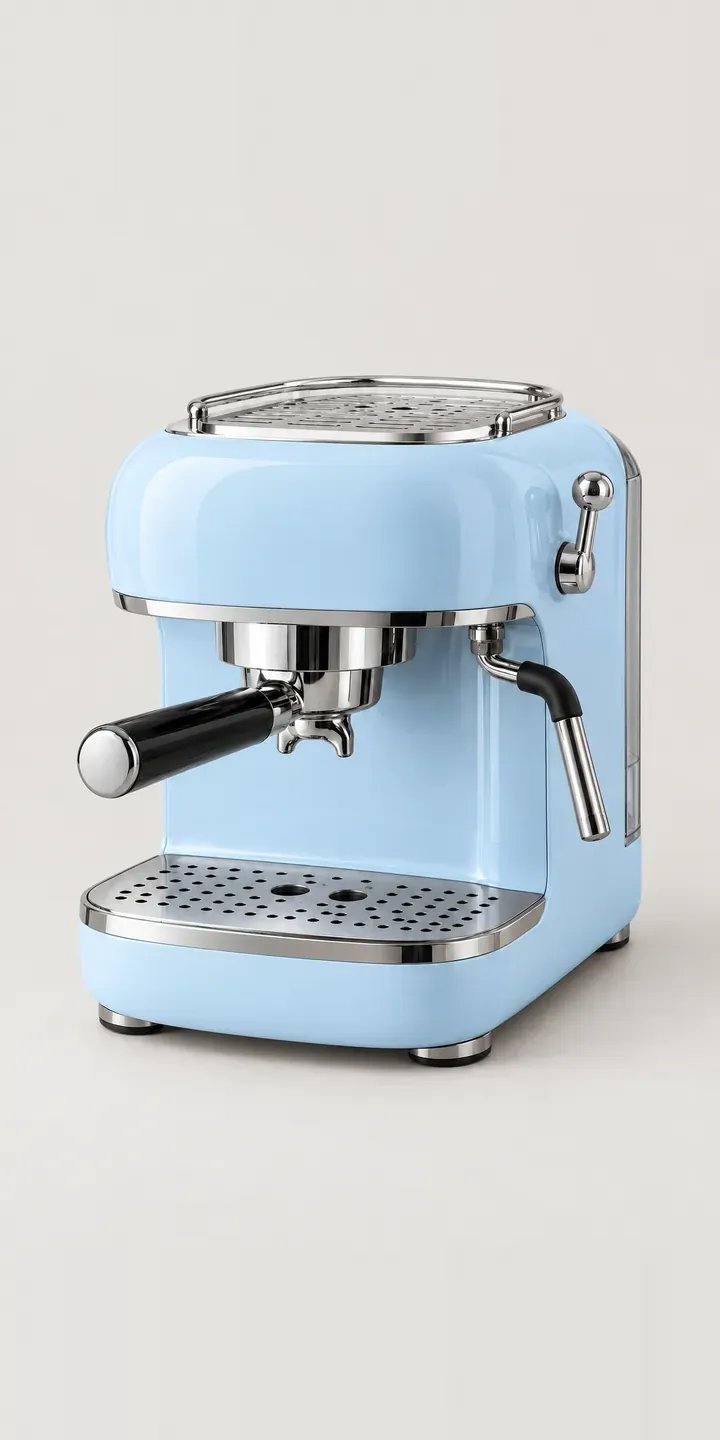
Retro Espresso Machine
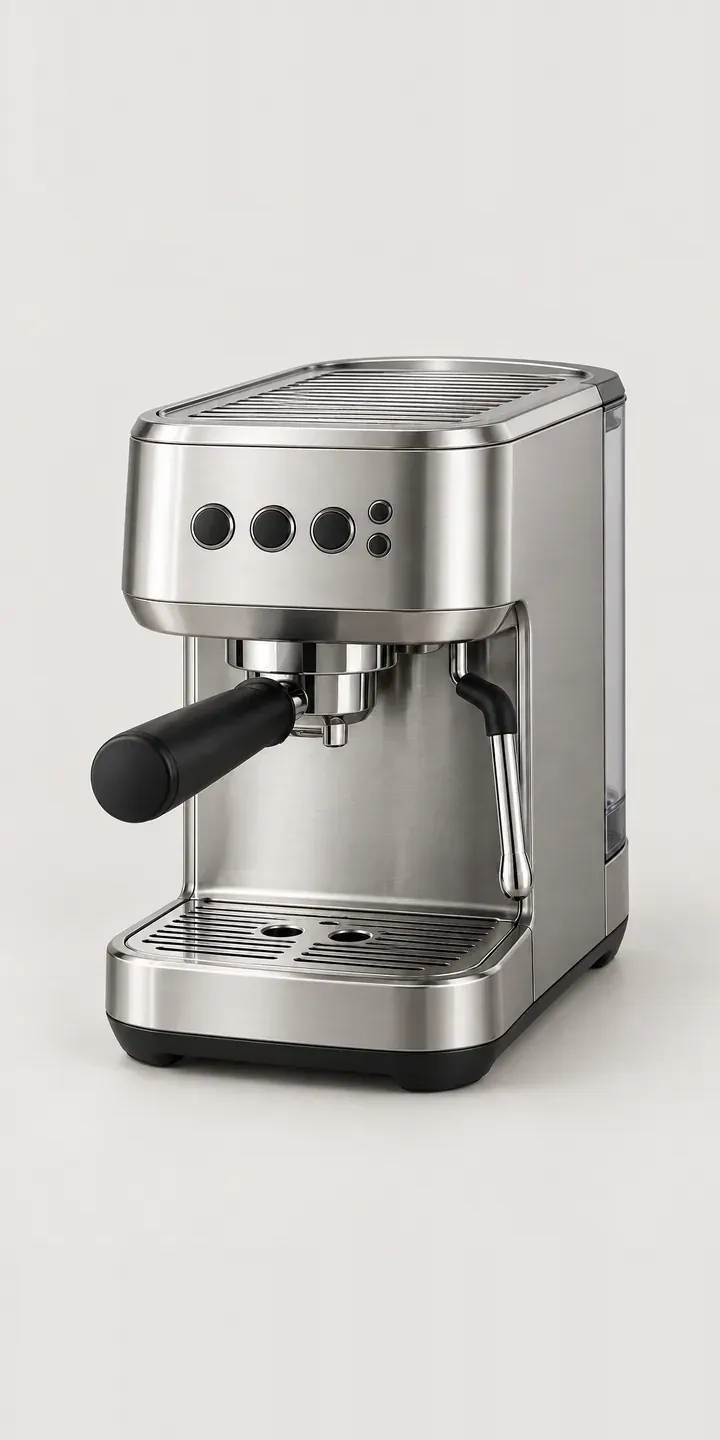
Slim Espresso Machine
All coffee machine configurator demos
A configurator for your coffee grinders
This demo uses an illustrative product. If you sell coffee grinders, I can build the same experience around your own range, photography and ordering process, connected to Shopify, WooCommerce or a quote workflow. I reply to enquiries within two UK working days.