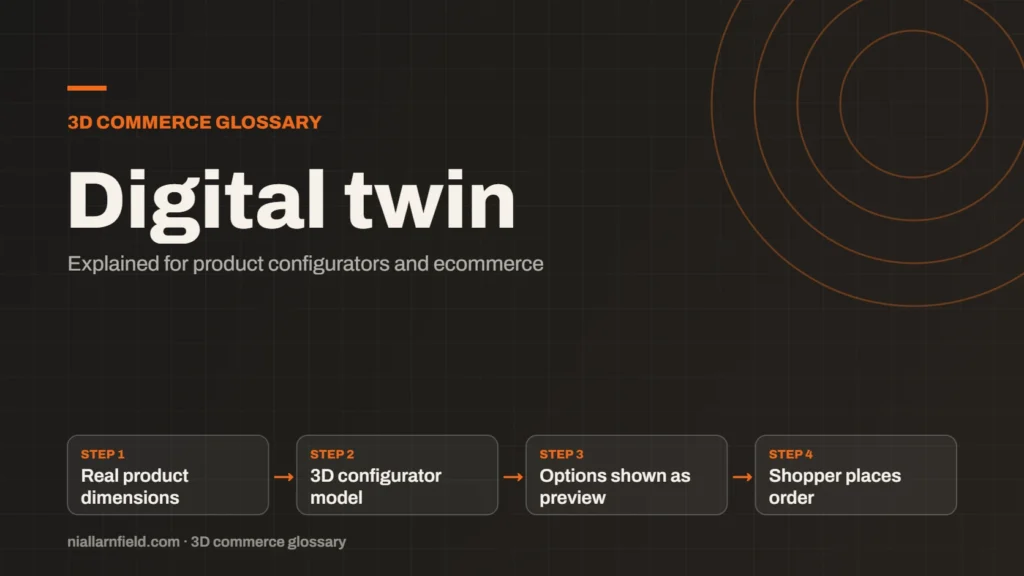
In a product configurator, a digital twin usually means a 3D model that matches a real product’s shape, materials and options. An industrial digital twin is different. It is a virtual copy of a physical asset kept in sync with live data.
Discuss your product rangeTry the demos
Two meanings of digital twin
The term has an industrial meaning and a commercial one. In industry, a digital twin is a virtual representation of real assets and processes, kept in sync at a set frequency and accuracy. The Fraunhofer IOSB explanation uses this definition. Such twins usually receive live data from machines or systems, which is what makes them useful for monitoring.
A product configurator uses the phrase more loosely. The 3D model matches a product’s shape and its options. It does not usually receive live sensor data from the product. Using one term for both can mislead buyers, and it can mislead developers too.
The industrial sense grew out of manufacturing and asset management. Engineers used virtual models to predict wear, test changes and plan maintenance. Those models depend on data from the real asset, which is what separates them from a picture. The two meanings can overlap, so the context matters. Ask who the audience is, what data they expect and what the model must do. Clear answers prevent misunderstandings before any work begins.
- Real product dimensions
- 3D configurator model
- Options shown as preview
- Shopper places order
What a configurator model does and does not do
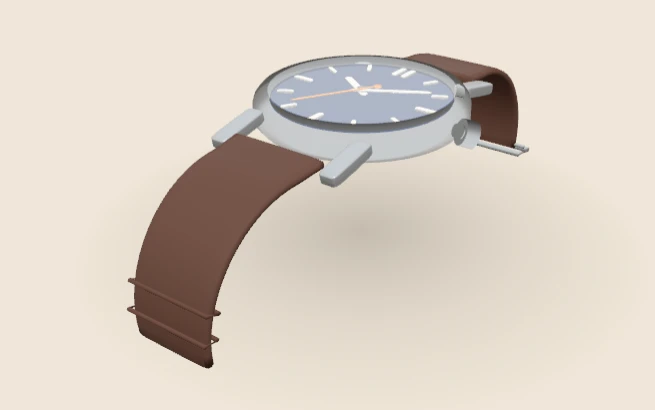
When I build a 3D model for a configurator, I match the real dimensions, materials and finish options. That gives the shopper an accurate preview before they order. It is a faithful visual and a useful configuration tool, and that is a valuable thing in its own right.
It is not a live copy of the product in use. A configurator model can still be very useful, though. It can show a sofa in a chosen fabric, or a lamp with a chosen arm length, before anything is made. The demos show this in practice, such as the desk lamp with its three arm lengths.
For more on how these models are presented to buyers, the 3D product visualisation guide sets out the options in detail. This does not make a configurator model less valuable. A faithful preview helps set the right expectation before a purchase. It also lets a buyer compare options side by side, which is the main job of a configurator. Some configurators also show the product in a room or in a lifestyle scene, as the visualisation guide describes. The model still previews the product. It does not monitor the product after sale. Clear wording builds trust with buyers from the first visit.
Keeping the model accurate
Accuracy comes from the process, not from the label. I take each dimension from a production drawing or a measured sample, and I note where it came from. That makes it possible to check a figure later, when a client asks why a model looks different.
- Record where each dimension came from, such as a drawing number or a sample.
- Match finish names to the product data, so the 3D view and the order agree.
- Re-export the model whenever the product design changes.
- Label any colour shown as a preview, because screens and printers vary.
I also keep one master product record that lists every option and its finish name. The 3D model, the product page and the order all read from that record. A single source of truth prevents the most common mismatch between what is shown and what is sold. The product configurator service covers how these preview models are built and checked.
When a dimension changes, log the change with its date and reason. This small habit makes later disputes much easier to settle, and it gives the next developer a clear trail to follow.
Common mistakes and limits
The biggest mistake is overclaiming. A marketing page that calls a configurator model a digital twin can set the wrong expectation. A shopper may read it as a live product feed, which the model cannot provide.
If a project does need live data, for example from an installed machine, it is a different piece of work. It needs data feeds, a defined sync rate and integration with the systems that hold that data. The system integration guide covers how configurators connect to other systems.
Ask the client which meaning they need before you quote. That one question avoids a lot of confusion later in the project. Finally, be careful with claims. Describe what the model does, such as showing options and dimensions. Avoid words that suggest live monitoring unless the project really includes it.
Related terms
- Parametric models: A parametric model is a 3D model defined by dimensions and rules rather than fixed geometry.
- 3D asset pipeline: A 3D asset pipeline is the set of steps that turns source files into models a web viewer can load.
- Tone mapping: Tone mapping converts the wide range of light values in a 3D scene into the narrower range a screen can show.
- Environment map: An environment map is an image of the surroundings that a 3D scene uses for lighting and reflections.
- Configurator embed: A configurator embed is how a 3D configurator appears inside another website.
- Material swatch: A material swatch is a sample of a finish, such as fabric, leather or metal, shown as a choice in a configurator.
- glTF: glTF is an open standard for 3D models, maintained by the Khronos Group.
- KTX2 textures: KTX2 is a container format for textures, the images that give 3D surfaces their colour and detail.
- Draco compression: Draco is an open-source compression library from Google for 3D mesh data.
- Meshopt compression: Meshopt compression shrinks glTF geometry, morph targets and animation data.
Browse all the definitions in the 3D commerce glossary.
Common questions
Is a 3D product model a digital twin?
People sometimes use the phrase that way. Strictly, a digital twin in industry is a live virtual copy of a physical asset that receives data. A configurator model is a faithful preview, not a live link to a product.
Does a configurator need real-time data to be a digital twin?
Only under the industrial meaning. Industrial definitions expect the virtual model to stay in sync with the physical asset. A product preview does not need that, so do not describe it as one.
Can a configurator model become an industrial digital twin?
Only with more work. You would need live data feeds, a defined sync rate and integration with the systems that hold that data. That is a separate project from building a product configurator.