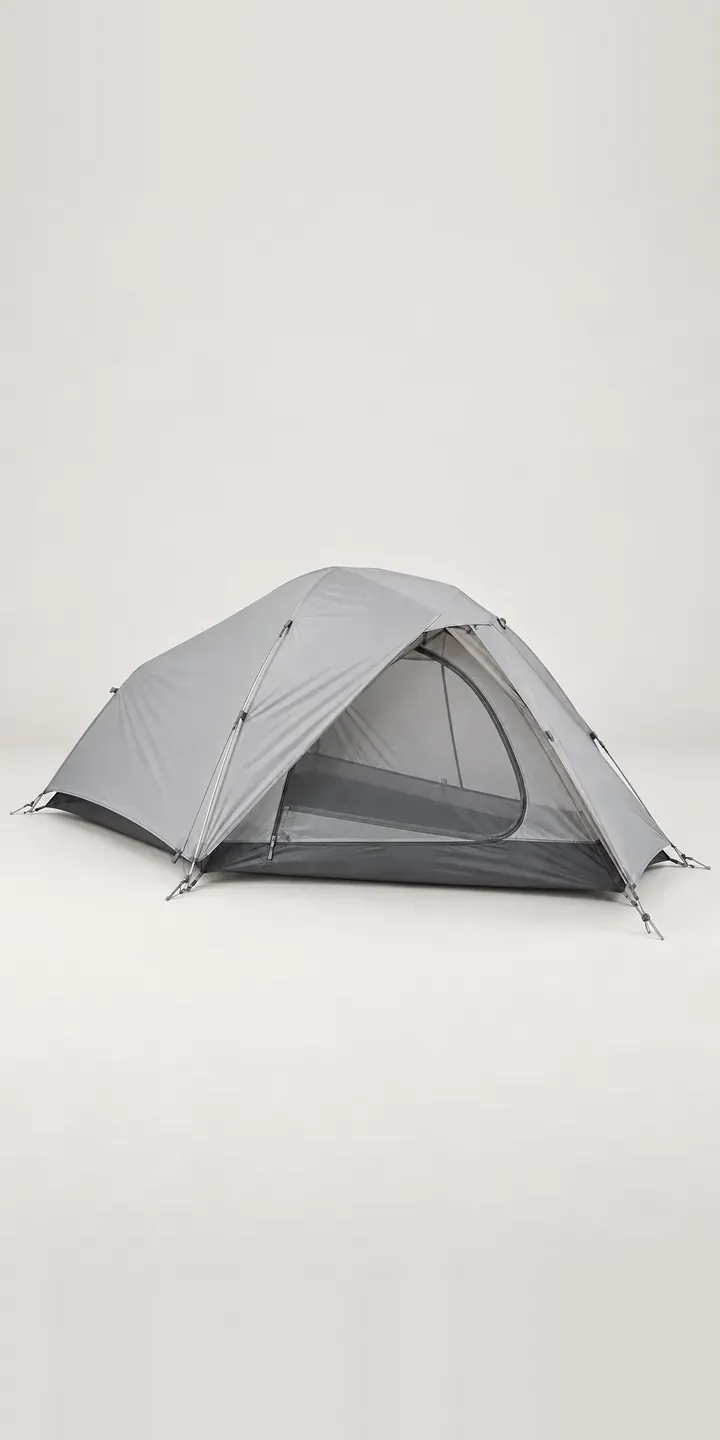
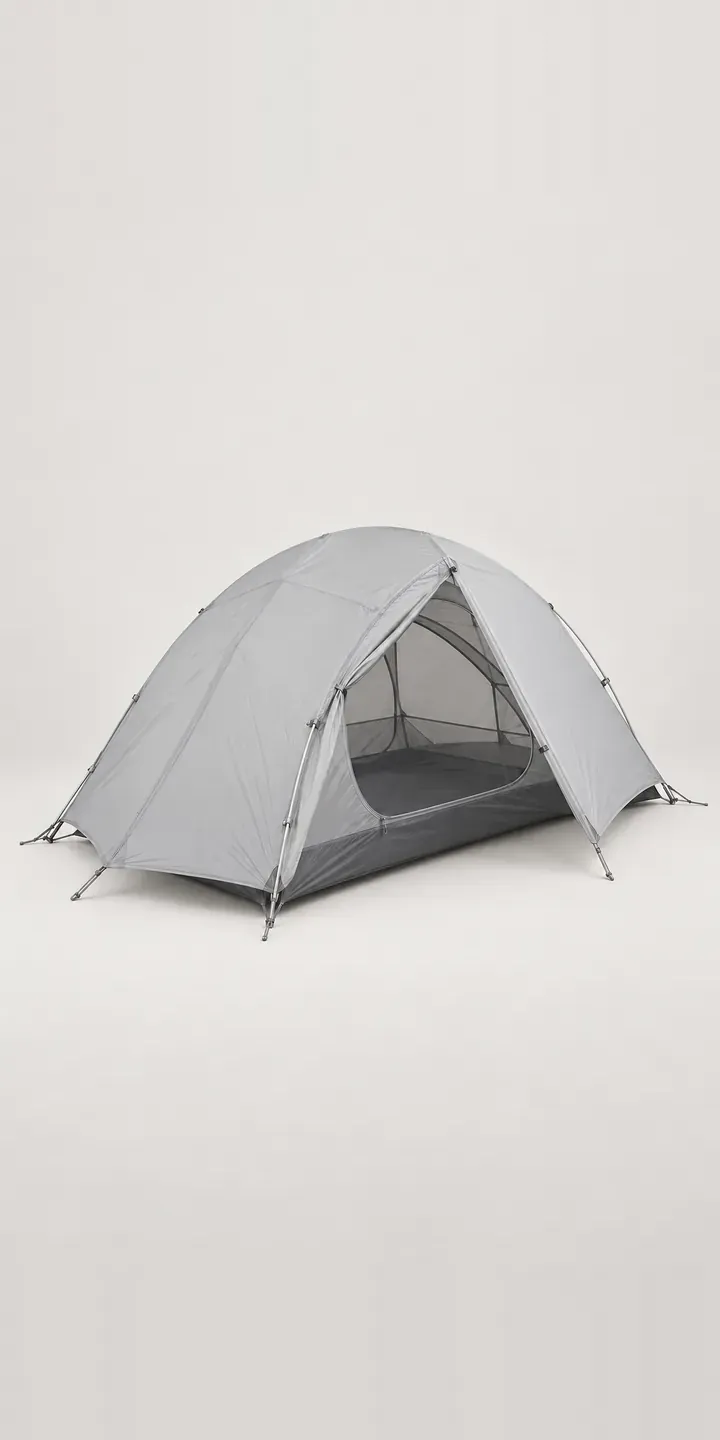
This demo shows a configurator for an illustrative trekking dome tent with a low profile and crossed poles. Swatches change the flysheet colour, and a capacity option records solo or two-person for the quote.
Backpacking buyers count grams. Every item has to justify its weight over a multi-day route, so the solo or two-person choice is not just about company. A two-person tent gives a solo trekker room for kit and wet clothing, at a weight penalty they feel on every climb. Colour matters differently here too: pale greys glow from a headtorch inside at night, while slate blue and sage disappear into a high camp.
Outdoor Configurator demo
Trekking Dome Tent
- Product
- Trekking Dome Tent
- Colour
- Mist Grey
- Capacity
- 1 Person
Illustrative product. The design and images are generated examples, not a real model for sale.
What you can configure
The demo shows mist grey, sage, sand and slate blue, from six colours that also include burnt orange and olive. The crossed pole sections and the zipped door to the vestibule hold the same position in each image. Capacity is one or two person. For now the choice lives in the summary. In production each capacity would get its own picture, with packed weight beside it.
- Colour: Mist Grey, Sage, Sand, Slate Blue
- Capacity: 1 Person, 2 Person
Why a configurator suits tents
Lightweight tent buyers research hard. They compare packed weight, floor area, peak height and vestibule size across brands before buying, often in a spreadsheet of their own. A product page that hides those numbers in a downloadable PDF, or shows one capacity only, loses them to a competitor who presents the data clearly.
A configurator answers on the page. Selecting solo or two-person updates the image, weight, floor dimensions and pack size together. Twelve versions across six colours and two capacities is a modest range, so the build is mostly about presenting accurate data well, with the inner tent and the fly both available to view.
Returns are the other concern. A backpacking tent that arrives heavier or smaller than expected tends to go back unused, often with a poor review. Showing the inner with a sleeping mat in place, and the vestibule with a pack, sets accurate expectations before the order and keeps the conversation about the tent rather than the refund.
How a production version would be built
A production build would photograph each capacity pitched in one colour, then produce the other flysheet colours as masked layers. Backpacking tents often need the inner shown as well as the fly, so a second view of the inner pitched alone is worth adding. The brand provides packed weight, minimum weight, floor dimensions, peak height, vestibule area and SKUs. Orders can go to a Shopify basket. For brands that already design in CAD, rendered product visualisation can produce pitched images before the first samples exist.
Build sheet for this range
- Colours in the full range: 6 (4 shown in this demo)
- Capacity choices: 2
- Combinations to support: 6 × 2 = 12
- Images for one photograph per combination at 3 angles: 36
- Images if capacities can be shown as separate layers, at 3 angles: 24
- Data each of the 12 combinations needs: a SKU or variant ID, price, stock or lead time, and any dimensions or specification that change
Questions about tent configurators
Should the configurator show the inner tent as well as the flysheet?
For backpacking tents, yes. Buyers want to see mesh versus solid inner, the door layout and the space inside. A second view of the inner pitched alone, or a cutaway with a mat and pack inside, covers it. The inner colour usually stays fixed while the flysheet changes.
How should weight differences between solo and two-person be presented?
Plainly, beside the image, with packed weight and minimum weight both labelled. Showing the difference as a simple figure when the buyer switches capacity is clearer than two numbers in a table. If you publish component weights, a breakdown of poles, fly, inner and pegs serves the most detailed buyers.
Can trekkers compare this tent with others in our range?
Yes. A comparison view can place two or three tents side by side with matching data: weight, floor area, peak height and pitch type. The configurator keeps the chosen colour and capacity for each. It saves buyers building their own spreadsheet and keeps them on your site while they decide.
What does a backpacking tent configurator cost?
There is no fixed price. Cost depends on how many tent models and capacities you carry, whether you photograph or render them, and how the data and checkout connect. A single model in two capacities is a small project. I reply to enquiries within two UK working days with a scoped estimate.
More outdoor gear configurator demos
Trekking Rucksack
Two-Door Tent
Two-Person Dome Tent
Compact Dome Tent
Day Hike Rucksack
Everyday Daypack
All outdoor gear configurator demos
A configurator for your tents
This demo uses an illustrative product. If you sell tents, I can build the same experience around your own range, photography and ordering process, connected to Shopify, WooCommerce or a quote workflow. I reply to enquiries within two UK working days.