Below is an illustrative reference speaker, a compact monitor with an inverted dome tweeter and a front port slot. Choose a cabinet finish and a mount, and the summary builds the pair you would send for a quote.
People buying a reference monitor have usually narrowed the shortlist on sound. What remains is how the cabinet will live in the room. A studio wants something that disappears into acoustic treatment. A home listener wants furniture. The finish and the mounting method decide whether these speakers suit the space, and both are hard to judge from a single product shot.
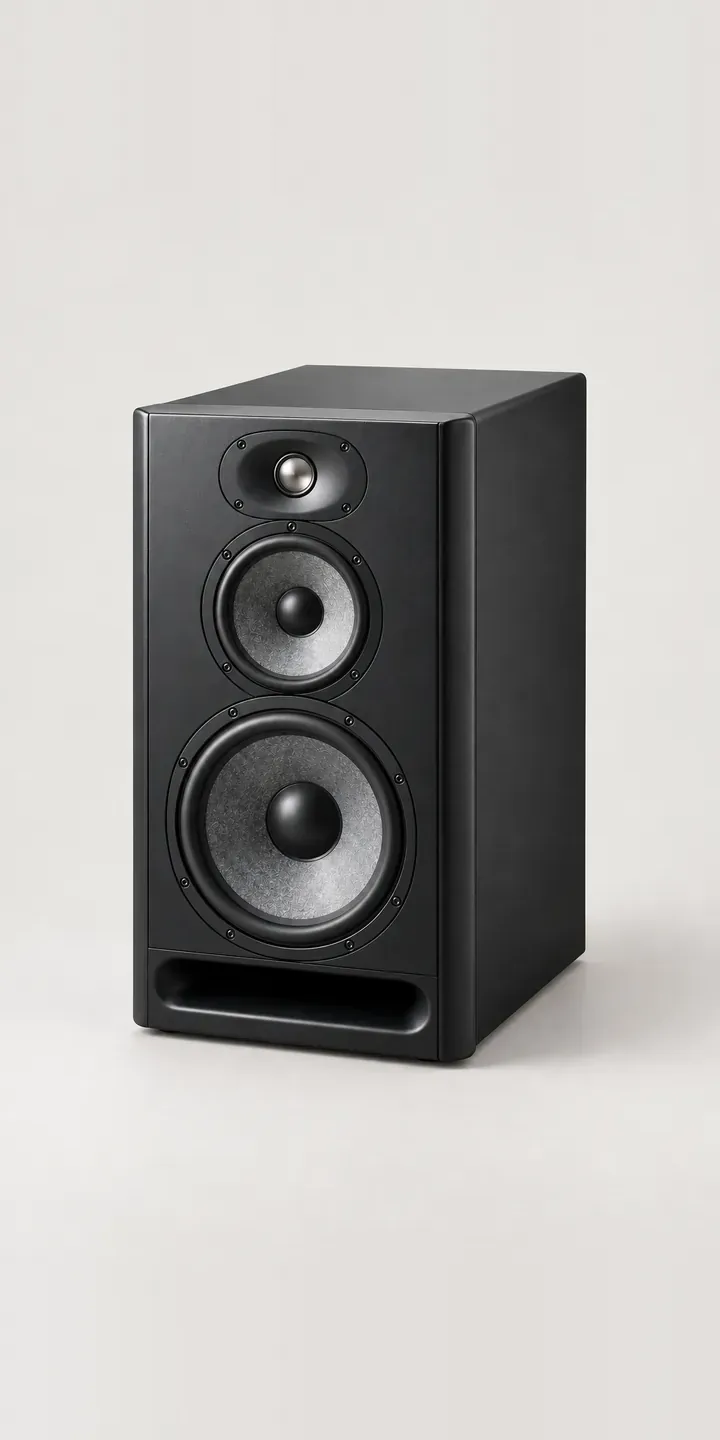
Audio Configurator demo
Reference Speaker
- Product
- Reference Speaker
- Colour
- Matte Black
- Mount
- Desk
Illustrative product. The design and images are generated examples, not a real model for sale.
What you can configure
Four cabinet finishes are in the demo: matte black, walnut veneer, satin white and dark red. Light oak and graphite complete the range. Desk, stand or wall mount is the second choice. It affects placement as much as looks, because height and distance from the wall change how a monitor sounds. The mount is recorded in the summary but does not alter the image in this demo.
- Colour: Matte Black, Walnut Veneer, Satin White, Dark Red
- Mount: Desk, Stand, Wall
Why a configurator suits speakers
Speakers sell in pairs, and real veneer complicates that. A walnut pair is usually cut from consecutive leaves so the grain matches across both cabinets. Buyers paying for veneer want reassurance that their pair will match. The configurator page is the right place to give it, with a representative image of each finish.
Mounts multiply the range. Six finishes across three mounting options is eighteen configurations, and the stands and wall brackets are often separate products with their own codes. Hi-fi retailers tend to treat them as an afterthought at checkout. Building the mount into the configuration gives the buyer a complete, compatible system, and the retailer stops fielding questions about which bracket fits.
Finishes like dark red and light oak are often made to order. That means a lead time, and a lead time needs managing. A configurator can show which finishes ship from stock and which take longer. The buyer then chooses with the delivery date in view, not after payment.
How a production version would be built
For a speaker, I would render rather than photograph. Veneer, satin paint and dark red lacquer all need consistent lighting, and a 3D model of the cabinet turns each finish into a material change. The mount then becomes a separate render layer, whether stand, wall bracket or desk pads, positioned under the same cabinet. Six finish images and three mount layers cover the range. Finish codes, pair pricing, mount compatibility and lead times per finish come from the retailer. Orders go to a basket or a dealer quote, and a 3D configurator is a later option if the brand wants rotation.
Build sheet for this range
- Colours in the full range: 6 (4 shown in this demo)
- Mount choices: 3
- Combinations to support: 6 × 3 = 18
- Images for one photograph per combination at 3 angles: 54
- Images if mounts can be shown as separate layers, at 3 angles: 27
- Data each of the 18 combinations needs: a SKU or variant ID, price, stock or lead time, and any dimensions or specification that change
Questions about speaker configurators
Can the configurator sell speakers as pairs and as single units?
Yes. Quantity can default to pairs, with a single-unit option for buyers building a surround setup or replacing a damaged cabinet. Pricing and stock follow the pair or single code. Making pairs the default avoids the classic mistake of ordering one speaker when the listed price was per unit.
How should real wood veneer be shown when every pair is different?
Show a representative pair, photographed or rendered from a real sample, and say plainly that the grain will vary. Some brands offer a photo of the actual pair before dispatch for premium finishes. The configurator can add that as an option, which turns natural variation into a selling point.
Can mounts be limited to the finishes and models they fit?
Easily. Each mount carries a compatibility rule. If a wall bracket only suits the smaller cabinet, it disappears for the larger model. Stand finishes can follow the cabinet or be chosen separately. The rules live in the product data, so a new bracket can be added without code changes.
Can dealers use the configurator to place orders with the brand?
Yes. A trade login can show dealer pricing and route the configured order to the brand as a purchase request, with the dealer's account details attached. Retail visitors see the same configurator with a dealer locator or quote request at the end. One set of images and rules serves both.
More audio equipment configurator demos



All audio equipment configurator demos
A configurator for your speakers
This demo uses an illustrative product. If you sell speakers, I can build the same experience around your own range, photography and ordering process, connected to Shopify, WooCommerce or a quote workflow. I reply to enquiries within two UK working days.