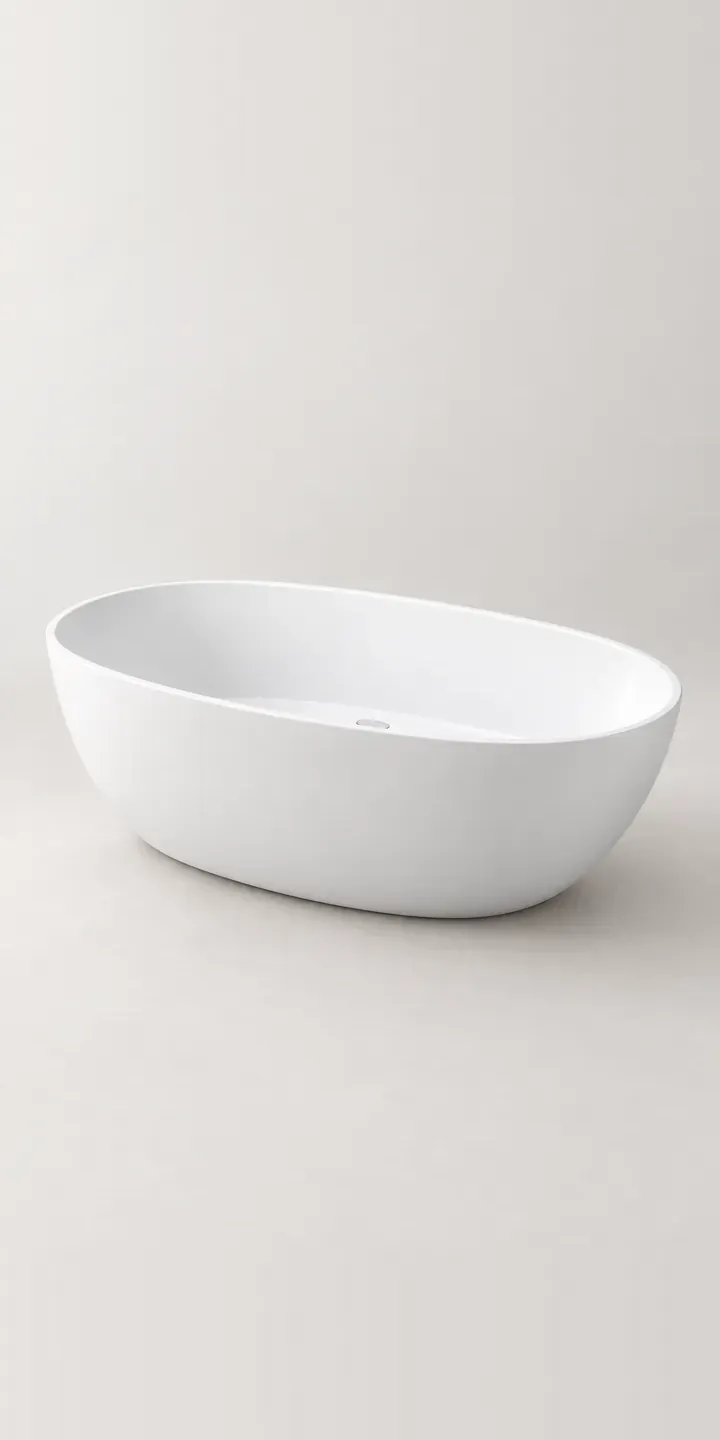
This illustrative countertop basin sits on top of the vanity rather than in it. Configure it by glaze colour and tap hole, then send it as a quote request.
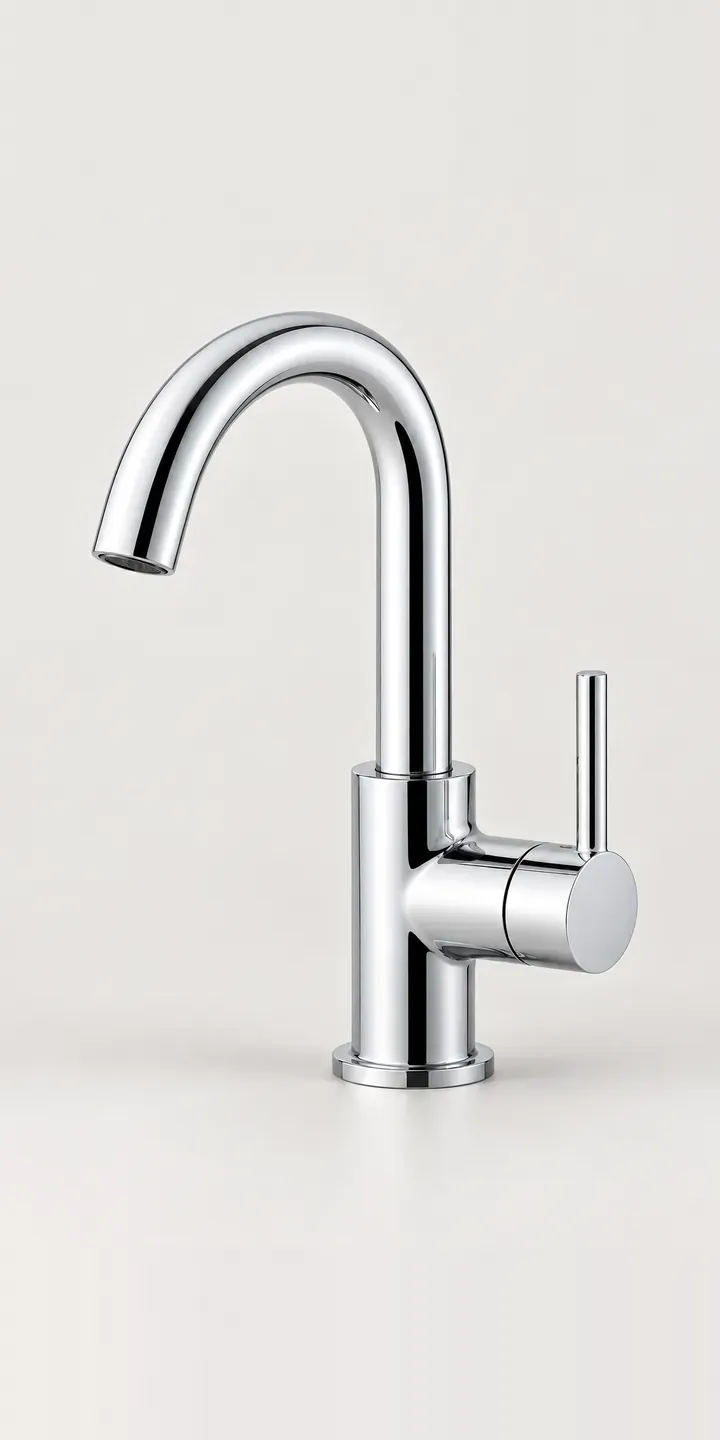
The tap-hole choice looks minor, but it decides the plumbing. A basin with no hole needs a wall-mounted tap or a deck tap on the worktop. A wall tap has to be planned before the wall is closed up. A basin with one hole takes a tall mixer on the rim. Buyers are often choosing the basin before they realise they have also chosen the tap.
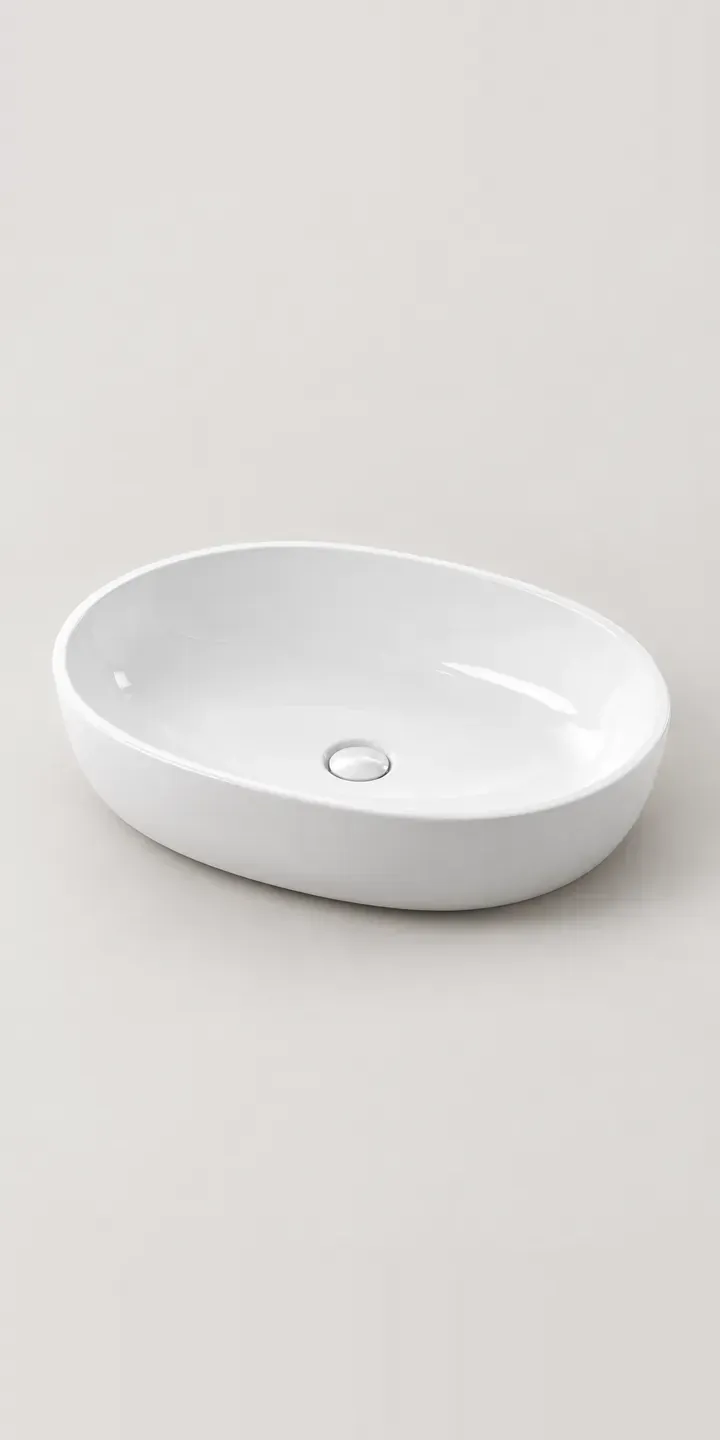
Bathroom Configurator demo
Countertop Basin
- Product
- Countertop Basin
- Colour
- Gloss White
- Tap Hole
- None
Illustrative product. The design and images are generated examples, not a real model for sale.
What you can configure
Gloss white, matte black, stone grey and sand are the glazes in the demo, four of six. The option is no tap hole or one hole. Sand and stone grey suit the timber vanities these basins usually sit on, while matte black makes a heavier statement. The tap-hole choice is kept in the summary, although the image does not yet show it.
- Colour: Gloss White, Matte Black, Stone Grey, Sand
- Tap Hole: None, 1 hole
Why a configurator suits basins
Coloured basins sell on mood but fail on practicalities. A customer chooses sand, orders the version with no tap hole, and then finds the plumber has already run pipes for a deck-mounted mixer. Either the wall is opened up again or the basin goes back. Both are expensive, and both stem from a choice that seemed trivial.
The consequence can be made visible on the page. Selecting no tap hole can show a wall tap above the basin and prompt the customer to choose one. A note explains it needs planning at first fix. Selecting one hole can show a tall mixer on the rim. The basin and tap are then ordered as a pair.
For a bathroom retailer, six glazes and two hole options make twelve basins, each pairing with several taps. Showing those pairings in one view helps sell the tap with the basin. It also gives cleaner order data, with the hole configuration recorded explicitly rather than inferred from a product code.
How a production version would be built
Each glaze would be shown from a raised three-quarter view, with and without a tap hole, alongside a top-down view of the bowl. Rendering from CAD is efficient for ceramics, because the shape is fixed and only the glaze changes. Retailer data covers SKUs, dimensions and glaze names, plus compatible taps for each hole option. That list drives the pairing step. On WooCommerce the basin and its paired tap can go into the basket together, with stock tracked for each.
Build sheet for this range
- Colours in the full range: 6 (4 shown in this demo)
- Tap Hole choices: 2
- Combinations to support: 6 × 2 = 12
- Images for one photograph per combination at 3 angles: 36
- Images if tap holes can be shown as separate layers, at 3 angles: 24
- Data each of the 12 combinations needs: a SKU or variant ID, price, stock or lead time, and any dimensions or specification that change
Questions about basin configurators
Will choosing a basin without a tap hole prompt the customer to add a wall tap?
Yes. Selecting no tap hole can open a tap step showing wall-mounted and deck-mounted options that suit the basin height. A short note explains that wall taps need their pipework planned before tiling. The configurator then adds basin and tap as a pair, so the plumber receives both together.
How accurate are coloured glazes like sand and stone grey on screen?
Reasonably accurate with calibrated photography, but glazes shift with lighting and gloss level. A matte glaze looks different under warm bathroom light than in daylight. I calibrate against a physical sample and recommend offering a glaze sample in the configurator for buyers who need certainty.
Is there a check that the basin fits on the vanity?
There can be, if vanity dimensions are in the product data or the customer enters them. The basin's footprint is compared with the worktop width and depth, leaving space for the tap. A warning appears if the basin overhangs or crowds the tap. It is a simple rule that prevents a frustrating return.
Do we need separate images for each tap-hole option?
In most cases. A tap hole is visible on the rim, so an honest preview needs one image per glaze per hole option. For this basin, that is twelve. Rendering from a single CAD model keeps that affordable, because the hole is a small geometry change rather than a new photograph.
More bathroom configurator demos

All bathroom product configurator demos
A configurator for your basins
This demo uses an illustrative product. If you sell basins, I can build the same experience around your own range, photography and ordering process, connected to Shopify, WooCommerce or a quote workflow. I reply to enquiries within two UK working days.