Built around an illustrative single-lever basin tap, this configurator lets you choose a finish and a standard or tall spout. The result goes out as a quote request.
Buyers choose a tap's finish with their eyes and its spout height with a tape measure. The second choice is the one they get wrong. A tall spout over an inset basin throws water too far and splashes. A standard spout beside a countertop bowl may not clear the rim at all. The finish sets the look of the washroom, but the spout decides whether the tap works.
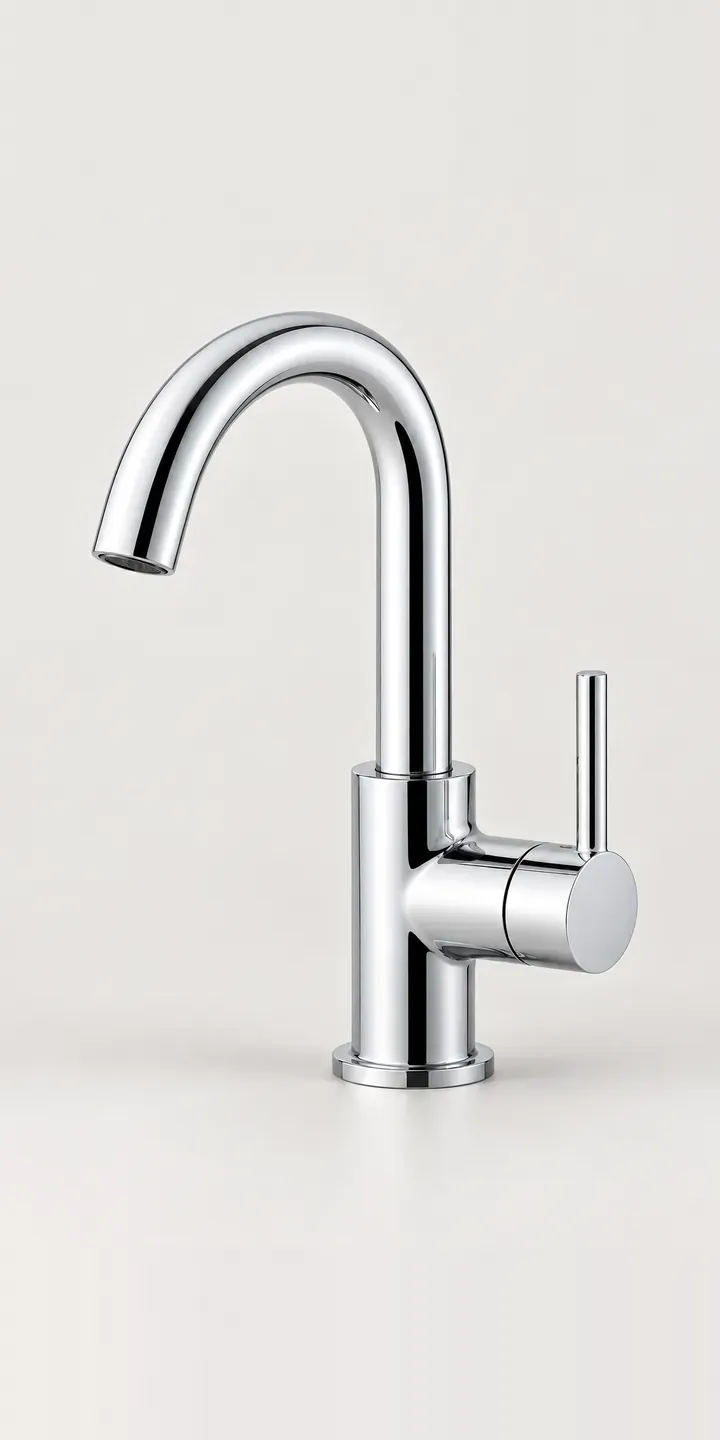
Bathroom Configurator demo
Lever Basin Tap
- Product
- Lever Basin Tap
- Colour
- Chrome
- Spout
- Standard
Illustrative product. The design and images are generated examples, not a real model for sale.
What you can configure
The demo covers chrome, matte black, brushed nickel and brushed brass, four of the six finishes, with the lever, body and spout identical in each. Spout height is selectable and listed in the summary, though the photograph does not change with it here. A production version would show both heights, ideally beside the basin types each one suits.
- Colour: Chrome, Matte Black, Brushed Nickel, Brushed Brass
- Spout: Standard, Tall
Why a configurator suits basin taps
Six finishes in two heights gives twelve taps. A bathroom retailer will often list them as twelve SKUs with a chrome photo and a finish dropdown. Buyers are left guessing at brushed nickel versus chrome under bathroom lighting. Photographing each finish properly is the first fix.
The bigger fix is pairing. A tap is rarely bought alone, and the most common mismatch is height against basin. A configurator that knows the basin type can recommend the right spout, or warn when a pairing will splash or fail to reach. That catches the error before installation, when a fitted tap usually cannot be returned.
Hotel and serviced-apartment refurbishments raise the stakes further. A specifier ordering the same tap for every room needs one finish, one height and a quantity, and needs the finish to match across deliveries. A configurator that ends in a quote, with SKU and quantity attached, gives the supplier a clean schedule rather than a spreadsheet of room numbers.
How a production version would be built
One image per finish per spout height is realistic: twelve views from a fixed angle, plus close-ups of the lever and outlet. Rendering from the manufacturer's CAD files is often cheaper than photography and keeps every finish identical in shape. I would ask the retailer for SKUs, spout heights and reach figures, and the basin types each height is designed for. That data drives the pairing rules. Retail orders go to the basket, and contract orders to a quote request.
Build sheet for this range
- Colours in the full range: 6 (4 shown in this demo)
- Spout choices: 2
- Combinations to support: 6 × 2 = 12
- Images for one photograph per combination at 3 angles: 36
- Images if spouts can be shown as separate layers, at 3 angles: 24
- Data each of the 12 combinations needs: a SKU or variant ID, price, stock or lead time, and any dimensions or specification that change
Questions about basin tap configurators
Could spout height be recommended from the basin the customer has?
It can. If the customer picks a basin first, or says whether it is inset, semi-recessed or countertop, the spout height can be recommended or restricted. The rules come from spout height and reach figures you already publish, so updating them when the range changes does not need a developer.
Will brushed nickel and chrome look different enough on screen?
They can, if they are photographed properly. Chrome is a mirror that reflects its surroundings, while brushed nickel is warmer and diffuses light. Shooting both in the same controlled set, with a close-up of the brushed grain, makes the difference clear. A single angle on white tends to flatten it.
How should a configurator show the tap's reach over the basin?
With a side view and the reach figure, measured from the tap body to the centre of the outlet. Reach decides where the water lands, so it matters as much as height. A simple side-on diagram, shown when the spout option changes, lets buyers and plumbers check the fit against the basin they have.
Do we need 3D for a tap configurator?
Not usually. Taps photograph and render well as still images, and a 2D configurator loads quickly on mobile. 3D becomes worthwhile when buyers need to rotate the tap to judge the lever profile, or when a range has many handle and spout combinations. I compare both approaches on the 3D product configurator page.
More bathroom configurator demos
Mineral Cast Bath
Minimal Basin Mixer
Moulded Oval Bath
Oval Soaking Bath
Overhead Spray Set
Panelled Bath
All bathroom product configurator demos
A configurator for your basin taps
This demo uses an illustrative product. If you sell basin taps, I can build the same experience around your own range, photography and ordering process, connected to Shopify, WooCommerce or a quote workflow. I reply to enquiries within two UK working days.