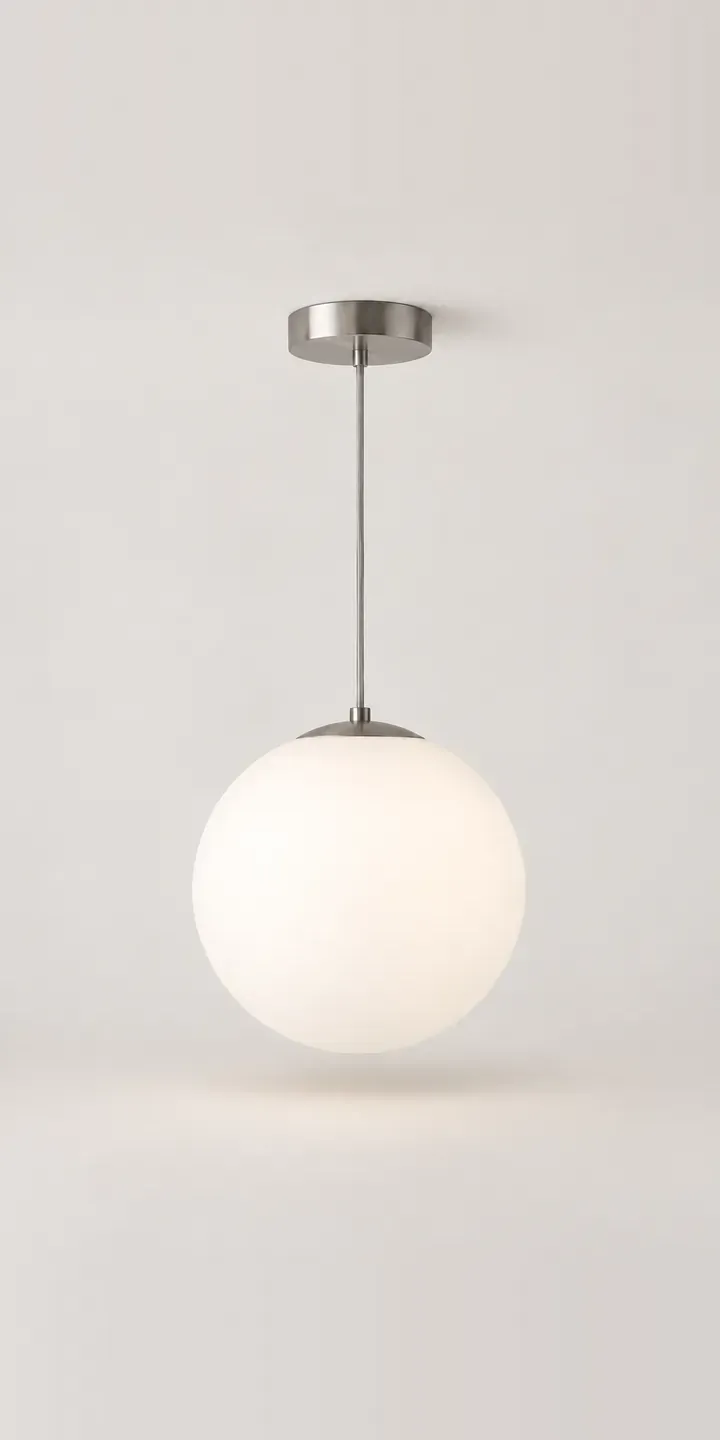
A hand-blown opal sphere held by a small metal cap: that is the whole of this illustrative pendant, and the configurator lets you set both parts. Choose a cap finish and a globe diameter to build your version.
The glass is the same in every version, so the choice comes down to two details buyers often underrate. The cap is a small piece of metal, but it has to sit with door furniture, switches and stair rails. The diameter decides whether the globe reads properly in a tall space. In a double-height hallway, a sphere that looked generous in a showroom can look like a marble once it is hung.
Lighting Configurator demo
Opal Sphere Pendant
- Product
- Opal Sphere Pendant
- Colour
- Satin Chrome
- Diameter
- 330 mm
Illustrative product. The design and images are generated examples, not a real model for sale.
What you can configure
Only the cap changes between images, which is exactly how buyers should compare it, with the glass glow held constant. Satin chrome, matte black, brushed brass and matte white are shown; copper and gunmetal are the other two caps. Diameter, 330 or 450 mm, is selectable and recorded in the summary, though the picture stays the same. Production would show both sizes against a stair or landing.
- Colour: Satin Chrome, Matte Black, Brushed Brass, Matte White
- Diameter: 330 mm, 450 mm
Why a configurator suits pendants
A globe pendant looks simple to sell, but six caps in two diameters still makes twelve products. The differences are small enough that one photograph cannot carry them. Brushed brass against satin chrome is a few square centimetres of metal. Buyers zoom in, cannot tell, and either order a sample or leave.
Stairwells and hallways add a decision the product page rarely helps with: drop length. A pendant in a three-storey stairwell may need several metres of cable, and getting it wrong means an electrician shortening it on site or a second order. A configurator can ask for the ceiling height and the point the globe should hang to, and record the drop needed.
Hand-blown glass is also expensive to return and awkward to pack. Every breakage in transit is a lost globe and a disappointed customer. When buyers choose the right diameter and cap first time, there are fewer second shipments, and fewer large glass parcels travelling back to the warehouse.
How a production version would be built
Because only the cap changes colour, layering works well. The opal sphere is shot or rendered once per diameter, and each cap finish sits on top as a separate layer, so twelve combinations need around eight images. A close-up of the cap in each finish, from a fixed camera position, is worth adding. The retailer supplies cap finishes, globe diameters, available drop lengths and any cut-to-length cable option. A drop-length field can feed a made-to-measure configuration flow if cables are cut to order.
Build sheet for this range
- Colours in the full range: 6 (4 shown in this demo)
- Diameter choices: 2
- Combinations to support: 6 × 2 = 12
- Images for one photograph per combination at 3 angles: 36
- Images if diameters can be shown as separate layers, at 3 angles: 24
- Data each of the 12 combinations needs: a SKU or variant ID, price, stock or lead time, and any dimensions or specification that change
Questions about pendant configurators
Can customers enter their ceiling height and get the right cable drop?
Yes. The configurator asks for ceiling height and the height the globe should hang at, then calculates the drop and adds it to the order. If cables come in fixed lengths, it picks the nearest one that works. For tall stairwells it can flag that an extended cable is needed.
How do you show how evenly the opal glass glows?
Show the globe both lit and unlit. Unlit, opal glass looks flat white and buyers judge the cap. Lit, it shows how evenly the glass diffuses the light, with no hot spot from the bulb. A toggle between the two states is a simple addition to an image-based build.
Does each globe look slightly different if it is hand-blown?
Usually a little, in wall thickness and the way light passes through. The configurator should say so plainly beside the image rather than in the terms and conditions. Customers who expect small variations in handmade glass are far less likely to return a globe because of them.
Can the cap finish be matched to other products in our range?
Yes. If wall lights, switches or other pendants share the same finishes, the configurator can remember the chosen finish and offer it across the range. That reduces mismatches when someone lights a whole hallway, and it encourages buyers to complete the set rather than mixing suppliers.
More lighting configurator demos
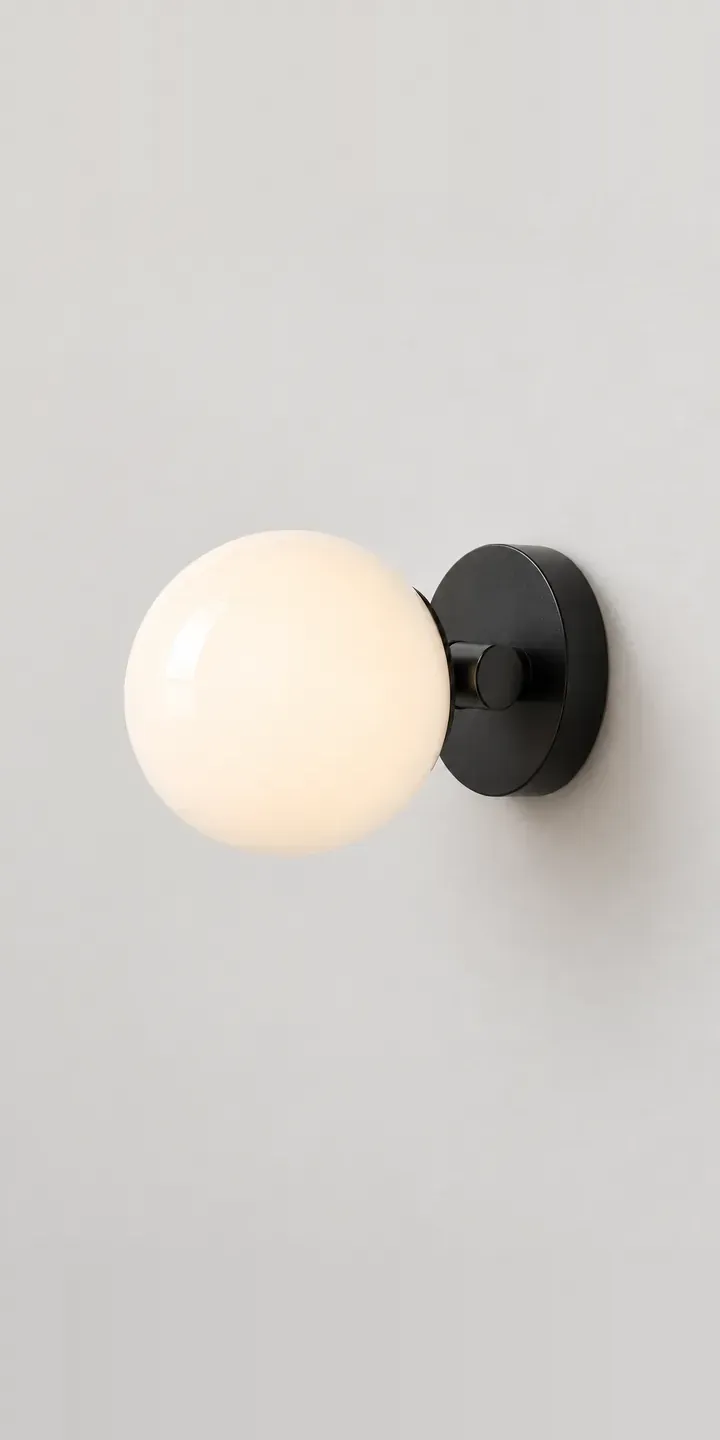
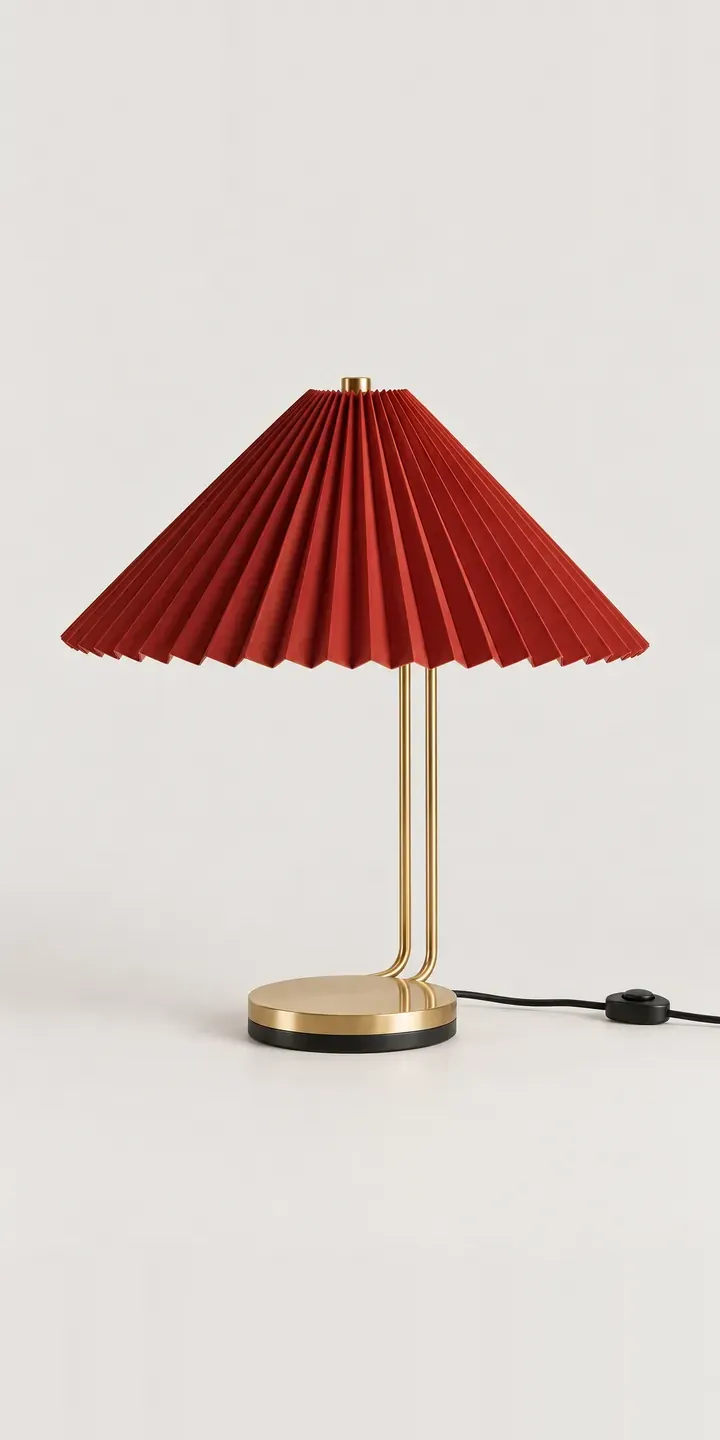
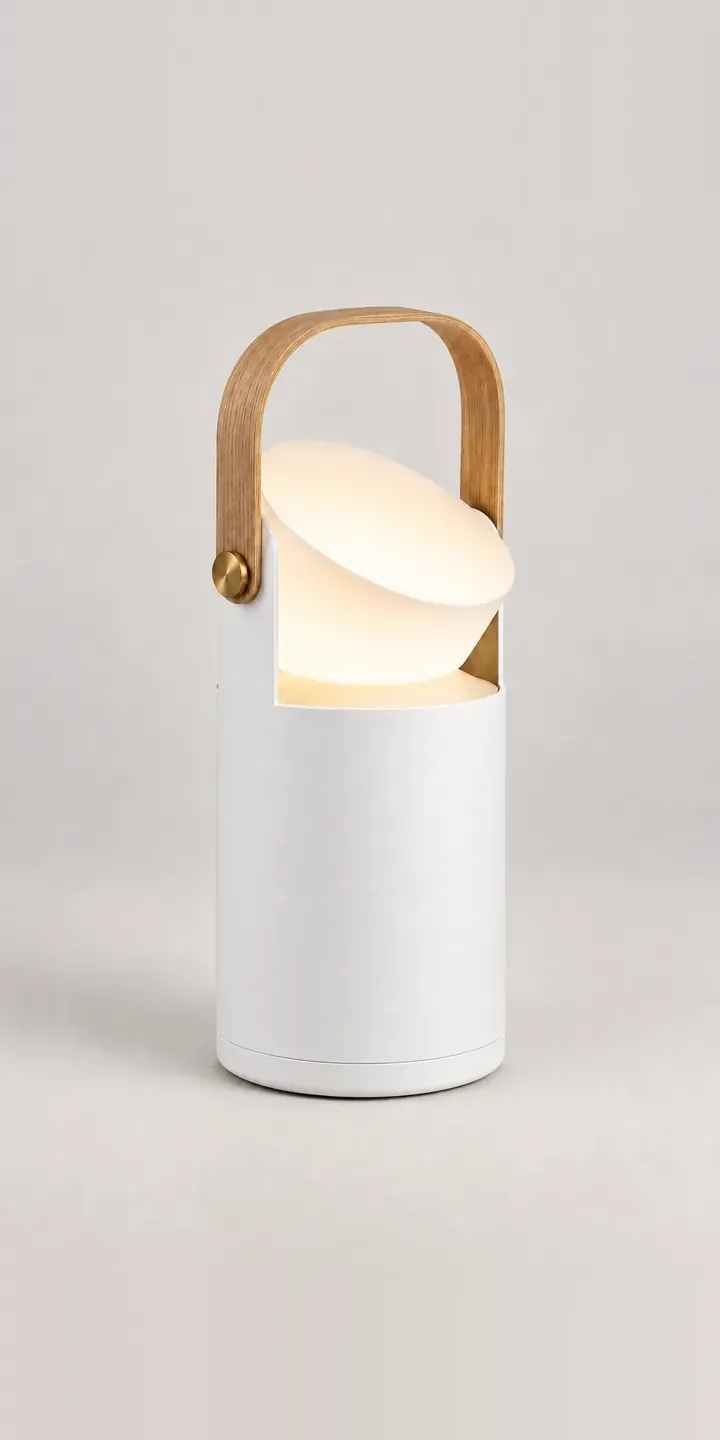
All lighting configurator demos
A configurator for your pendants
This demo uses an illustrative product. If you sell pendants, I can build the same experience around your own range, photography and ordering process, connected to Shopify, WooCommerce or a quote workflow. I reply to enquiries within two UK working days.