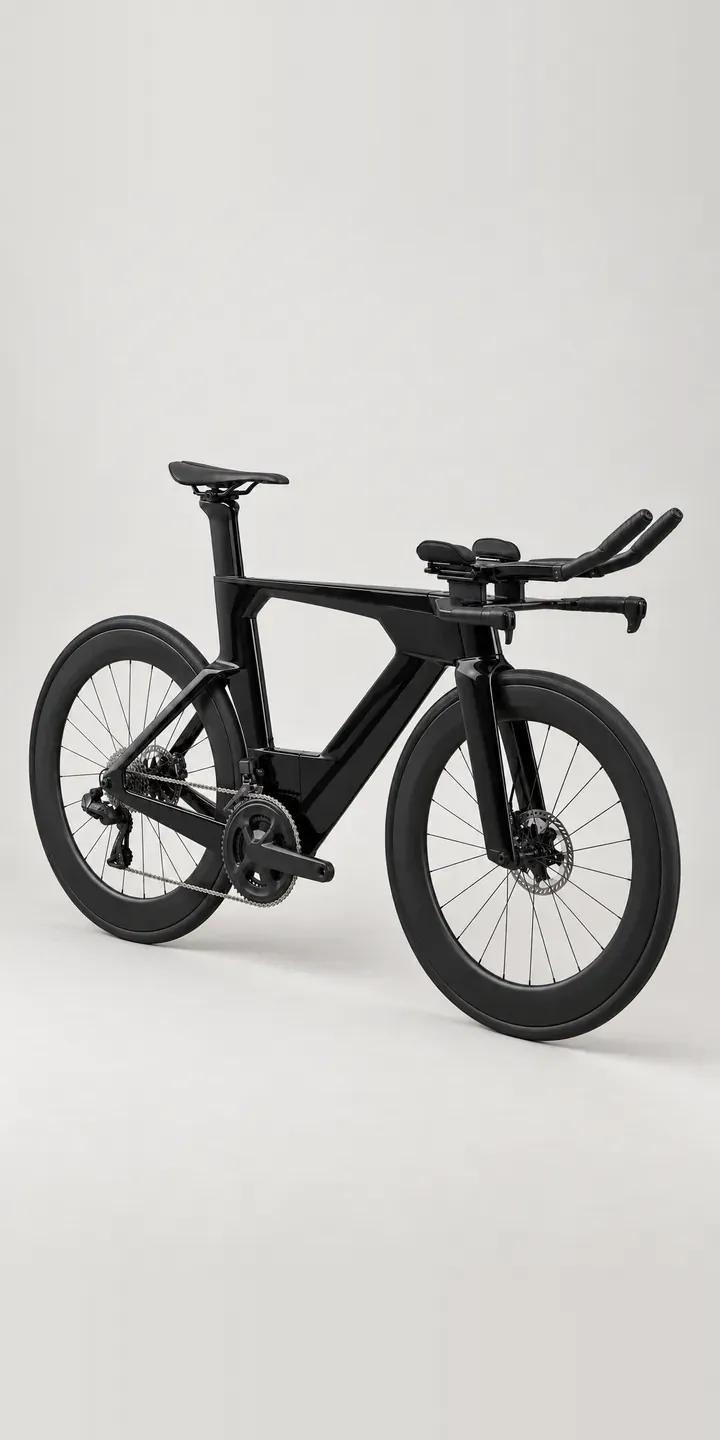
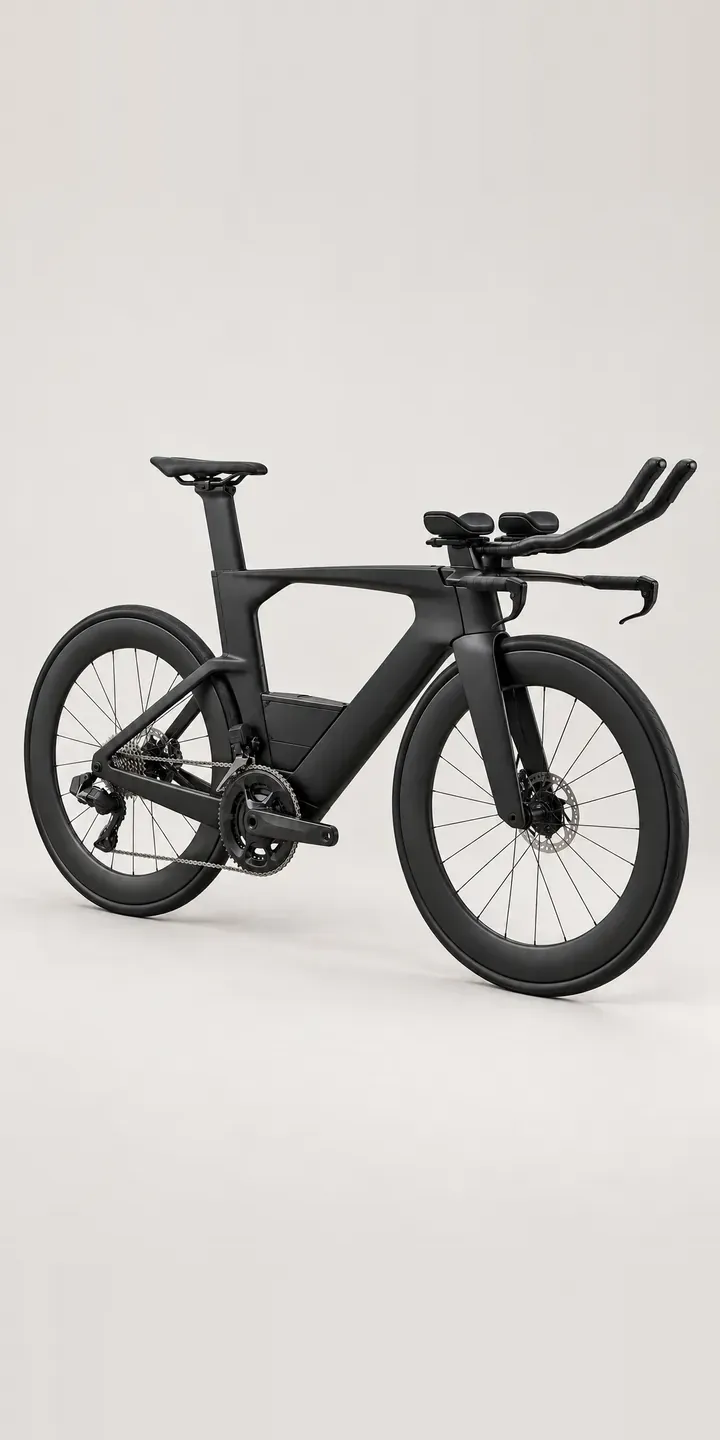
Triathletes rarely buy a tri bike on impulse. This illustrative frame is shown in four colours with small, medium and large sizes, and the build is sent as a quote rather than added to a basket.
The real decision is position. A tri bike puts the rider low and forward on aero extensions over a steep seat tube, and that position has to be held for hours and then followed by a run. Buyers compare pad stack, reach adjustment, saddle setback and how easily the front end can be tuned. Colour still matters, particularly to athletes who like their bike to stand out on a crowded transition rack.
Cycling Configurator demo
Triathlon Bike
- Product
- Triathlon Bike
- Colour
- Gloss Black
- Frame Size
- S
Illustrative product. The design and images are generated examples, not a real model for sale.
What you can configure
Swatches switch the frame between gloss black, electric blue, matte white and titanium grey. Each image is shot from the same angle, so the forearm pads and the steep seat tube line up between colours. Size is captured in the summary but does not change the image here. In production the size step would sit beside a short fit questionnaire, because three sizes have to cover a wide range of riders.
- Colour: Gloss Black, Electric Blue, Matte White, Titanium Grey
- Frame Size: S, M, L
Why a configurator suits tri bikes
Tri bikes are fit-critical and seasonal. Most are bought in the months before an athlete's target race, and a bike that arrives late or in the wrong size can cost them that race. Recording size alongside the rider's existing fit numbers, or their fitter's details, lets the shop confirm the order before it is placed.
That fit capture is where the configurator earns its keep. The buyer enters saddle height, pad position and current bike measurements, or uploads a fit sheet. The retailer receives a structured request and can advise on size, stem and extension length before the frame is ordered. It works more like a made-to-measure configurator than a colour picker, which suits how tri bikes are actually sold.
Lead times then become visible. Each colour and size combination can show whether it is in stock or a factory order with an expected date. Athletes can pick a colour they will have before race day, rather than discovering a delay after they have paid a deposit.
How a production version would be built
On the imagery side, one photograph or render per colour from a fixed side-on position is enough. The heavier work is in the data: size ranges, pad stack and reach adjustment, compatible extensions, and stock or lead times per combination. The configurator ends in a quote form with fit fields and an optional file upload, which lands in the shop's inbox or CRM with every answer structured. For brands that sell direct, the same build can go to a Shopify or WooCommerce basket once the fit has been confirmed by the retailer's fitter.
Build sheet for this range
- Colours in the full range: 6 (4 shown in this demo)
- Frame Size choices: 3
- Combinations to support: 6 × 3 = 18
- Images for one photograph per combination at 3 angles: 54
- Images if frame sizes can be shown as separate layers, at 3 angles: 27
- Data each of the 18 combinations needs: a SKU or variant ID, price, stock or lead time, and any dimensions or specification that change
Questions about tri bike configurators
Can customers upload a bike fit report with their configuration?
Yes. The quote form can accept a PDF or image of a fit report and store it with the configuration. Your fitter sees the rider's numbers next to the chosen size before replying. That saves a round of emails and makes ordering the wrong size much less likely.
How do we show lead times per size and colour?
Each combination maps to a SKU with a stock level or an expected date, read from your store or ERP. The configurator shows in stock, due on a date, or factory order. For athletes working towards a race, that information often decides which colour they choose.
Can the configurator suggest extensions and pad spacers for a given fit?
It can, if your fit rules are written down. A rider whose numbers sit at the top of the medium range might be shown a longer extension, for example. I keep those suggestions as clear, editable rules in the product data, owned by your fit team rather than buried in code.
Is a three-size range too coarse for a configurator to help?
No, that is where it helps most. With only three sizes, adjustability does the fine-tuning, so the buyer needs guidance on where they sit in the range and which parts to change. A size step with clear fit ranges and an expert follow-up does that far better than a size chart alone.
More bike configurator demos
A configurator for your tri bikes
This demo uses an illustrative product. If you sell tri bikes, I can build the same experience around your own range, photography and ordering process, connected to Shopify, WooCommerce or a quote workflow. I reply to enquiries within two UK working days.