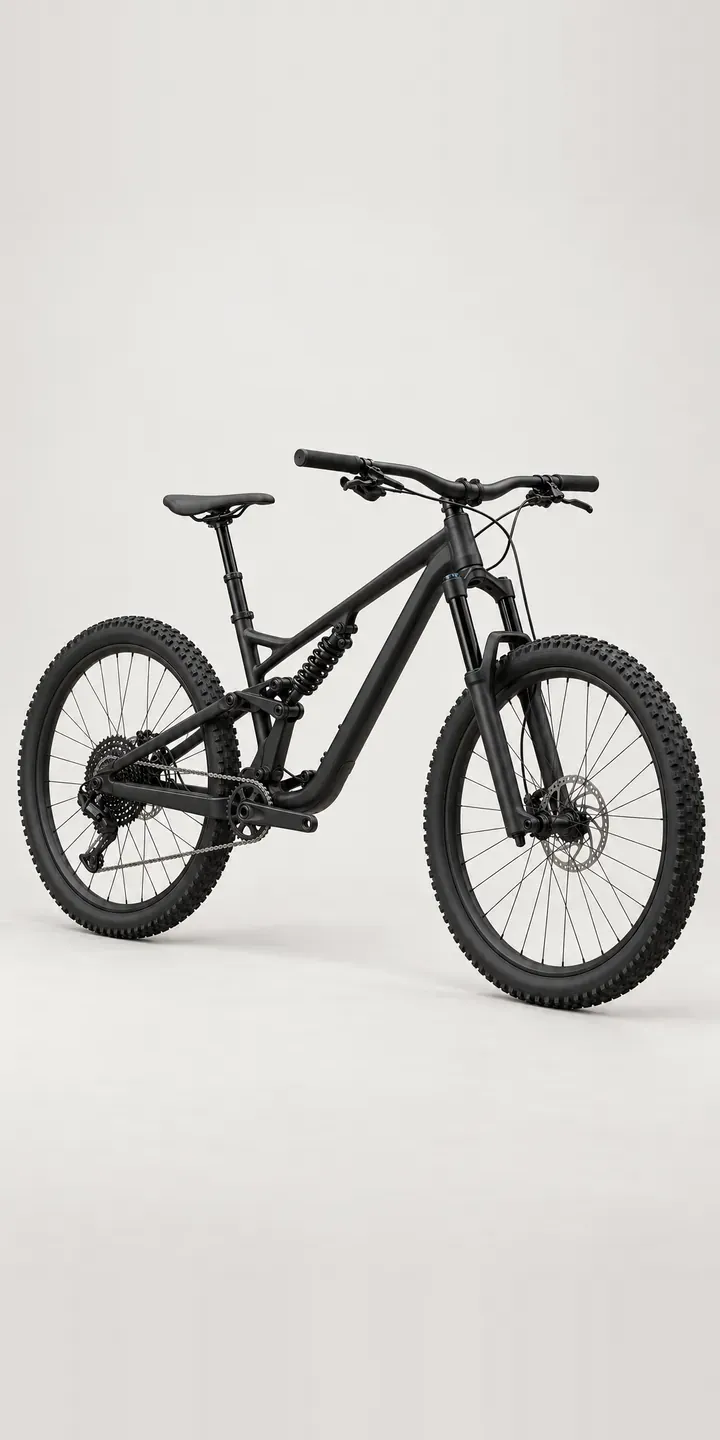
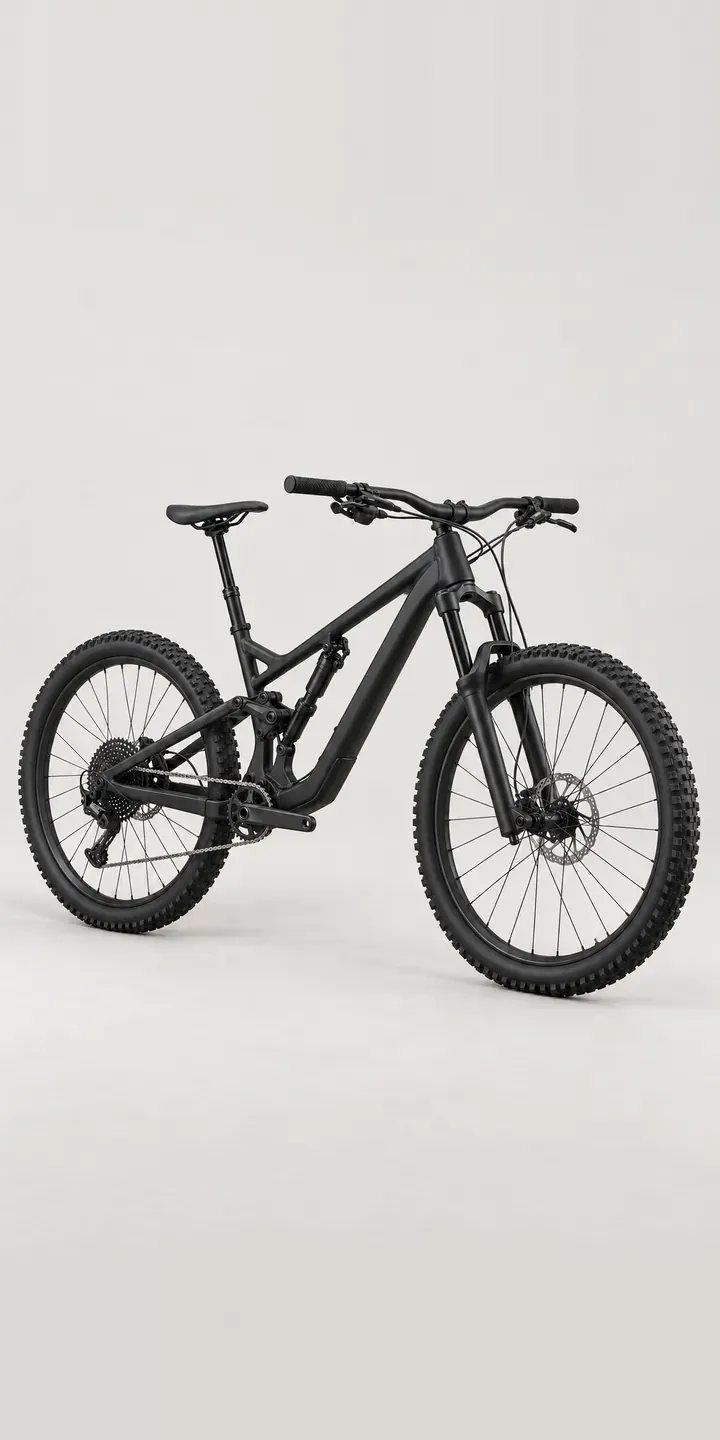
Modern trail geometry has made sizing harder to get right from a chart. This illustrative trail bike, with a coil rear shock and a dropper post, is shown in four colours and three sizes, and the configured build is sent for a quote.
Longer reach and slacker angles mean two riders of the same height may want different sizes, depending on whether they spend their time on steep descents or long climbs. Buyers also check whether the dropper will fit at full insertion for their leg length, and how much drop they can run. Colour runs alongside all of that, and terracotta and gloss sage give the bike park crowd an alternative to black.
Cycling Configurator demo
Trail Mountain Bike
- Product
- Trail Mountain Bike
- Colour
- Matte Black
- Frame Size
- S
Illustrative product. The design and images are generated examples, not a real model for sale.
What you can configure
The colour picker covers matte black, gloss sage, terracotta and navy, and every photograph shares one angle, so the coil shock in its linkage and the dropper post sit in the same place. Size is selectable and recorded in the summary, but the image stays the same. In a production build, choosing a size would update reach, seat tube length and maximum dropper length.
- Colour: Matte Black, Gloss Sage, Terracotta, Navy
- Frame Size: S, M, L
Why a configurator suits mountain bikes
A mountain bike in the wrong size is an expensive mistake to undo. It goes back in a bike box at the retailer's cost, often with signs of use that make it hard to resell as new. Many of those returns start with a size chart that looked simple on the product page and did not reflect how the rider actually rides.
A configurator can ask two or three useful questions before suggesting a size: height, inseam and riding style. It then shows reach and dropper insertion for that size, and flags when the rider sits between two. That is not a full bike fit, but it is closer than a single height range, and it leaves the shop with a record of the advice given.
Coil shocks add a step that air-sprung bikes avoid. The spring has to suit the rider's weight, and the wrong one means a swap after the first ride. Asking for rider weight during configuration lets the shop fit the right spring before the bike leaves, which is a small detail that riders remember.
How a production version would be built
Paint is a single-image swap per colour from a locked camera, with optional details of the coil shock and dropper. The real effort is in the sizing logic: reach, stack, seat tube length, insertion depth and dropper length per size, plus the rules that turn height, inseam and riding style into a suggestion. That data comes from the brand's geometry sheet and belongs in one place, as set out in my notes on configurator product data. Orders go to a basket, a quote or a dealer, with the advice and spring choice stored on the order.
Build sheet for this range
- Colours in the full range: 6 (4 shown in this demo)
- Frame Size choices: 3
- Combinations to support: 6 × 3 = 18
- Images for one photograph per combination at 3 angles: 54
- Images if frame sizes can be shown as separate layers, at 3 angles: 27
- Data each of the 18 combinations needs: a SKU or variant ID, price, stock or lead time, and any dimensions or specification that change
Questions about mountain bike configurators
Can the configurator check whether the dropper post suits a rider's inseam?
Yes, if you supply insertion depth and dropper lengths per size. The rider enters inseam, and the configurator checks whether the chosen size and dropper leave enough post for their saddle height. If not, it suggests a shorter dropper or a different size, which prevents a common complaint after delivery.
How should the configurator handle riders who fall between two sizes?
By showing the trade-off rather than choosing for them. The smaller frame is usually more agile on tight trails, while the larger one is calmer at speed. The configurator can show both sizes' reach, ask about riding style, then recommend one with a reason. A test ride option helps anyone still unsure.
Can riders see the bike with an air shock instead of the coil?
In production, yes, if you offer it. The shock sits in a defined place in the frame, so an alternative can be photographed at the same angle and composited in. Coil and air shocks look quite different, and riders who care about the choice will want to see it on the bike before ordering.
What does a mountain bike configurator cost?
I do not publish fixed prices, because the work varies with the number of models, sizes and options, the state of your geometry data and photography, and where orders need to go. My guide to configurator pricing walks through each of those factors and how they affect the budget.
More bike configurator demos
A configurator for your mountain bikes
This demo uses an illustrative product. If you sell mountain bikes, I can build the same experience around your own range, photography and ordering process, connected to Shopify, WooCommerce or a quote workflow. I reply to enquiries within two UK working days.