Upholstered beds are sold on fabric. The shape of this illustrative padded bed is simple. Fabric wraps tightly over the headboard edge, and a neat seam marks where the padded side rail meets it. What the buyer agonises over is the cloth.
They want to know how a colour looks over a curved, padded edge rather than on a flat swatch, and how the weave catches light. They also wonder whether forest green will feel rich or heavy in their room. For a made-to-order bed the stakes are higher. Once the fabric is cut, the bed is often not returnable in the way a stock item is, so the buyer needs real confidence before ordering.
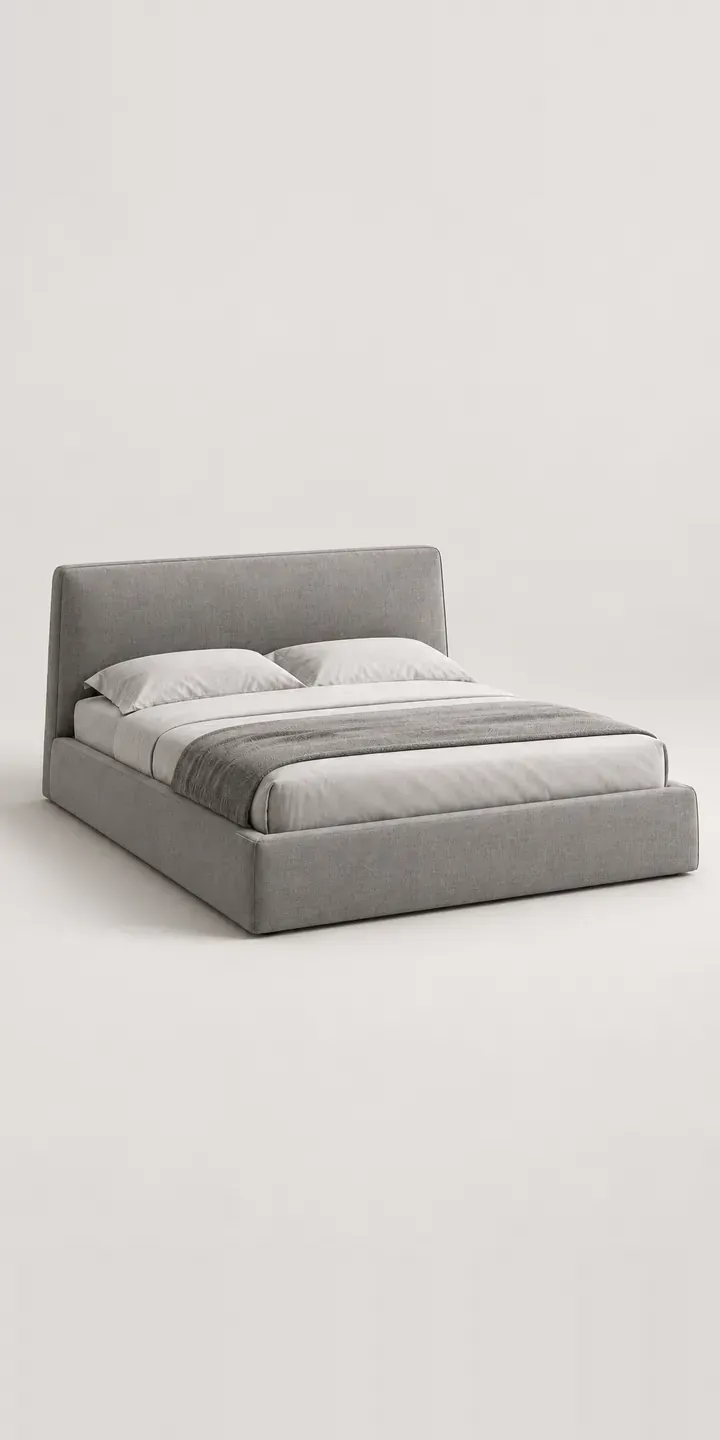
Bedroom Configurator demo
Padded Bed
- Product
- Padded Bed
- Colour
- Neutral Grey
- Width
- 140 cm
Illustrative product. The design and images are generated examples, not a real model for sale.
What you can configure
Fabrics in the demo are neutral grey, oatmeal, charcoal and forest green, with dusty rose and ink blue in the wider range. The 140, 160 and 180 cm widths show in the summary. On an upholstered bed the width also changes how much fabric the headboard presents, so a larger size makes a strong colour more dominant in the room.
- Colour: Neutral Grey, Oatmeal, Charcoal, Forest Green
- Width: 140 cm, 160 cm, 180 cm
Why a configurator suits beds
Upholstery ranges grow fast. Six colours across three widths is eighteen combinations for one bed, and most brands offer several fabric types, each in its own colours. Photographing every one is unrealistic, so retailers show a handful and post swatches for the rest. That swatch-and-wait cycle can add weeks to a sale and loses customers along the way.
A configurator built from consistent renders can show every fabric on the actual bed. The swatch request then becomes a final check rather than the first step. Samples still go out, but to buyers who have already chosen, which makes each one far more likely to lead to an order.
Hotels and serviced apartments buy upholstered beds in quantity, often with contract requirements for durability and fire safety. A configurator can filter fabrics by those requirements, show only compliant options to trade users, and put the fabric code and quantity on the quote. That suits the way contract furniture is actually bought.
How a production version would be built
Fabric beds benefit most from 3D rendering or texture-mapped images. A single model of the bed is rendered with each fabric applied. New colours, or whole fabric ranges, are then added from swatch scans rather than a new photoshoot. Close-ups of the headboard edge show weave and texture. I would ask the brand for fabric names and codes, rub-test and fire-safety data for contract users, widths and dimensions, and lead times per fabric. Orders go to a basket or a quote, with an optional swatch request. My notes on 3D product configurators explain the rendering side.
Build sheet for this range
- Colours in the full range: 6 (4 shown in this demo)
- Width choices: 3
- Combinations to support: 6 × 3 = 18
- Images for one photograph per combination at 3 angles: 54
- Images if widths can be shown as separate layers, at 3 angles: 27
- Data each of the 18 combinations needs: a SKU or variant ID, price, stock or lead time, and any dimensions or specification that change
Questions about bed configurators
Can new fabrics be added without photographing the bed again?
Yes, if the configurator uses a 3D model or texture mapping. A new fabric is scanned or photographed flat, mapped onto the bed, and rendered in the same light as the rest. Adding a seasonal colour or a whole new fabric range becomes far quicker than organising another photoshoot.
Can customers order a fabric swatch from the configurator?
A swatch button beside each fabric adds it to a sample order, and the configured bed is saved so the customer can return to it. When the swatch arrives, one link reopens the build. Tracking which swatches lead to orders also shows you which fabrics are earning their place.
Can contract buyers see fire-safety and durability data for each fabric?
Yes. Each fabric carries its test data in the product information, and trade users can filter by it, for example to see only fabrics suitable for hotel use. The data appears in the summary and passes to the quote, saving the supplier from answering the same compliance questions for every project.
How do you show the texture of the fabric accurately?
With close-up views and good scans. The main image shows colour and shape, while a close-up of the padded edge shows the weave and how the fabric wraps. I calibrate colour against physical swatches. Textured fabrics such as boucle need more care than flat weaves, and samples remain the final check.
More bed configurator demos
A configurator for your beds
This demo uses an illustrative product. If you sell beds, I can build the same experience around your own range, photography and ordering process, connected to Shopify, WooCommerce or a quote workflow. I reply to enquiries within two UK working days.