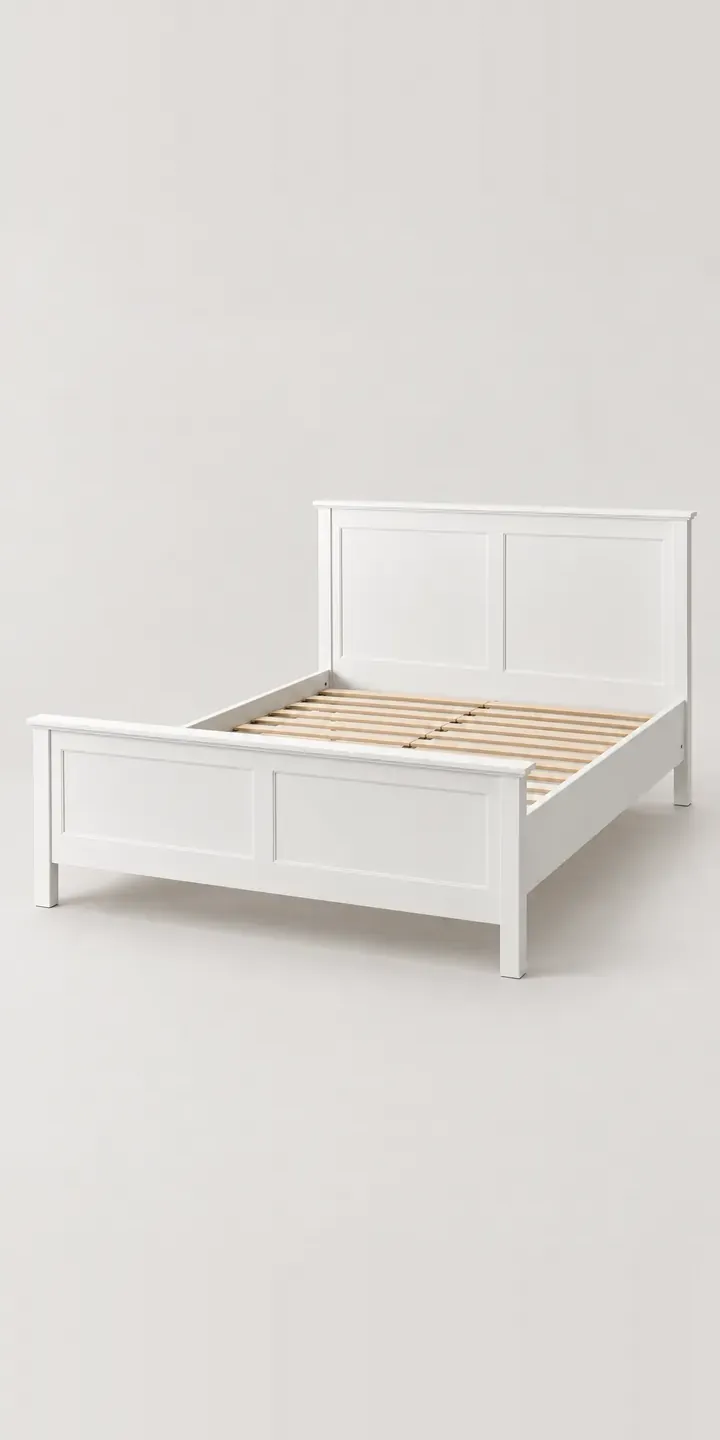
A footboard changes how a bed sits in a room. This illustrative frame pairs a tall headboard, profiled along its top edge, with a low footboard panel meeting the side rail at each corner. It reads as a complete piece of furniture rather than a mattress on a base.
People who choose a footboard are usually furnishing a room with some formality, often a guest bedroom or a main bedroom with traditional touches. They are weighing the frame's presence against the room's size, since a footboard adds visual length. Taller sleepers will also want to know it will not stop their feet. Finish then sets the mood: walnut effect and black feel formal, light oak and white more relaxed.
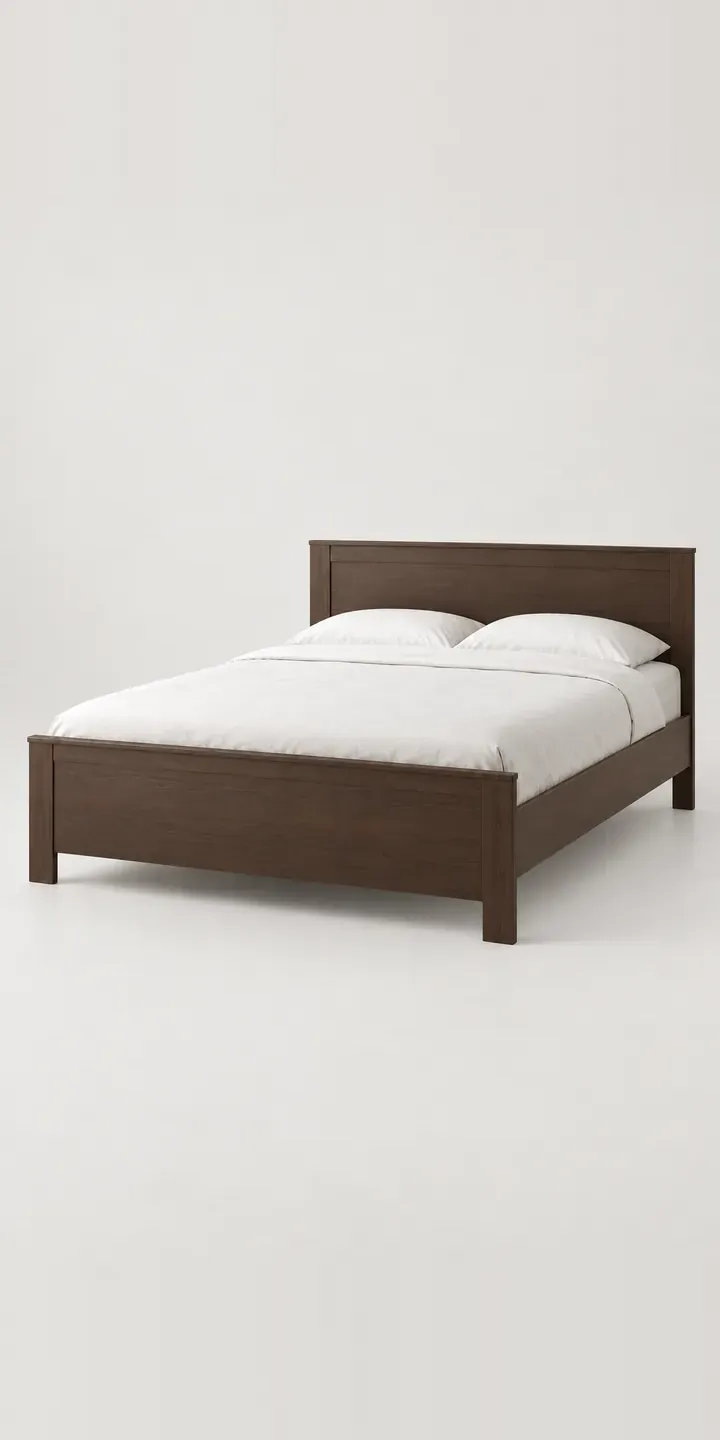
Bedroom Configurator demo
Footboard Bed
- Product
- Footboard Bed
- Colour
- Walnut Effect
- Width
- 140 cm
Illustrative product. The design and images are generated examples, not a real model for sale.
What you can configure
The demo switches between walnut effect, white, light oak and black. Grey and navy complete the range. Width is 140, 160 or 180 cm and is captured in the summary. With a footboard, width and finish together decide how much the bed fills the room, because the frame is visible on all four sides rather than three.
- Colour: Walnut Effect, White, Light Oak, Black
- Width: 140 cm, 160 cm, 180 cm
Why a configurator suits beds
Furniture with strong outlines is where the difference between finishes shows most. The profiled headboard edge catches light differently in black than in light oak, and the footboard corner reveals whether a finish is real veneer or an effect. Customers look closely at those details, and a small swatch simply cannot show them.
Eighteen combinations of finish and width is more than most retailers will photograph for one frame. A configurator shows every finish on the actual bed and states the width clearly. For effect finishes, it also lets the retailer explain what walnut effect means, so nobody expecting solid timber is surprised by a printed grain.
Footboard beds are typically bought for rooms where the bed is the main piece, and buyers often add bedside tables or an ottoman. Offering those in the chosen finish is a natural next step. Retailers who sell mattresses can also recommend a depth that leaves the mattress top at a sensible height above the footboard.
How a production version would be built
An image-based build fits this frame. Each finish is rendered from a three-quarter angle showing the headboard profile and footboard corner together. A close-up of the corner joint adds finish detail. Widths can share renders with a dimension overlay, or have their own images if the proportion change is visible. Finish descriptions need to state whether each is veneer, paint or effect, alongside widths, dimensions and any matching pieces. Orders go to the basket as variants, or to a quote for trade buyers furnishing several rooms at once.
Build sheet for this range
- Colours in the full range: 6 (4 shown in this demo)
- Width choices: 3
- Combinations to support: 6 × 3 = 18
- Images for one photograph per combination at 3 angles: 54
- Images if widths can be shown as separate layers, at 3 angles: 27
- Data each of the 18 combinations needs: a SKU or variant ID, price, stock or lead time, and any dimensions or specification that change
Questions about bed configurators
Can the configurator explain the difference between an effect finish and real veneer?
Yes, and it should. Each finish carries a short description and a close-up showing the grain or print, so buyers see exactly what walnut effect means before ordering. That cuts returns from customers who expected solid timber, and it builds trust in the finishes that genuinely are veneer.
Will tall customers know if the footboard limits their legroom?
The configurator can show the internal length between headboard and footboard beside the mattress length, so taller buyers can see whether their feet will clear. If the range includes a version without a footboard, it can be suggested. The detail matters most where the footboard rises above mattress height.
Can the bed be configured with matching bedside tables and an ottoman?
A further step offers matching pieces in the same finish, each with its own options, and shows them together in a simple room view. The summary lists every item for one order. It works especially well for guest bedrooms, which buyers often furnish in a single purchase.
Where would the configurator sit on our existing website?
On the product page itself, replacing the standard variant selector, with the configured build going into your existing basket or quote form. Your products, prices and checkout stay as they are. It works on Shopify, WooCommerce or a custom site, as set out on my product configurator service page.
More bed configurator demos

A configurator for your beds
This demo uses an illustrative product. If you sell beds, I can build the same experience around your own range, photography and ordering process, connected to Shopify, WooCommerce or a quote workflow. I reply to enquiries within two UK working days.