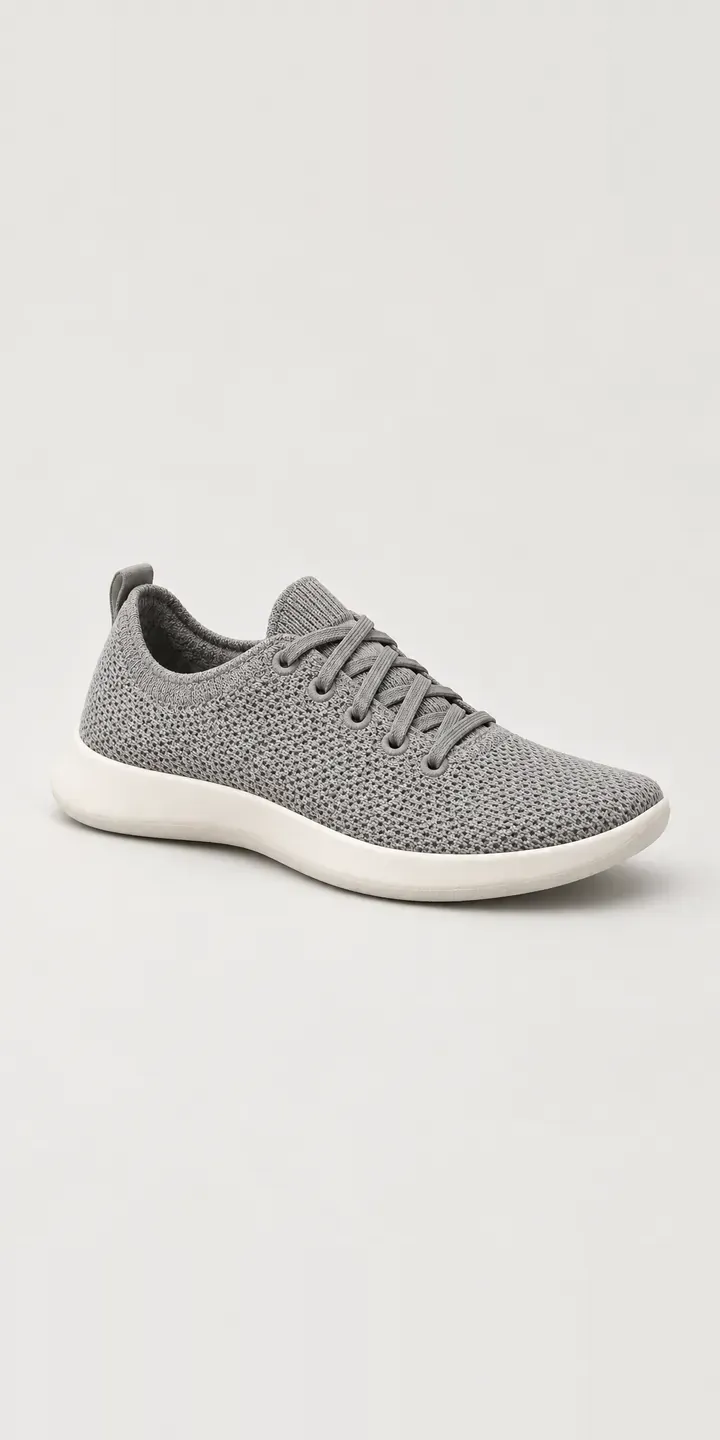
Here a knit everyday sneaker has been set up as a working configurator. The upper colour is the choice that changes the shoe, and a size completes the order summary that goes off as a quote request.
Knit buyers are usually choosing a shoe they will wear most days: commuting, travelling, standing for long stretches. They weigh comfort first, then how well a colour hides wear and goes with what they already own. That makes the neutrals the hard part. Heather grey, charcoal and oat can blur together in small thumbnails, and a buyer who wanted a warm oat but received something greyer feels misled.
Footwear Configurator demo
Knit Everyday Sneaker
- Product
- Knit Everyday Sneaker
- Colour
- Heather Grey
- Size
- UK 6
Illustrative product. The design and images are generated examples, not a real model for sale.
What you can configure
Heather grey, charcoal, navy and oat make up the demo, with moss and blush held back for a full build. Every image keeps the padded heel collar and flat textile laces in view. Those are where a knit upper shows its yarn colour most clearly. Choosing a size adds it to the summary while the photograph stays as it is.
- Colour: Heather Grey, Charcoal, Navy, Oat
- Size: UK 6, UK 8, UK 10
Why a configurator suits sneakers
Knit is a texture-led material. Heathered yarns mix two or more tones, so the same upper reads lighter from a distance and speckled up close. A flat product shot on white often hides that, and the buyer is left guessing. Consistent, close imagery shows every colour at the same scale, which is what customers need to tell charcoal from navy.
For a direct-to-consumer brand, one sneaker in six colours is a single product with six faces. Splitting it across six listings divides reviews and dilutes search ranking. Keeping it on one page, with colour as a live choice, concentrates both. It also gives the brand clean data about which colours people click on, add to basket and abandon.
That data matters for knitwear, where yarn is bought well ahead of production. If oat outsells navy in the configurator before a restock, the next knitting run can follow demand rather than last season's guess. Fewer customers order two colours to compare at home and send one back.
How a production version would be built
A production knit sneaker build starts with imagery that holds texture. I would shoot a main angle and a macro of the knit per colour, using fixed lighting so heathered tones stay comparable. Laces can be a separate layer if the brand wants contrast laces as an option, which avoids reshooting every shoe. From the brand, the build needs colour names, yarn references if relevant, size runs and stock. Colour and size become variants on either platform, so the configurator feeds the normal basket and checkout.
Build sheet for this range
- Colours in the full range: 6 (4 shown in this demo)
- Size choices: 3
- Combinations to support: 6 × 3 = 18
- Images for one photograph per combination at 3 angles: 54
- Images if sizes can be shown as separate layers, at 3 angles: 27
- Data each of the 18 combinations needs: a SKU or variant ID, price, stock or lead time, and any dimensions or specification that change
Questions about sneaker configurators
How can shoppers tell heather grey from charcoal on a phone screen?
Show them side by side at the same scale. The configurator can place a small comparison strip of all the knit colours under the main image, plus a macro shot of each yarn. Phone screens vary, so I describe each colour in words too: warm or cool, flat or speckled. That combination does more than any single photo.
Could customers pick a contrast lace colour?
Yes, and it is one of the cheaper options to add. Laces are shot or rendered once per colour as a separate layer, then composited over each upper. Six uppers and three lace colours give eighteen looks from nine images. Any pairings you do not want to sell can be blocked in the product data.
Will the configurator work with our existing size guide?
It should. Your size guide can open from the size selector, and fit notes such as roomy in the toe can sit next to the sizes. Half sizes, or EU and US sizing, are just more values in the product data. Customers who pick a size you do not hold see that straight away rather than at checkout.
Does this work on WooCommerce as well as Shopify?
It does. I build configurators for both. On WooCommerce each colour and size maps to a variation, so stock and pricing stay where your team already manages them. A custom platform is possible too, provided it exposes product and stock data through an API.
More footwear configurator demos
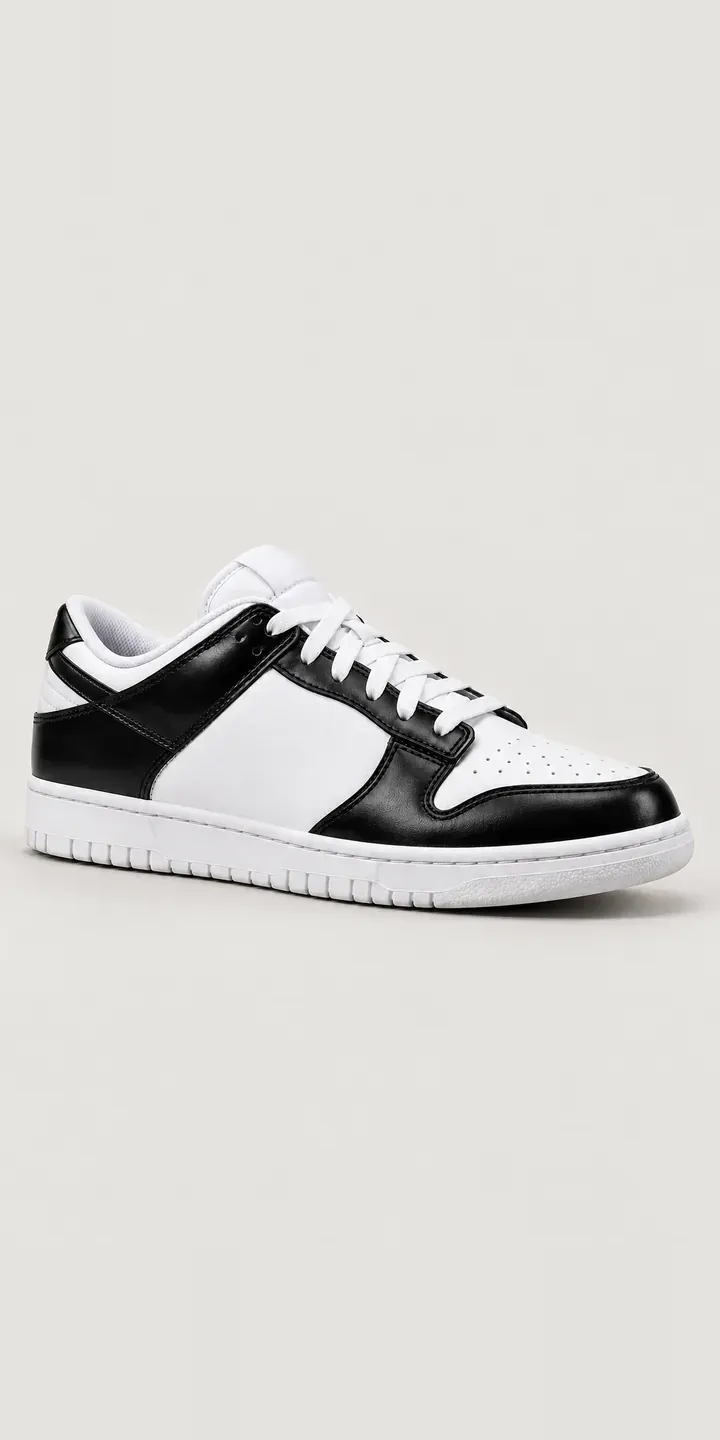
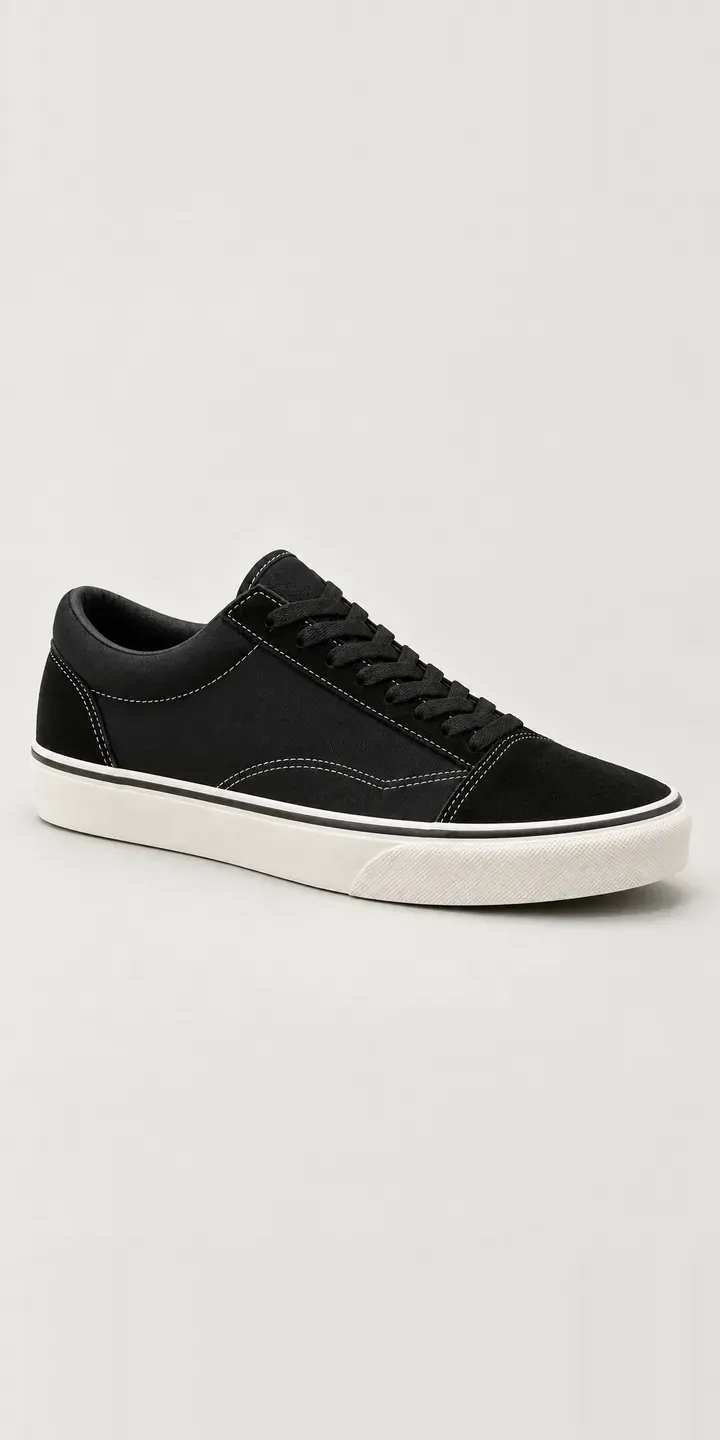
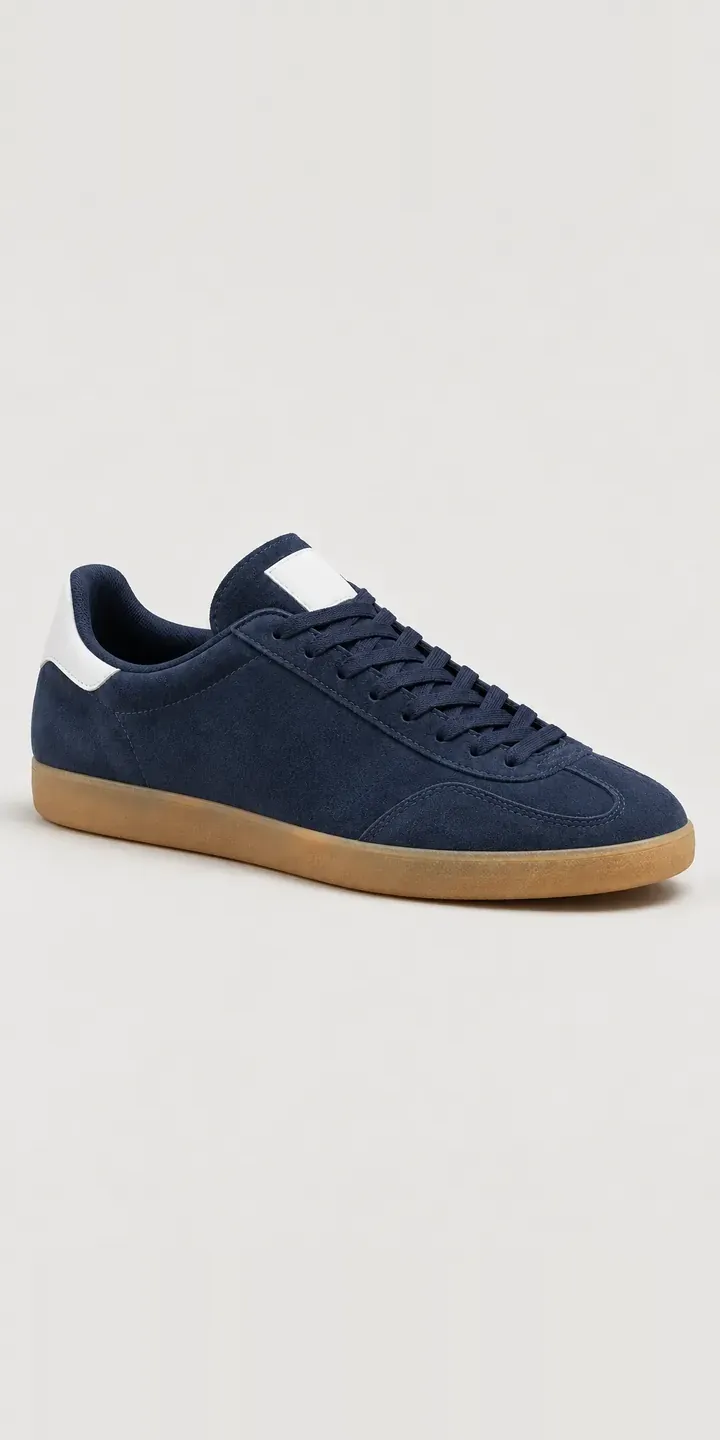
All footwear configurator demos
A configurator for your sneakers
This demo uses an illustrative product. If you sell sneakers, I can build the same experience around your own range, photography and ordering process, connected to Shopify, WooCommerce or a quote workflow. I reply to enquiries within two UK working days.